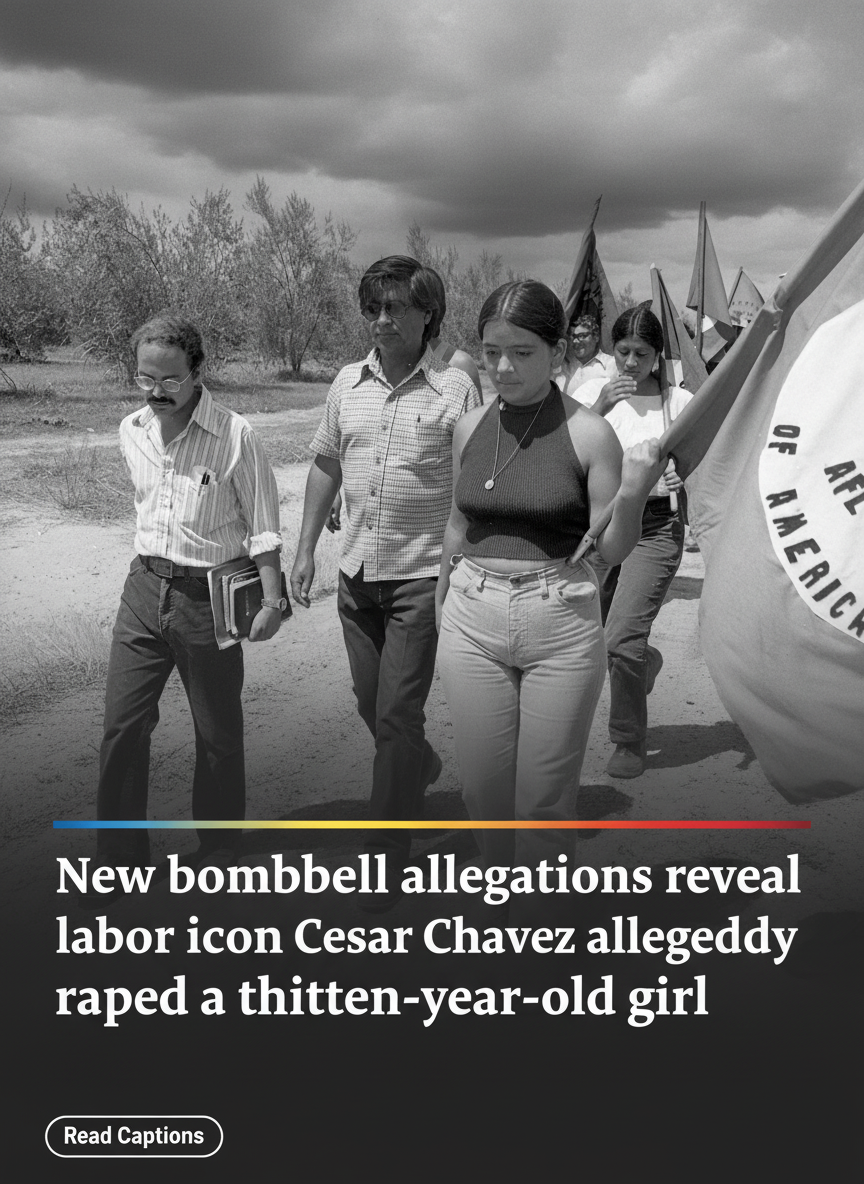
Shattered Icon: Cesar Chavez Accused of Raping 13-Year-Old Girl in Bombshell Report
By News Desk | Published: March 18, 2026
DELANO, Calif. — The towering legacy of Cesar Chavez, the sainted figure of the American labor movement and co-founder of the United Farm Workers (UFW), faced a seismic reckoning on Wednesday following the release of a bombshell report detailing allegations of sexual assault against a minor.
In a harrowing account that has sent shockwaves through the political and activist communities, Ana Murguia has come forward to detail a haunting incident she claims occurred decades ago. The allegations, first reported by the New York Post, describe an encounter in which Chavez allegedly raped Murguia when she was just 13 years old.
‘The Chilling Six Words’
Central to Murguia’s account is a moment of cold, calculated intimidation that she says has haunted her for a lifetime. According to the report, as the labor icon cornered the young girl, he muttered six words that would define her trauma: “This is our little secret now.”
Murguia, now coming forward after years of silence, described the incident as a “total betrayal” by a man who was viewed as a moral compass for millions of farmworkers. The report details how Chavez allegedly used his position of immense power and the reverence surrounding his “La Causa” movement to ensure his victim’s silence.
A Movement Under Scrutiny
The allegations come at a time when the historical legacies of civil rights leaders are being increasingly scrutinized through the lens of modern accountability. Chavez, who was awarded the Presidential Medal of Freedom posthumously in 1994, remains a symbol of non-violent protest and labor rights, with his birthday celebrated as a state holiday in California and several other states.
However, Murguia’s testimony suggests a darker underside to the movement’s inner circle. “He was a god to us,” Murguia stated in the report. “That is what made the fear so absolute. Who would believe a child over a saint?”
The report indicates that the incident allegedly took place during the height of the UFW’s influence, a period when Chavez was frequently surrounded by devoted followers and shielded by a protective internal hierarchy.
Reactions and Reckoning
As news of the allegations spread on Wednesday, reactions were swift and divided. The Cesar Chavez Foundation and the UFW have yet to release a full formal statement, though sources close to the organizations expressed “profound sadness and shock” at the claims. Some activists have called for a reassessment of how Chavez is memorialized, while others urged caution until further evidence is brought to light.
Legal experts suggest that while Chavez passed away in 1993, the civil implications for his estate and the organizations that bear his name could be significant. More importantly, the psychological impact on the community he represented is immeasurable.
Conclusion: An Uncertain Legacy
For decades, the name Cesar Chavez has been synonymous with the phrase “Sí, se puede” (Yes, we can). But for Ana Murguia and those now grappling with her story, that legacy is now inextricably linked to a different set of words—the chilling whisper of a man who allegedly used his stature to prey on the vulnerable.
As the public digests these bombshell revelations, the conversation is shifting from Chavez’s tactical brilliance in the fields to the moral weight of his private conduct. Whether his statues will remain standing and his name will continue to grace public schools across the nation is a question that now looms larger than ever before.