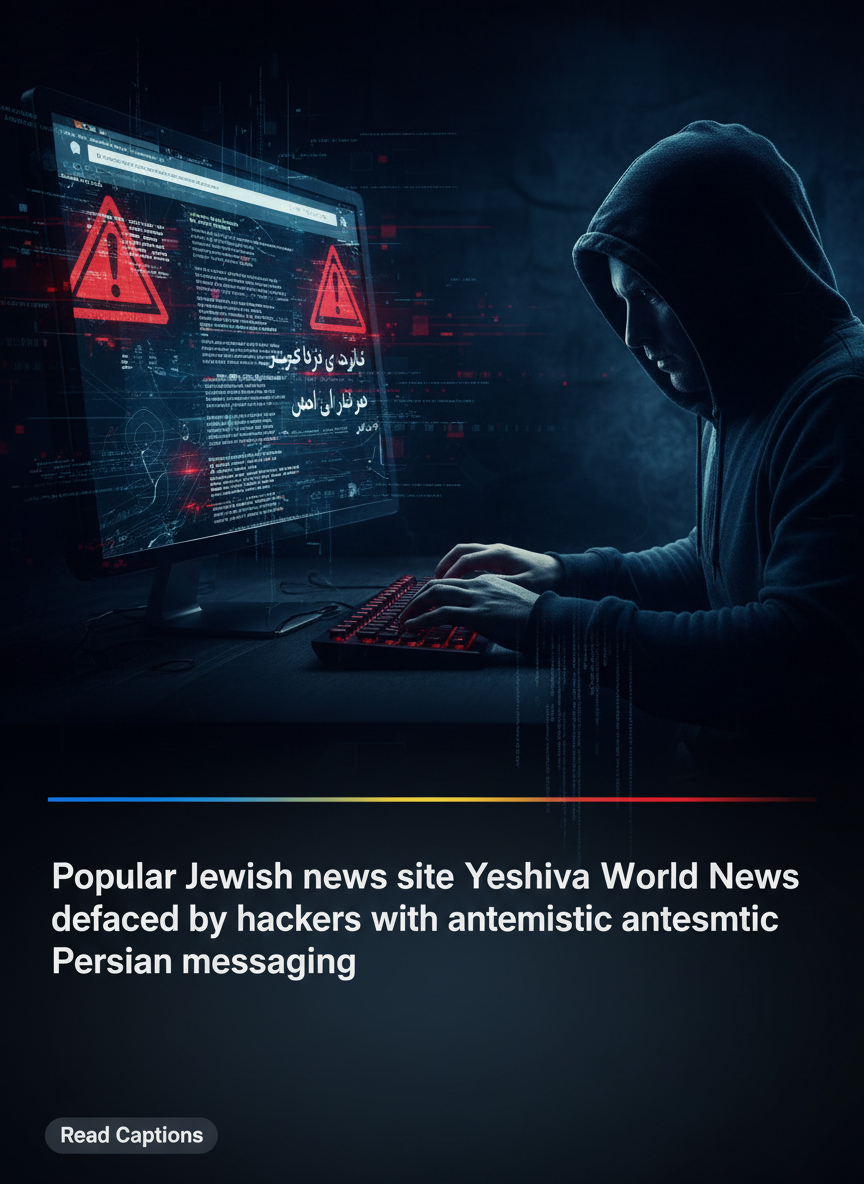
Cyberattack Targets Yeshiva World News: Popular Jewish Publication Defaced with Hate Speech
NEW YORK — Readers of one of the world’s most prominent Orthodox Jewish news outlets were met with a chilling display of digital hostility on Wednesday. Yeshiva World News (YWN), a cornerstone of digital media for the Jewish community, fell victim to a sophisticated cyberattack that replaced its standard reporting with threatening messages and antisemitic rhetoric.
A Digital Hostage Situation
The breach became apparent early Wednesday when the site’s homepage was replaced with a stark defacement page. Visitors were greeted not with the day’s headlines, but with text written in Persian. The most prominent message, translated by linguistic experts, declared: “Now we are in control.”
The intrusion extended beyond the site’s internal servers. The hackers managed to manipulate the site’s metadata, causing the hateful messaging and an antisemitic epithet to appear in Google search results. This “SEO poisoning” ensured that even those who did not click on the link were exposed to the group’s hateful rhetoric.
Language and Intent
The use of Persian messaging has raised immediate questions regarding the origin and motivation of the attack. While official attribution by cybersecurity firms is still pending, the combination of the Persian language and targeted antisemitic slurs points toward a politically or ideologically motivated “hacktivist” group.
Media outlets reporting on the incident, including PIX11 News, have opted not to repeat the specific slurs used in the defacement, citing the graphic and hateful nature of the language. The breach represents a significant escalation in digital harassment directed at Jewish media organizations, which have seen a rise in such threats in recent years.
Impact on the Community
Yeshiva World News serves as a vital hub for information, ranging from international politics to local community alerts within the Orthodox world. By silencing the publication and replacing its content with threats, the attackers effectively disrupted a key communication channel for thousands of daily readers.
Security experts note that “defacement” attacks, while often temporary, are designed to sow fear and demonstrate the vulnerability of the targeted institution. “This isn’t just about technical access; it’s about psychological impact,” says one cybersecurity analyst. “By taking over the title tag on Google, they are essentially planting a flag in a digital public square.”
The Path to Recovery
As of late Wednesday, technical teams were reportedly working to purge the malicious code and restore the website to its original state. The process involves not only regaining control of the CMS (Content Management System) but also requesting that search engines like Google recrawl the site to remove the offensive titles from search indices.
The incident remains under investigation. As the digital landscape becomes increasingly volatile, the hack of Yeshiva World News serves as a stark reminder of the ongoing threats facing niche media outlets and the heightened need for robust cybersecurity infrastructure in the face of rising online hate.