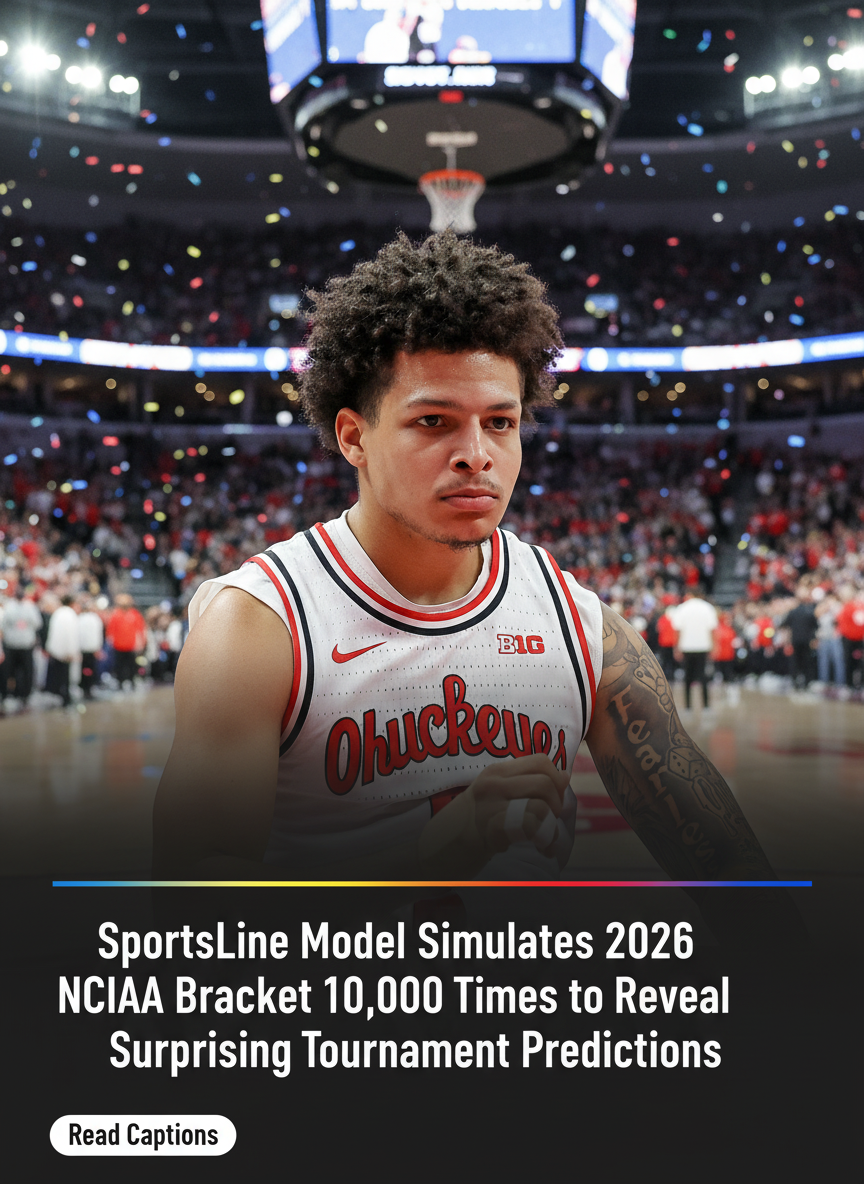
Data Over Hype: SportsLine Model Reveals Shocker Predictions for March Madness 2026
As the 2026 NCAA Tournament approaches, millions of fans across the country are staring at blank brackets, grappling with the perennial question: Which “Cinderella” will dance into the second weekend, and which blue-chip powerhouse is destined for an early exit? While gut feelings and school loyalty often drive bracket decisions, data-driven analysis is taking center stage this year.
The experts at SportsLine have officially released their 2026 March Madness simulations, and the results are sending shockwaves through the college basketball world. By leveraging a sophisticated computer model that simulated the entire tournament 10,000 times, SportsLine has identified several “bracket busters” that traditional analysts might be overlooking.
A Proven Track Record of Success
In an event defined by its unpredictability, the SportsLine model has established itself as a beacon of reliability. Last season, the model’s predictive power was on full display as it correctly nailed 12 of the 16 teams that advanced to the Sweet 16. This high level of accuracy gave followers a significant edge in their pools, particularly in identifying mid-major programs ready to topple high-seeded giants.
The model doesn’t just look at wins and losses; it evaluates offensive and defensive efficiencies, strength of schedule, individual player matchups, and historical performance trends. By running 10,000 unique iterations of the 2026 tournament, the model identifies “value” picks—teams that have a statistically higher chance of advancing than their seed or public perception would suggest.
Surprising Picks for the 2026 Bracket
While the full details of the model’s picks are kept behind a proprietary veil, the preliminary reveals suggest a tournament defined by volatility. This year’s simulation is reportedly “fading” several top-three seeds, suggesting that some of the nation’s most popular picks to reach the Final Four may not even survive the first weekend.
Conversely, the model has identified a handful of double-digit seeds with the statistical DNA of a deep-run contender. According to the simulation, these underdogs possess the specific defensive metrics required to stifle high-scoring favorites, making them “must-watch” picks for anyone looking to win their office pool.
The Methodology: 10,000 Paths to Victory
The power of the 10,000-simulation approach lies in its ability to account for variance. In a single-elimination format, a cold shooting night or a whistle-heavy officiating crew can end a championship dream in 40 minutes. By simulating the games thousands of times, the model filters out the “noise” of individual fluke occurrences and identifies which teams consistently find a way to win across a multitude of scenarios.
“March Madness is rarely about who the best team is on paper,” says the SportsLine analytical team. “It’s about matchups and sustainability. Our model looks for the teams that can win in multiple ways—whether it’s a grind-it-out defensive battle or a high-octane shootout.”
Conclusion: Preparing Your Winning Bracket
As the clock ticks toward the opening tip-off, the 2026 NCAA Tournament promises the usual blend of heartbreak and heroics. However, for those looking to move past mere guesswork, the SportsLine model offers a blueprint built on hard data rather than media narratives.
With a track record that includes a stellar 2025 performance and 10,000 fresh simulations under its belt, the model’s “surprising” picks may just be the key to navigating the madness this March. Whether you are chasing a perfect bracket or simply looking to beat your friends, the data suggests that the biggest surprises are yet to come.