High Stakes and High-Quality Seafood: Why Las Vegas Sharks Eat Better Than Tourists Paying $1,000 for Dinner
In a city defined by excess, where high-rollers routinely drop upwards of $1,000 for a single dinner on the Las Vegas Strip, some of the most pampered diners aren’t even human. While tourists are savoring gold-flaked steaks and vintage Bordeaux, a group of elite residents at the Mandalay Bay Resort and Casino is enjoying a menu that might actually be fresher than what is served at some five-star restaurants.
The Finest Catch on the Strip
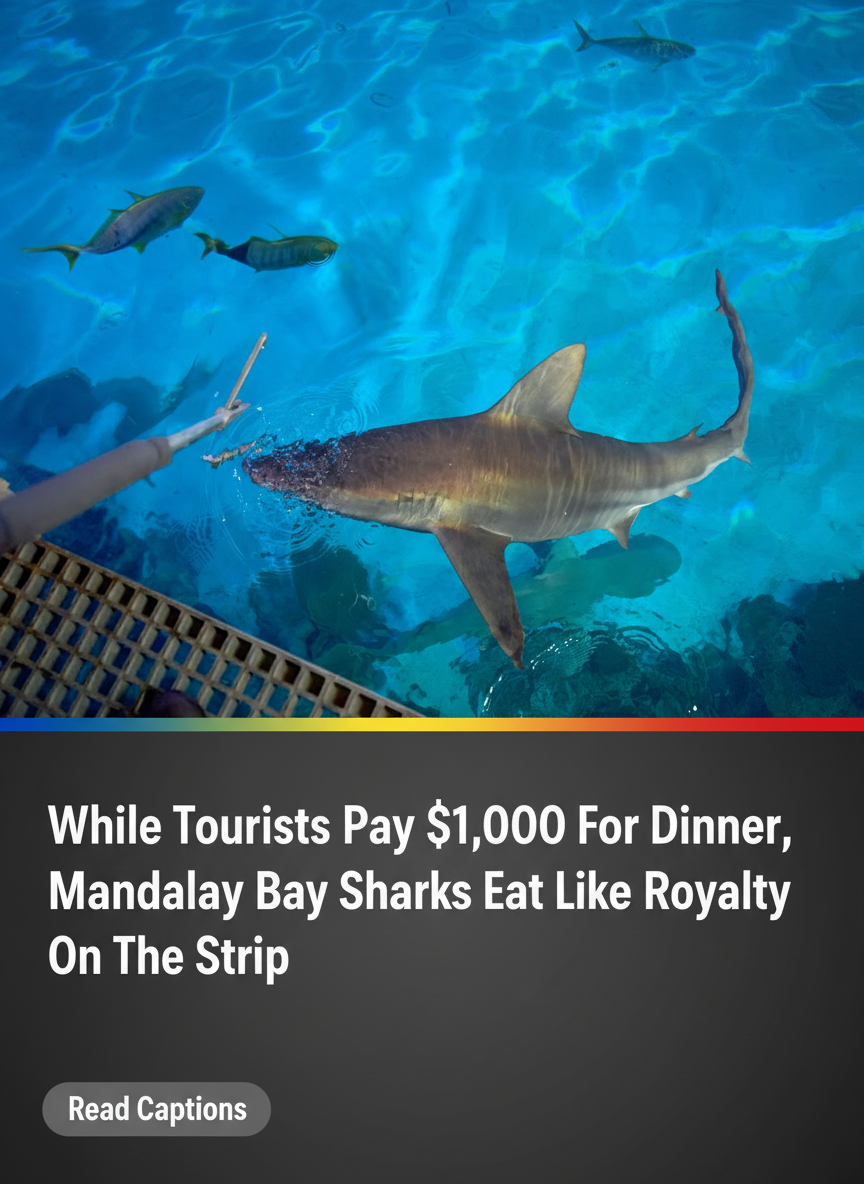
According to Jack Jewell, the lead aquarist at Mandalay Bay’s Shark Reef Aquarium, the facility’s predatory inhabitants “eat like royalty.” In a recent interview, Jewell highlighted the meticulous standards maintained for the aquarium’s shark population, noting that their diet is often superior to the pricey fare consumed by visitors just a few floors away.
The sharks at Mandalay Bay dine on a rotating selection of restaurant-quality seafood, including mackerel, herring, and sardines. These aren’t mere “scraps” or secondary-grade fish; the aquarium sources high-grade, sustainable seafood to ensure the health and longevity of the animals.
A Disciplined Diet for Apex Predators
While a tourist might indulge in a massive buffet or a multi-course tasting menu every night of their vacation, the sharks follow a more disciplined—but equally high-end—regime. The apex predators are fed three times a week, a schedule that mimics their natural metabolic needs while ensuring they remain healthy and satiated.
“They’re probably eating better than most of the people on the Strip,” Jewell told Fox News. The secret to their health isn’t just the quality of the fish, but the supplements included. Every meal is meticulously prepared and often stuffed with vitamins to ensure the sharks receive a balanced nutritional profile that supports their immune systems and energy levels.
The Logistics of Fine Dining Underwater
Feeding a tank full of predators requires more than just tossing fish into the water. To manage a community of sharks, the aquarium staff utilizes “target feeding.” This process involves trainers using long poles to deliver specific pieces of fish to individual sharks. This ensures that every animal gets its fair share and that the staff can monitor exactly how much each shark is consuming.
This controlled environment also serves a practical purpose for the aquarium’s ecosystem. By keeping the sharks well-fed on premium seafood, the staff reduces the likelihood of the predators eyeing their smaller tank mates as a midnight snack. In Las Vegas, it seems, a full stomach is the best way to keep the peace.
The Cost of Luxury
The comparison between the sharks’ diet and the $1,000 dinners of the Strip highlights the unique nature of Las Vegas luxury. While tourists pay for the ambiance, the celebrity chef’s name, and the prime real estate overlooking the Fountains of Bellagio, the sharks are focused purely on the quality of the protein.
As Las Vegas continues to evolve into a global culinary destination, the Shark Reef Aquarium stands as a reminder that the “best meal in town” is a subjective title. Whether it is a Wagyu ribeye at a candlelit table or a fresh mackerel delivered via tong under 1.3 million gallons of water, the Strip remains a place where everyone—regardless of species—expects to be treated like a king.
For visitors looking to see these high-end diners in action, the Shark Reef Aquarium at Mandalay Bay remains one of the Strip’s most popular attractions, offering a rare glimpse into the lives of some of the world’s most misunderstood—and apparently well-fed—creatures.