High-Speed Connection, Low-Speed Narrative: Ian Purnell’s ‘Arctic Link’ Prioritizes Process Over People
By Cinema Insider Staff | March 20, 2026
In an era where the digital divide is often discussed in terms of socio-economics and politics, Swiss director Ian Purnell’s new documentary, Arctic Link, attempts to capture the physical reality of bridging that gap. The film follows the arrival of high-speed internet to a remote Alaskan island—a community finally joining the global grid decades after the rest of the world. However, as the first reviews emerge, the consensus suggests that while the film is a masterclass in visual polish, it may leave audiences disconnected.
A Visual Odyssey into Industrial Infrastructure
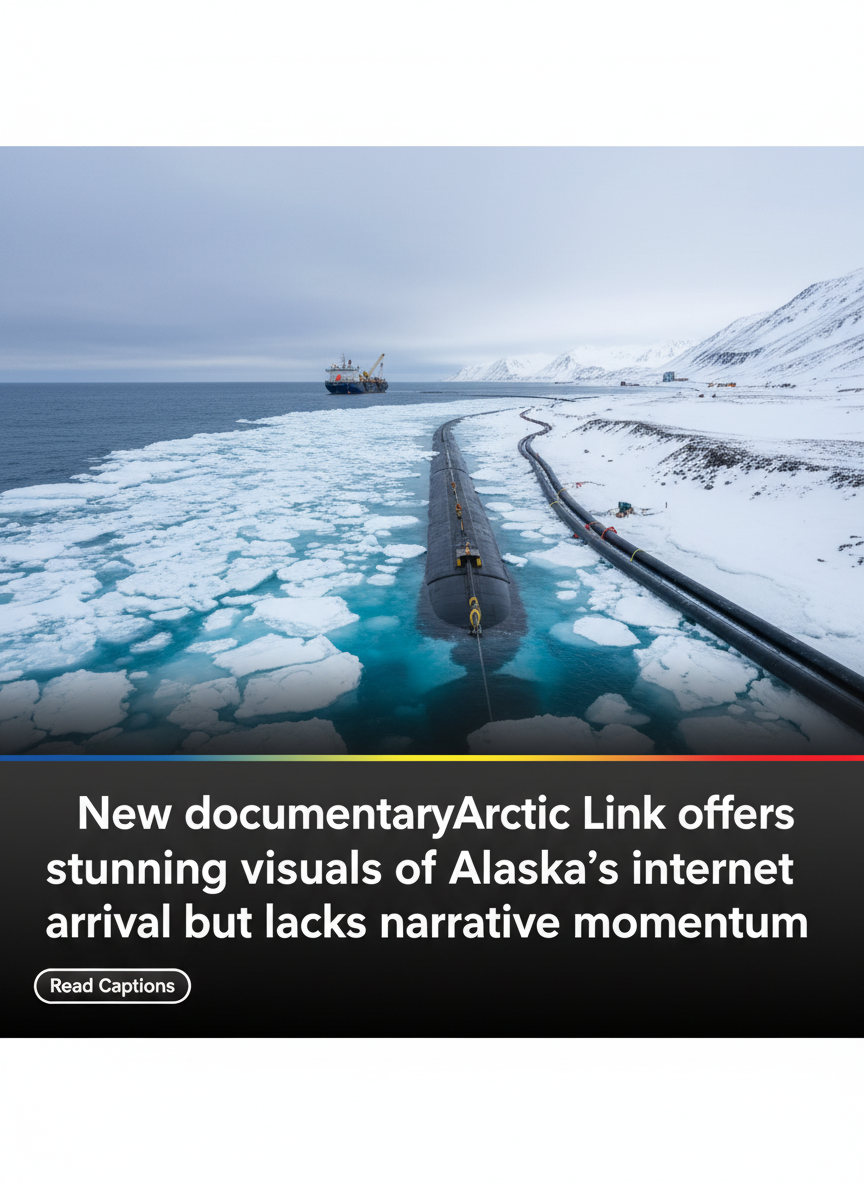
Purnell, known for his keen eye for industrial aesthetics, treats the arrival of fiber optic cables not as a mere utility upgrade, but as a monumental shift in the human landscape. The cinematography is undeniably striking; the film captures the harsh, pristine beauty of the Alaskan wilderness and juxtaposes it against the sleek, synthetic complexity of modern technology. From the gleaming manufacturing plants where the cables are birthed to the massive vessels that transport them across the ocean, “Arctic Link” is a feast for the eyes.
The director spends a significant portion of the runtime detailing the logistics of the operation. Viewers are treated to meticulous shots of cable winding, the heavy machinery of the laying process, and the sheer scale of the engineering required to connect the world’s most isolated outposts. For those fascinated by the “how” of the modern world, the film offers a rare, high-definition look at the skeleton of the internet.
The Narrative Lag
Despite its technical brilliance, the film is drawing criticism for its “narratively inert” structure. Critics argue that Purnell becomes so enamored with the hardware and the process that he loses sight of the heart of the story: the people. The residents of the Alaskan island, whose lives are about to be irrevocably changed by the sudden influx of global information, often feel like secondary characters in their own narrative.
The experience of watching “Arctic Link” has been described as “confounding.” By focusing so heavily on the manufacturing and transport of the cables, the film creates a distancing effect. Rather than feeling the mounting tension of a community on the brink of a digital revolution, the audience is instead invited to a cold, philosophical meditation on technology itself. This abstract approach may alienate viewers looking for a more traditional, human-centric documentary.
A Missed Connection?
The central irony of “Arctic Link” is that a film about connectivity feels strangely detached. The “link” of the title refers as much to the physical cable as it does to the metaphorical connection between the remote and the global. However, by prioritizing the industrial over the emotional, Purnell misses the opportunity to explore the psychological impact of the internet’s arrival. What happens to a culture that has existed in isolation when it is suddenly plugged into the 24-hour news cycle and the chaos of social media?
While the film touches on these themes, they are often buried under layers of atmospheric shots and industrial footage. The result is a documentary that functions more as a video installation in a modern art gallery than a compelling piece of investigative or observational cinema.
Conclusion
Ian Purnell’s “Arctic Link” is a work of undeniable craft. It is a visually stunning exploration of the physical infrastructure that defines our age. However, its glacial pace and lack of narrative momentum make it a challenging watch. For enthusiasts of industrial cinematography and abstract filmmaking, it is a rewarding meditation. For the average viewer seeking to understand the human cost and triumph of the digital frontier, “Arctic Link” may be a connection that never quite clears the buffer.