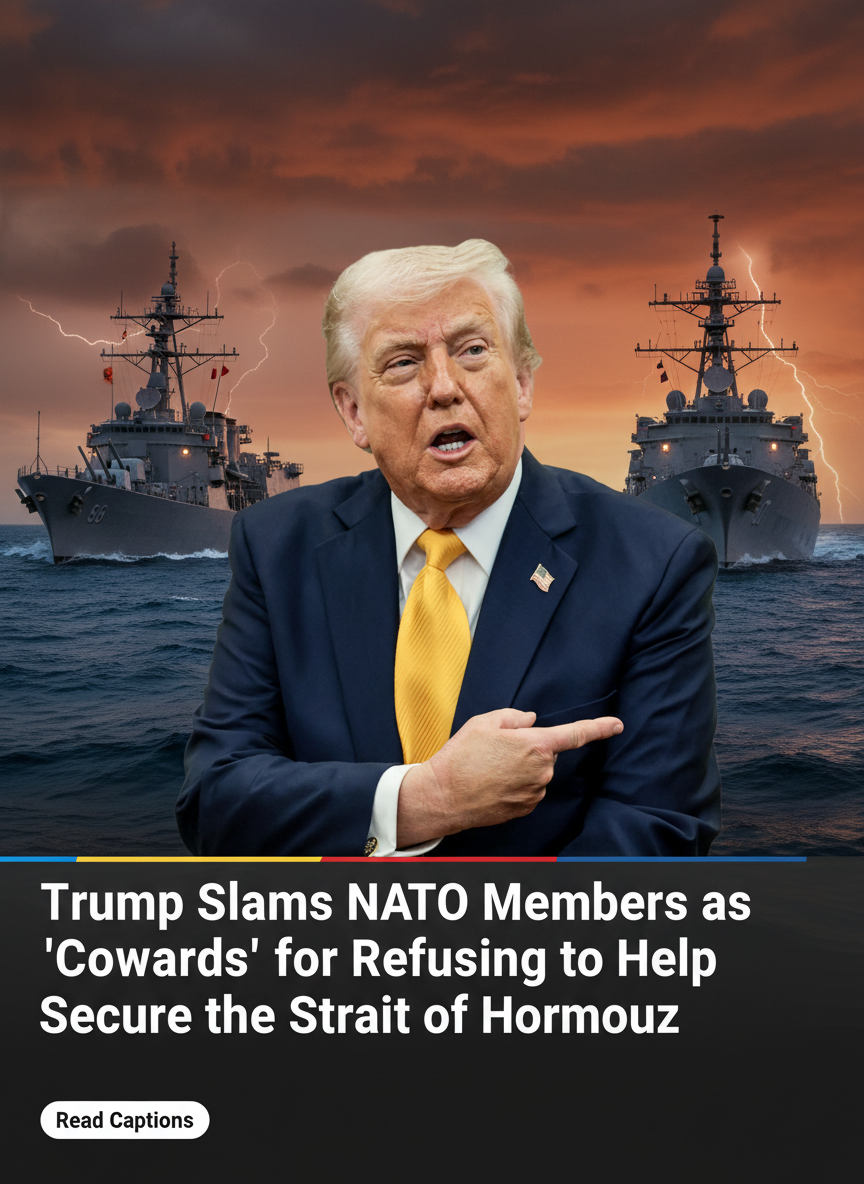
‘Cowards’: Trump Blasts NATO Allies Over Refusal to Secure Strait of Hormuz
WASHINGTON D.C. — President Donald Trump ignited a fresh diplomatic firestorm early Friday morning, leveling scathing criticism against NATO member states. In a series of pointed remarks, the President labeled long-standing allies as “cowards” following their collective refusal to provide military support for a U.S.-led initiative to reopen and secure the Strait of Hormuz.
A Friday Morning Broadside
The President’s comments, delivered via social media and later echoed by White House officials, mark a significant escalation in tensions within the North Atlantic alliance. Trump expressed deep frustration that European nations—many of whom rely heavily on the energy resources flowing through the Middle Eastern chokepoint—are unwilling to commit naval assets to ensure the safety of international shipping traffic.
“Our so-called allies are happy to let the United States foot the bill and take all the risks, but when it comes time to protect the very oil that powers their cities, they run for cover,” the President stated. “It is a disgrace. They are cowards who have forgotten what a real alliance looks like.”
Tensions in the Strait
The Strait of Hormuz, a narrow waterway between Oman and Iran, is widely considered the world’s most important oil transit point. Recent weeks have seen an uptick in maritime interference and threats from regional actors, prompting the Trump administration to call for a “Coalition of the Willing” to patrol the waters and ensure the “freedom of navigation.”
Despite the strategic importance of the route, several key NATO members, including France and Germany, have signaled a preference for diplomatic de-escalation rather than a direct military presence. Critics of the administration’s plan argue that a heavy-handed naval intervention could inadvertently trigger a broader conflict in the region.
The ‘America First’ Ultimatum
The President’s rhetoric on Friday aligns with his long-standing “America First” foreign policy, which frequently questions the value of international organizations that he perceives as being subsidized by the American taxpayer. Sources close to the White House suggest that the President is considering a re-evaluation of U.S. maritime protection for certain foreign-flagged vessels if their home countries refuse to contribute to the mission.
“We are not the world’s policemen for free,” Trump added during a brief interaction with reporters on the South Lawn. “If they want their tankers protected, they should bring their own ships to the fight. If not, they shouldn’t expect us to do the heavy lifting.”
Mixed Reactions from the Hill
The backlash was immediate on Capitol Hill. While some Republican lawmakers praised the President for demanding accountability from NATO, Democrats and several veteran diplomats warned that such insults could permanently damage the integrity of the alliance.
“Calling our closest allies ‘cowards’ does nothing to secure the Strait of Hormuz,” said one senior member of the Senate Foreign Relations Committee. “It only serves to embolden our adversaries and isolate the United States at a time when we need global cooperation most.”
Conclusion
As of Friday afternoon, the NATO headquarters in Brussels has not issued a formal rebuttal to the President’s comments. However, the internal rift highlights an increasingly fragile consensus on how to handle global energy security and regional instability. With oil prices fluctuating on the news, the eyes of the world remain fixed on the Strait—and on whether the President’s pressure tactics will force a change of heart among the NATO rank and file or lead to a historic fracturing of the alliance.