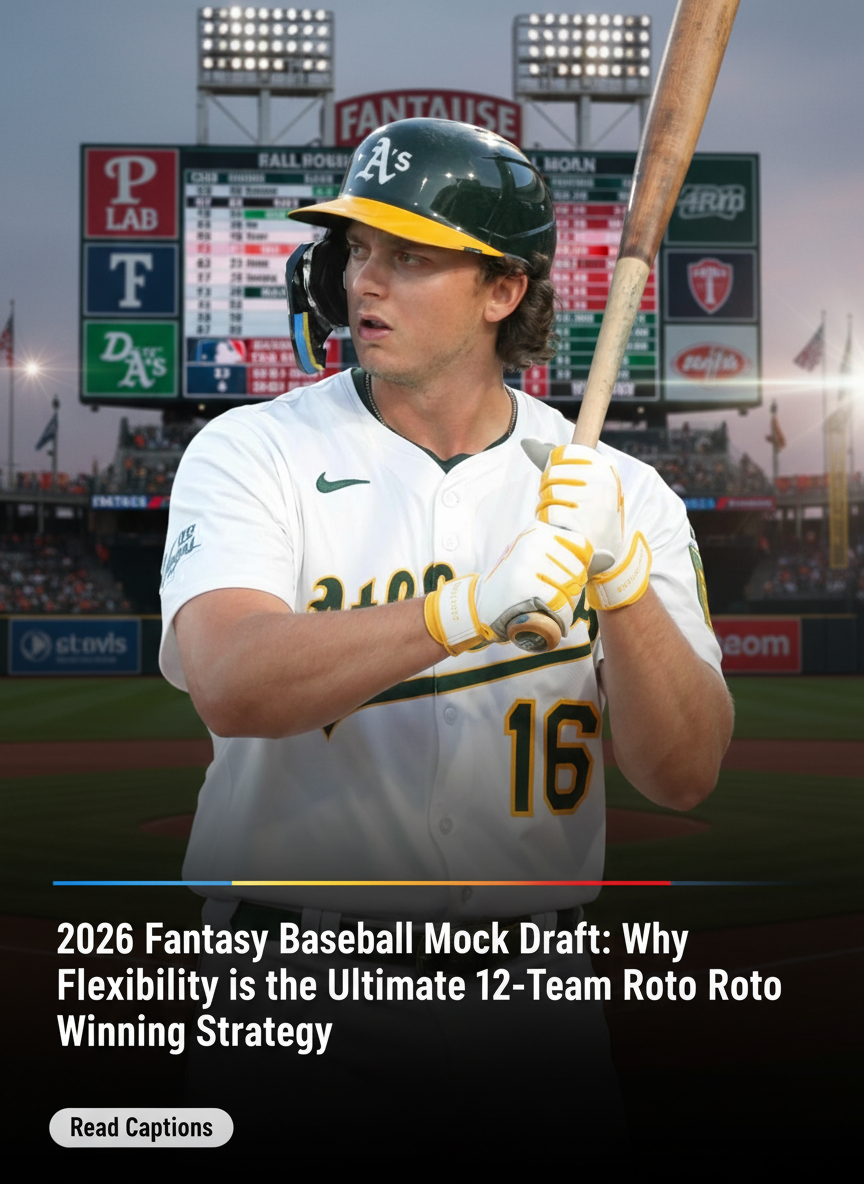
The Art of the Pivot: Lessons from the 2026 Fantasy Baseball 12-Team Roto Mock Draft
In the high-stakes world of fantasy baseball, the best-laid plans often evaporate by the end of the first round. As the 2026 season approaches, experts and enthusiasts alike are finding that the most successful managers aren’t those who stick to a rigid script, but those who treat the draft board like a living, breathing organism. This was the primary takeaway from the latest CBS Sports 12-team Rotisserie (Roto) mock draft: success is found in taking what the draft gives you.
The “Go with the Flow” Philosophy
The 2026 landscape has shifted significantly from years past. With a new generation of power-speed threats like Elly De La Cruz and Bobby Witt Jr. firmly established as the “Big Two,” the early rounds of this mock draft saw a frantic scramble for elite statistical anchors. However, the expert panel noted that the real winners were those who didn’t fight the current.
Summary analyst Scott White emphasized that while every manager enters the room with a preference—perhaps “Pocket Aces” or “No-Catcher” builds—the room’s collective ego often dictates a different path. If the first two rounds see an unprecedented run on starting pitching, the value lies in snagging the falling elite bats. Conversely, if the room ignores the “boring” veteran starters in favor of high-upside rookies, the path to victory lies in stabilizing your ERA and WHIP with proven arms.
Early Round Trends: The New Guard Reigns Supreme
In this 12-team simulation, the first round was a testament to the youth movement. Elly De La Cruz went first overall, a reflection of his status as a singular force capable of winning the stolen base category single-handedly while providing 30-plus home run power. He was followed closely by Witt Jr. and a resurgent Ronald Acuña Jr., who appears to have regained his peak form two years removed from his second ACL recovery.
The middle rounds, however, provided the most tactical intrigue. We saw a “wait-and-see” approach on the 2025 breakout stars, with managers hesitating to pay full price for sophomore players like Jackson Holliday or Wyatt Langford. This created a vacuum where established veterans—players like Bryce Harper and Freddie Freeman—fell into the laps of managers who were happy to bank “boring” elite production while others chased the “next big thing.”
The Pitching Paradox
Pitching remains the most volatile sector of fantasy baseball in 2026. The mock draft highlighted a growing trend: the disappearance of the “workhorse” ace. As teams continue to limit starter workloads, the value of high-strikeout relievers and “bulk” specialists has skyrocketed.
Managers who attempted to force a “Pitching First” strategy often found themselves reaching for arms with significant injury history. The experts who thrived were those who waited, picking up high-upside arms like Paul Skenes and Andrew Painter after the initial frenzy, allowing them to stack their hitting categories early and “take the discount” on pitching later in the draft.
Takeaways for the 2026 Season
The mock draft results serve as a vital reminder that a draft is not won in a vacuum. It is a series of reactions. The key lessons highlighted by the recap include:
- Don’t Reach for Speed: With stolen bases remaining high across the league, don’t sacrifice batting average or home runs just to chase a one-dimensional speedster.
- Watch the Tiers: When a tier of players is nearing its end, that is the only time to consider “reaching.” Otherwise, always opt for the best player available.
- Embrace the Uncertainty: In a 12-team Roto format, balance is king. If the draft hands you an abundance of power early, use your middle rounds to shore up ratios rather than doubling down on what you already have.
Conclusion
As the 2026 fantasy baseball season draws closer, the 12-team Roto mock draft proves that flexibility is a manager’s greatest asset. You cannot control when a rival will “snive” your favorite sleeper, but you can control how you pivot. By letting the draft come to you and scooping up value where others see risk, you build a roster that is not just talented, but resilient. In 2026, don’t just draft a team—draft the opportunities the room provides.