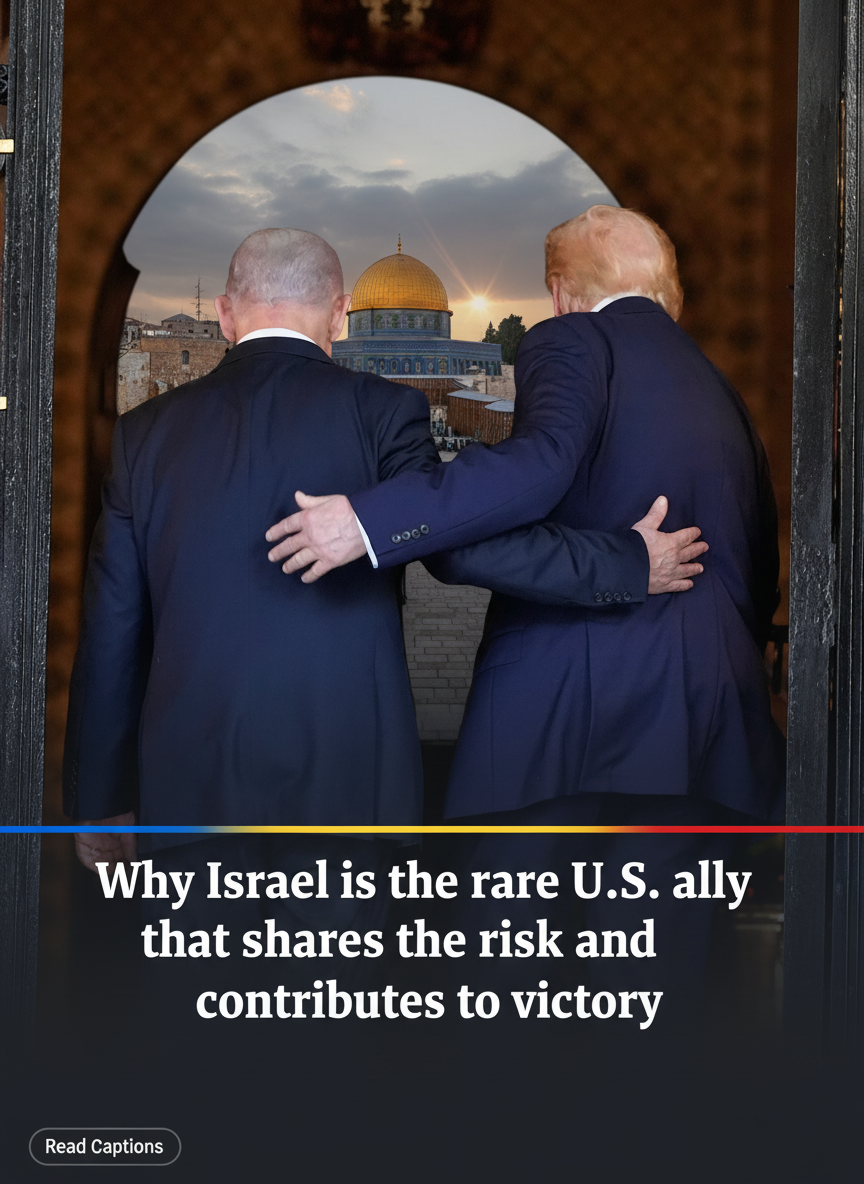
A Partnership of Equals: Redefining the U.S. Military Alliance with Israel Amid Regional Tensions
By Global Strategy Desk | March 17, 2026
The Shift from Protection to Participation
In the high-stakes theater of Middle Eastern diplomacy and defense, a significant narrative shift is taking hold within the halls of Washington and the command centers of Jerusalem. As tensions with Iran reach a critical threshold, a new perspective is emerging among strategic analysts: any potential conflict is no longer viewed as the United States fighting a war for Israel, but rather a war fought with Israel.
This distinction, highlighted in recent strategic assessments, marks a departure from traditional “forever war” critiques. Instead of viewing Israel as a security dependent, policymakers are increasingly recognizing the nation as a rare ally that significantly “pulls its weight,” effectively sharing both the strategic risks and the tactical burdens of regional stability.
Pulling Weight in a High-Risk Landscape
Unlike many traditional U.S. allies who rely heavily on the American security umbrella for their survival, Israel has built a self-reliant military infrastructure that provides unique value to the United States. From cutting-edge missile defense systems like the Iron Dome and David’s Sling to world-class cyber-intelligence capabilities, Israel offers a technological and tactical contribution that few other nations can match.
Experts argue that in the context of Iranian aggression, Israel serves as a “force multiplier.” By neutralizing regional proxies and providing real-time intelligence on IRGC movements, Israel reduces the direct operational burden on U.S. forces. This active participation refutes the notion of Israel as a passive recipient of aid, positioning it instead as a critical stakeholder that contributes as much as it consumes in the bilateral relationship.
Sharing the Risk: The Frontline Reality
Perhaps the most compelling aspect of this evolving alliance is the concept of shared risk. While U.S. interests in the region are significant, Israel faces an existential threat on its immediate borders. By taking the lead in “gray zone” operations—clandestine missions aimed at disrupting nuclear proliferation and arms smuggling—Israel absorbs the immediate brunt of retaliatory actions.
This willingness to occupy the front lines allows the United States to maintain a strategic distance while still achieving its broader objective of preventing a nuclear-armed Iran and ensuring the free flow of global commerce. “This isn’t a case of the U.S. being dragged into a local skirmish,” says one senior defense analyst. “It’s a collaborative effort where the ally is willing to take the first blow and provide the necessary intelligence to prevent a wider conflagration.”
A New Model for Modern Alliances
The “With, Not For” doctrine also addresses growing domestic concerns in the United States regarding foreign entanglements. By framing the relationship as a peer partnership, advocates argue that the U.S. is not acting as the world’s policeman, but rather as a partner in a collective defense agreement. This model of “burden-sharing” is increasingly seen as the blueprint for future American alliances in an era of fiscal restraint and strategic pivoting.
In the case of Iran, the synergy between U.S. global reach and Israeli regional expertise creates a deterrent that neither nation could achieve alone. This collaborative victory—measured in prevented attacks and stabilized trade routes—serves as the ultimate justification for the continued depth of the alliance.
Conclusion: The Path Forward
As the geopolitical landscape grows more complex, the U.S.-Israel relationship is proving to be a resilient exception to the trend of declining international commitments. By focusing on mutual contribution and shared sacrifice, both nations are signaling to adversaries that they are prepared for a long-term, integrated defense strategy.
Ultimately, the narrative of a war fought “with, not for” Israel reflects a mature realization of modern warfare: in a world of interconnected threats, the strongest defense is found not in isolation or dependency, but in a robust partnership where every player is fully invested in the victory.