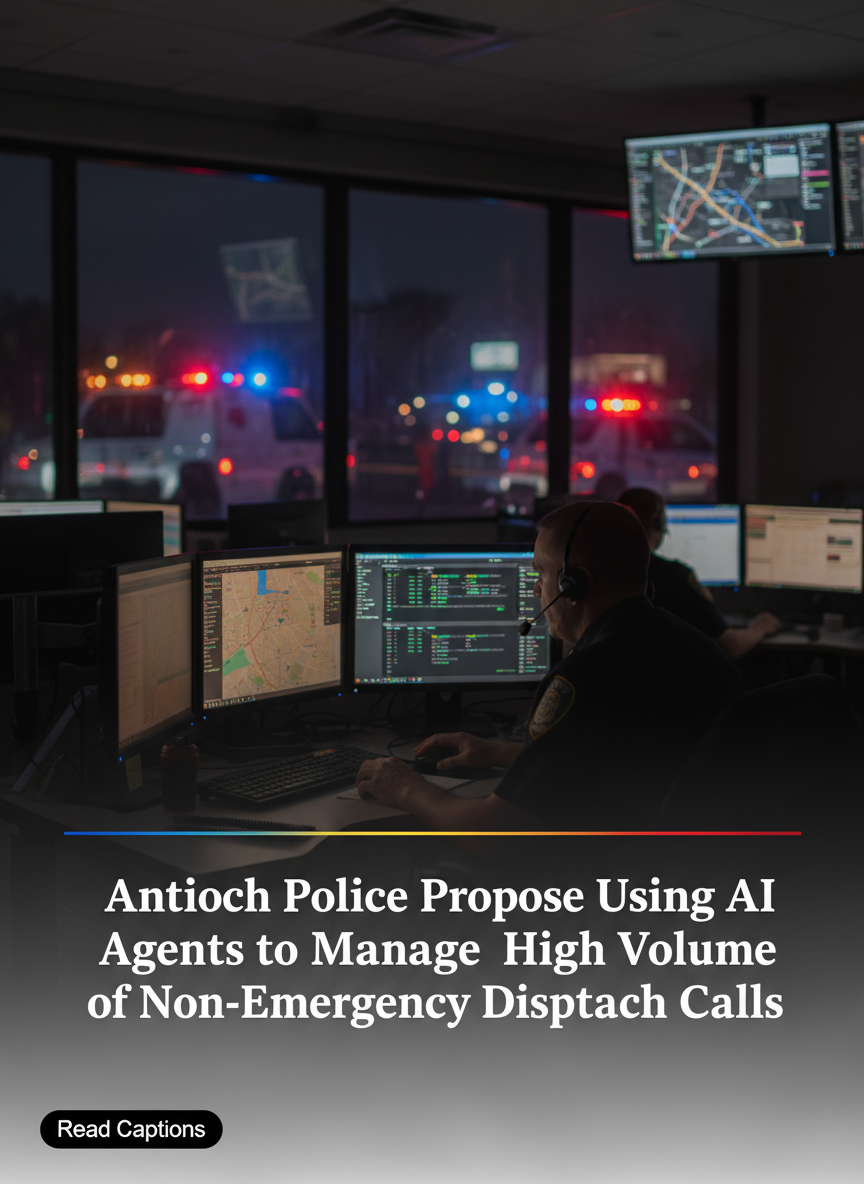
Antioch Police Turn to AI to Combat Staffing Shortages and Mounting Call Volumes
ANTIOCH, Calif. — Faced with an overwhelming influx of calls and a persistent staffing crisis, the Antioch Police Department (APD) is looking toward the digital frontier for relief. The department is officially seeking City Council approval to implement artificial intelligence agents designed to assist dispatchers with non-emergency phone calls, a move that could redefine how the city handles public safety communications.
A System Under Pressure
The proposal comes at a critical time for Antioch. Like many law enforcement agencies across the country, the APD has been grappling with a significant shortage of personnel. Despite these vacancies, the volume of work has not diminished. According to department data, dispatchers manage hundreds of thousands of calls every year, ranging from life-threatening emergencies to routine administrative inquiries.
This high volume, coupled with fewer hands on deck, has led to increased wait times and significant burnout among dispatch staff. By introducing AI into the workflow, the department hopes to create a buffer that allows human dispatchers to focus their expertise where it is needed most: high-stakes, emergency situations.
How the AI “Dispatchers” Work
The proposed AI technology is not intended to replace human workers, but rather to serve as a sophisticated digital assistant. These AI agents are specifically designed to handle non-emergency lines. When a resident calls to report a minor issue—such as a parking complaint, a request for police records, or a non-violent property crime—the AI can gather information, provide answers to frequently asked questions, and even help file reports.
By filtering out these routine tasks, the department anticipates a significant reduction in the “noise” that currently clogs emergency communication channels. This ensures that when a 911 call comes in, a human dispatcher is available to answer immediately, potentially saving vital seconds in life-or-death scenarios.
The Path to Approval
The transition to an AI-augmented dispatch center is not yet a done deal. The Antioch Police Department must first secure the green light from the City Council to allocate the necessary funds and approve the vendor contracts. During preliminary discussions, proponents of the plan emphasized that the technology is a force multiplier that provides 24/7 coverage without the overhead of traditional overtime costs.
However, the move toward automation in public service often raises questions regarding privacy, data security, and the “human touch” required in community policing. The APD has signaled its commitment to ensuring that the AI solution is integrated ethically and transparently, maintaining a high standard of service for Antioch residents.
Looking Ahead
If approved, Antioch would join a growing list of cities exploring “Smart City” solutions to infrastructure and staffing woes. For a department that has faced its fair share of hurdles in recent years, the move represents a proactive step toward modernization.
As the City Council prepares to vote on the measure, the eyes of both the community and surrounding law enforcement agencies will be on Antioch. If successful, this AI pilot program could serve as a blueprint for other departments struggling to balance limited resources with the ever-increasing demands of public safety.
This story is developing. Check back for updates following the City Council’s upcoming session.