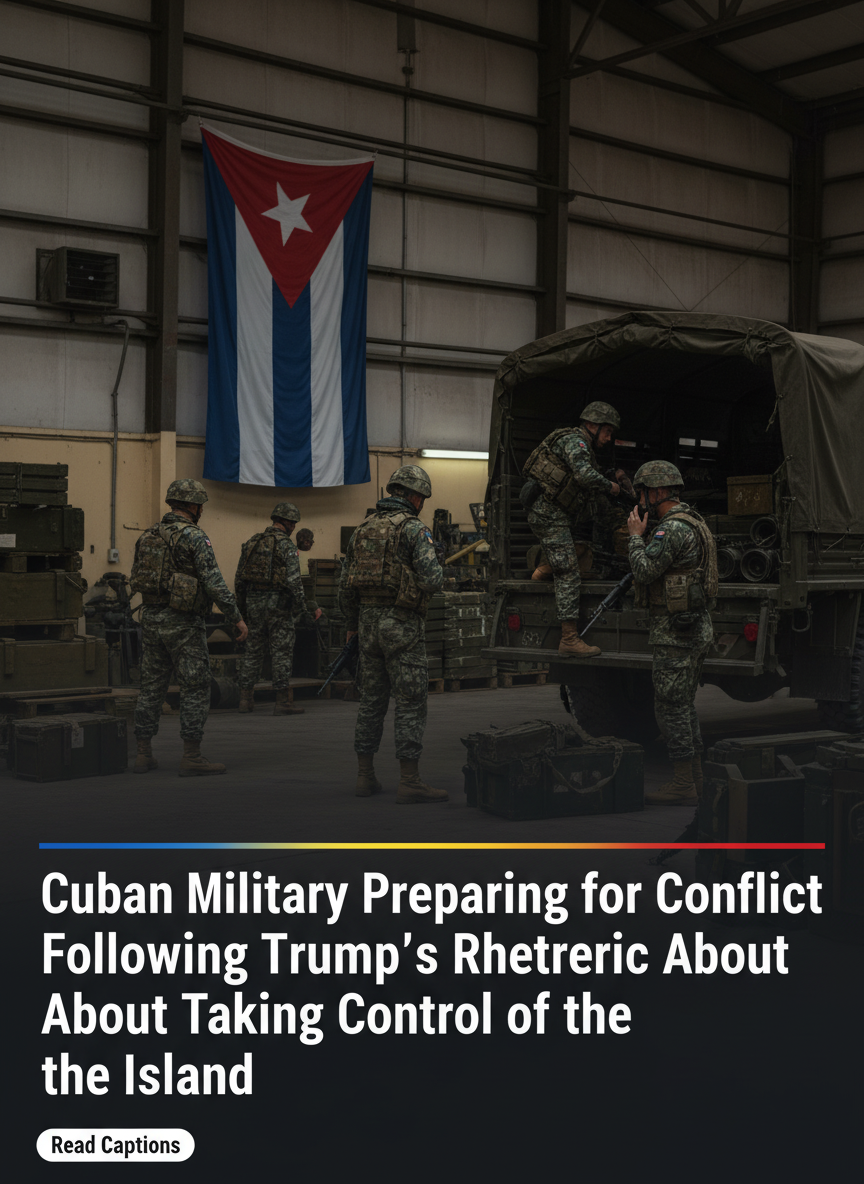
Havana on High Alert: Cuba Mobilizes Military After Trump Floats Plan to ‘Take’ Island
HAVANA — Tension between the United States and Cuba has reached a fever pitch this week following provocative remarks from President Donald Trump regarding the future of the island nation. In a stark response, senior Cuban officials revealed on Sunday that the country’s military is actively “preparing” for potential conflict, marking one of the most significant escalations in rhetoric between the two nations in decades.
Havana Issues a Warning of ‘Possible Aggression’
Appearing on NBC’s Meet the Press, Cuban Deputy Foreign Minister Carlos Fernández de Cossío delivered a pointed warning to Washington. He stated that the island is currently bracing for the “possibility of military aggression” following recent signals from the Trump administration.
“Our military is always prepared and, in fact, it is preparing these days for the possibility of military aggression,” Fernández de Cossío told moderator Kristen Welker. He emphasized that Cuba would be “naive” not to mobilize given current global instability and the specific language coming from the White House. While the minister stressed that Cuba finds “no justification whatsoever” for a conflict, he maintained that the nation is ready to defend its sovereignty at any cost.
Trump’s ‘Honor’ of Taking Cuba
The sudden shift in military posture follows a series of bold foreign policy statements by President Trump. During a recent interview, Trump suggested that he would soon have the “honor” of “taking Cuba… in some form.”
“I think I could do whatever I want with it, to tell you the truth,” Trump remarked, describing the Caribbean island as a “very weakened nation.” The President’s comments have been interpreted by some as a hint toward a more interventionist approach, moving beyond the strict economic embargoes that characterized his previous term and into the realm of direct territorial or political control.
A Defensive Front and Internal Pressure
The reaction from Havana was swift. Cuban President Miguel Díaz-Canel took to social media to signal defiance, writing on X that any “external aggressor will clash with an impregnable resistance.” Despite the defiant stance, Fernández de Cossío reiterated that Cuba remains a “peaceful country” and does not wish to be an enemy of the United States.
The geopolitical friction comes at a time of immense domestic strain for Cuba. The island has been gripped by widespread blackouts and growing unrest, prompting U.S. officials like Senator Marco Rubio to call for “new people in charge.” Meanwhile, reports indicate that Russia has continued to ship fuel to the island using “spoofing” tactics to bypass the U.S. embargo, further complicating the diplomatic landscape and drawing Cuba deeper into the friction between global superpowers.
Conclusion: A Region on Edge
As Havana prepares its defenses and Washington weighs its next move, the prospect of a renewed military or political confrontation looms over the Florida Straits. While the Deputy Foreign Minister expressed a desire for a “friendly and respectful relationship,” the current trajectory suggests a period of heightened volatility. For now, the world watches to see if the rhetoric of “taking” the island translates into a fundamental shift in U.S. foreign policy or remains a high-stakes game of diplomatic brinkmanship.