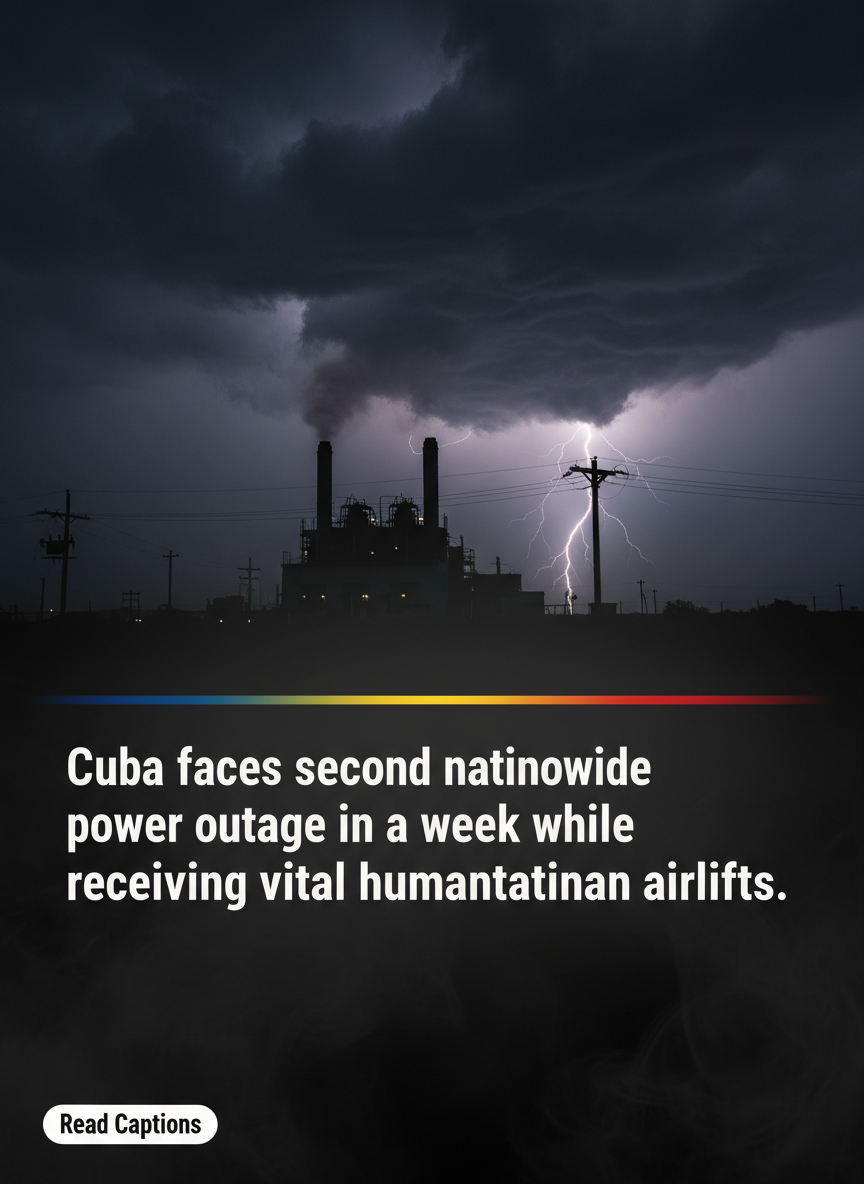
Darkness Deepens: Cuba Gripped by Second Nationwide Power Outage in Less Than a Week
HAVANA — For the second time in less than seven days, the island of Cuba has been plunged into a total nationwide blackout, leaving millions of residents without electricity and paralyzing an already fragile infrastructure. The latest collapse of the national electrical grid underscores a deepening energy crisis that has pushed the Caribbean nation to its breaking point.
The outage, which occurred late this week, follows a similar total grid failure just days prior. While government officials and electrical engineers worked feverishly to restore service, many provinces remained in the dark for hours, with some areas reporting only intermittent patches of power. The recurring failures have brought daily life to a standstill, affecting everything from water pumping stations to food preservation and hospital operations.
A Systemic Collapse
The Cuban government has attributed the instability to several compounding factors: aging thermoelectric plants that have gone decades without proper maintenance, a severe shortage of fuel to power those plants, and the lingering damage from recent hurricanes. The country’s energy infrastructure, largely built during the Soviet era, is reportedly operating far beyond its intended lifespan.
President Miguel Díaz-Canel has frequently blamed the long-standing United States trade embargo for the crisis, arguing that financial restrictions prevent the island from purchasing necessary spare parts and fuel. However, critics and energy experts point toward systemic economic mismanagement and a lack of investment in renewable alternatives as the primary drivers of the current collapse.
Humanitarian Aid Takes Flight
As the island struggles to keep the lights on, the international community has begun to respond to the mounting humanitarian risks. On Friday, the first of several planned aid flights arrived in Cuba, carrying essential supplies to help the population weather the crisis.
Humanitarian organizations have prioritized the delivery of food and medicine—items that are increasingly scarce and difficult to store without reliable refrigeration. Notably, the shipment also included solar panels and portable energy solutions. These are intended to provide decentralized power to critical facilities like community clinics and food distribution centers, offering a glimmer of hope for a more resilient energy future.
The Toll on the Cuban People
For the average Cuban citizen, the “zero-power” state has become an exhausting reality. “It is not just the heat or the lack of light,” said one Havana resident. “It is the uncertainty. You don’t know if the food you managed to buy today will be spoiled by tomorrow morning.”
The frequency of these outages has sparked rare public displays of frustration in various provinces. While the government has called for “serenity and confidence,” the repeated failure of the grid to hold a charge after restoration attempts has strained the public’s patience and raised questions about the long-term viability of the current energy strategy.
Looking Ahead
While the arrival of international aid provides temporary relief, the path to a stable power grid remains long and uncertain. Engineers continue to monitor the synchronized system, but the threat of a third blackout remains high as the grid remains in a “weak and sensitive” state.
As the humanitarian airlift continues through the weekend, the focus remains on immediate survival. However, the recurring darkness serves as a stark reminder that without significant structural overhauls and a steady supply of fuel, the island may continue to find itself caught between a failing past and a precarious future.