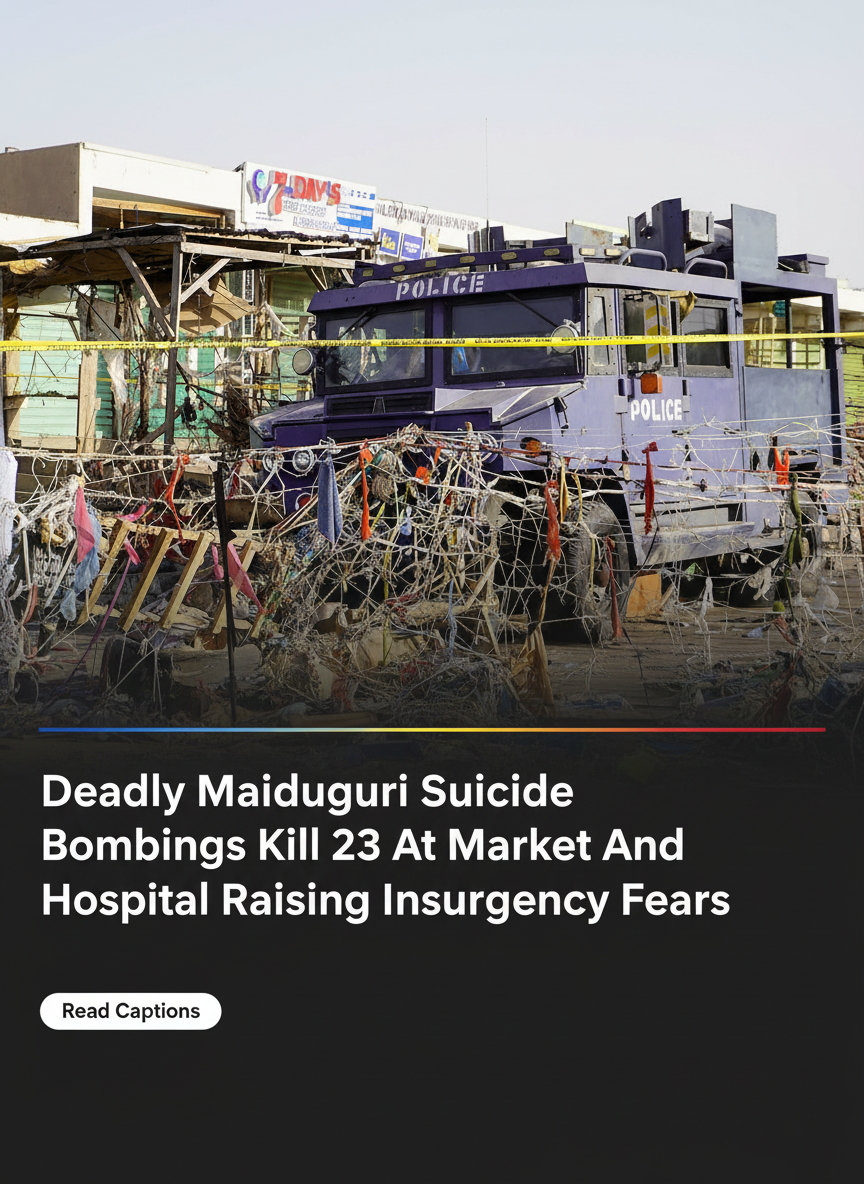
Terror Returns to Maiduguri: Deadly Blasts at Market and Hospital Spark Fears of Renewed Insurgency
MAIDUGURI, Nigeria — A wave of coordinated suicide bombings ripped through the city of Maiduguri on Monday night, killing at least 23 people and leaving more than 100 others wounded. The dual attacks, which targeted a crowded marketplace and a local hospital, have reignited fears that the extremist group Boko Haram is launching a fresh, deadly offensive in Nigeria’s volatile northeast.
A Night of Chaos and Carnage
The explosions occurred in quick succession as residents were finishing their daily business. The first blast struck a bustling market area, where traders and shoppers were gathered in the evening cool. Witnesses described a scene of total devastation, with the force of the explosion shattering stalls and leaving the ground littered with debris and the remains of victims.
Shortly after the market attack, a second suicide bomber detonated explosives at a nearby hospital. The targeting of a medical facility—a place of sanctuary and healing—has sent shockwaves through the community. Emergency responders, already overwhelmed by the casualties from the market, found themselves rushing to their own workplace to treat colleagues and patients caught in the crossfire.
Rising Death Toll and Strained Resources
Local health officials confirmed on Tuesday morning that the death toll has reached at least 23, though they warned that the number could rise as several of the 100-plus injured remain in critical condition. “The sheer volume of trauma cases has pushed our surgical teams to the brink,” said one medical official, speaking on the condition of anonymity. “We are dealing with shrapnel wounds, severe burns, and the psychological trauma of an attack on our own doorstep.”
The Shadow of Boko Haram
While no group has officially claimed responsibility for the carnage, the tactics bear the unmistakable hallmarks of Boko Haram. The insurgent group has plagued the Lake Chad Basin for over a decade, utilizing suicide bombers—often coerced women or children—to maximize civilian casualties in “soft targets” like markets, mosques, and schools.
In recent years, the Nigerian government and military have frequently claimed that the group is “technically defeated” or in retreat. However, Monday’s coordinated strikes suggest a sophisticated level of planning and a persistent ability to infiltrate high-security urban centers. Analysts suggest that the group may be attempting to reassert its dominance following internal leadership disputes and pressure from the rival Islamic State West Africa Province (ISWAP).
Fears of a “Renewed Insurgency”
The timing and nature of the attacks have raised alarms among security experts and international observers. For the residents of Maiduguri, the provincial capital of Borno State, the blasts are a grim reminder of the height of the insurgency when such attacks were a near-daily occurrence.
“This is a massive setback,” said security analyst Dr. Emeka Umeagbalasi. “Targeting a hospital is a strategic move to spread maximum terror. It tells the population that nowhere is safe—not even where you go to be saved. If the government does not respond with a more robust intelligence-led strategy, we could be looking at a bloody new chapter in this conflict.”
Government Response and Path Forward
Presidential spokespeople and regional leaders have condemned the attacks, vowing to bring the perpetrators to justice and increase security patrols in the region. However, for the families currently burying their loved ones in Maiduguri, promises of security ring hollow against the backdrop of renewed violence.
As the city enters a period of mourning, the international community continues to monitor the situation closely. The resurgence of large-scale suicide bombings in Nigeria’s northeast threatens not only regional stability but also the ongoing humanitarian efforts to support millions of internally displaced persons who have already fled the horrors of Boko Haram’s decade-long campaign.