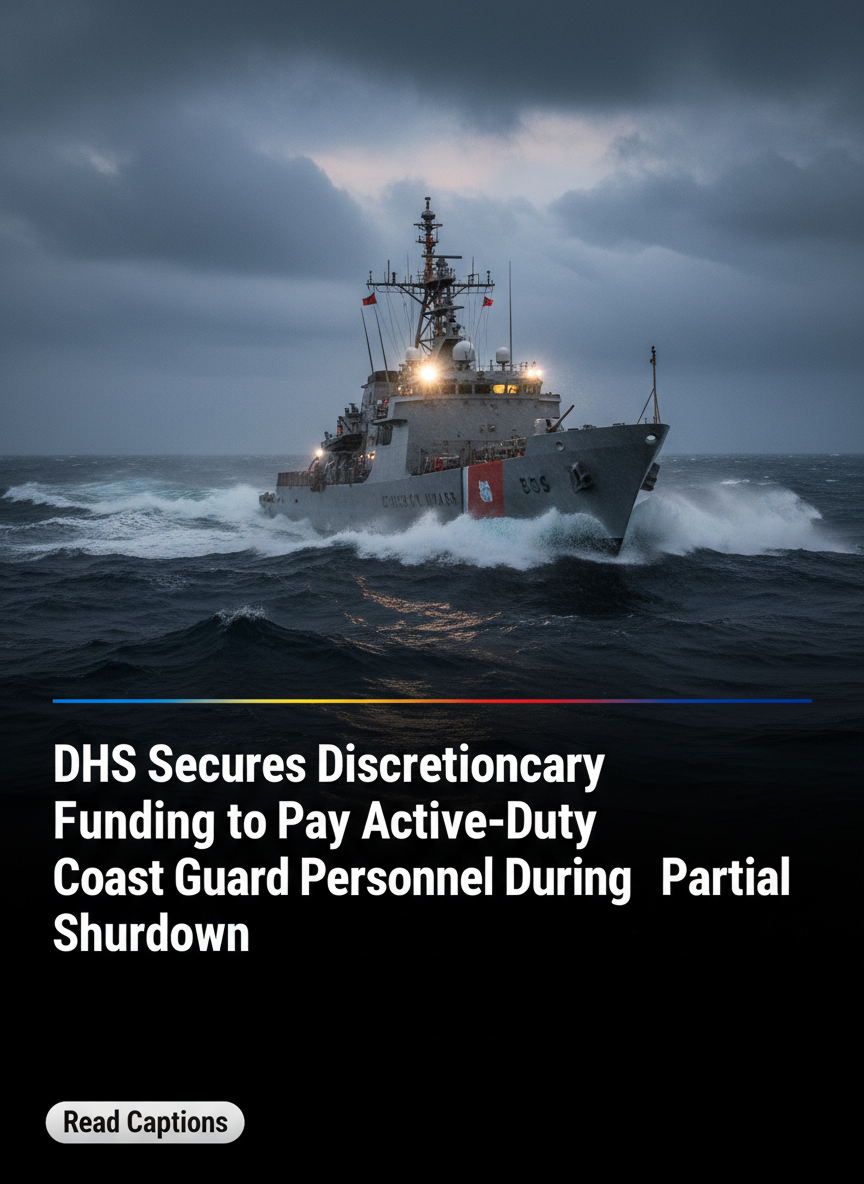
Coast Guard Pay Secured: DHS Utilizes Discretionary Funds to Support Service Members Amid Shutdown
By Staff Reporter | Published October 2023
In a rare move aimed at maintaining national security and domestic stability, the Department of Homeland Security (DHS) has announced that it will continue to pay active-duty U.S. Coast Guard personnel despite the ongoing partial government shutdown. The decision provides a temporary reprieve for approximately 42,000 service members who faced the prospect of ringing in the new year without a paycheck.
Finding a Way Forward
While the majority of federal agencies impacted by the funding lapse have been forced to furlough workers or require “essential” staff to work without immediate pay, DHS leadership identified a unique fiscal solution. By tapping into “unobligated balances” and discretionary funding sources, the department was able to authorize the December 31st salary payments for military members of the Coast Guard.
The Coast Guard occupies a unique position within the U.S. Armed Forces. Unlike the Army, Navy, Air Force, and Marine Corps, which fall under the Department of Defense (DoD), the Coast Guard operates under DHS. This distinction often leaves its members vulnerable during DHS funding disputes, as they are typically not covered by the same military appropriation bills that protect the other branches.
Relief and Disparity
The announcement brought significant relief to Coast Guard families across the nation. Vice Admiral Daniel Abel, the Coast Guard’s Deputy Commandant for Operations, expressed the department’s commitment to its personnel, noting that leadership worked around the clock to ensure those protecting the nation’s borders and waterways remained compensated.
However, the financial bridge does not extend to everyone. While active-duty military personnel will see their checks, nearly 8,500 civilian employees within the Coast Guard remain in a state of limbo. These workers are either furloughed or working without pay, highlighting the fragmented nature of federal funding during a partial shutdown.
A Temporary Fix for a Long-Term Problem
Political analysts warn that while the use of discretionary funds solves the immediate crisis for the end-of-year pay cycle, it is not a permanent solution. Should the government shutdown extend well into the coming month, DHS may exhaust the specific accounts used to facilitate these payments, putting future checks for service members back at risk.
The ongoing stalemate in Washington continues to center on border security and appropriations, with no clear end in sight. The Coast Guard’s situation has become a focal point for advocates who argue that those performing high-risk national security duties should never have their livelihoods used as leverage in political negotiations.
Conclusion
As the partial shutdown persists, the DHS maneuver serves as a testament to the department’s prioritization of its military mission. For now, the men and women of the Coast Guard can focus on their duties—ranging from search and rescue to drug interdiction—without the immediate shadow of financial instability. Nevertheless, the eyes of the service remain fixed on the Capitol, awaiting a broader legislative resolution that ensures long-term stability for all federal employees.