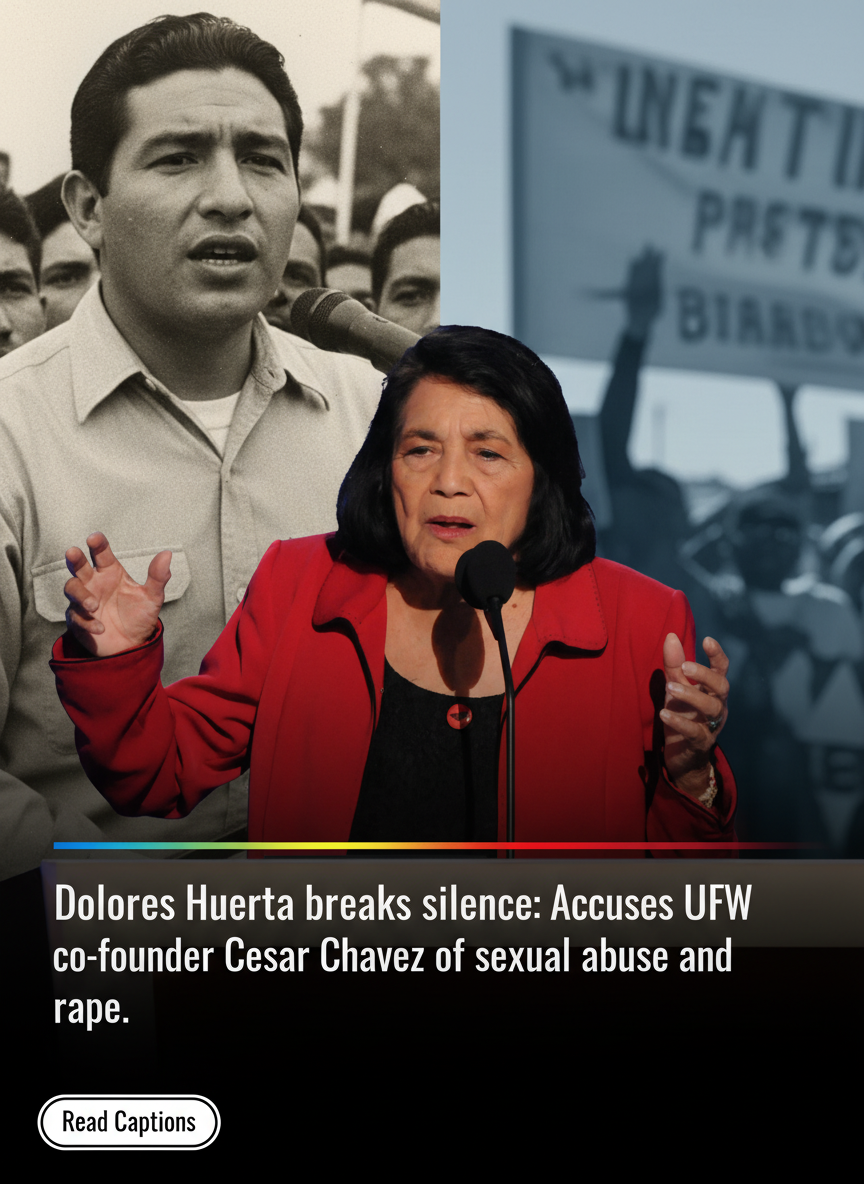
‘My Silence Ends Here’: Dolores Huerta Accuses Civil Rights Icon Cesar Chavez of Sexual Abuse
LOS ANGELES — In a revelation that has sent shockwaves through the American labor movement and the Chicano community, Dolores Huerta, the legendary co-founder of the United Farm Workers (UFW), has come forward with harrowing allegations of sexual violence against her long-time partner in activism, Cesar Chavez.
Huerta, who worked alongside Chavez for decades to secure basic rights for agricultural laborers, broke her decades-long silence on Wednesday, alleging that Chavez raped her on multiple occasions and that she became pregnant by him twice as a result of the abuse. The allegations, detailed in a bombshell report, threaten to permanently alter the legacy of one of the 20th century’s most revered civil rights figures.
A Legacy Under Scrutiny
For over half a century, Chavez and Huerta were viewed as the inseparable “dynamic duo” of the labor rights movement. Together, they founded the National Farm Workers Association—later the UFW—and led historic strikes and boycotts that changed the face of American labor. However, Huerta now describes a dark reality behind the public image of solidarity and non-violence.
“My silence ends here,” Huerta stated in an emotional disclosure. “For years, I protected the movement. I protected the symbol of the struggle because I believed the cause was greater than my own pain. But justice cannot be built on a foundation of secrets and trauma.”
According to the accounts provided, the alleged abuse occurred during the height of the UFW’s influence. Huerta claims that the power dynamics within the organization made it impossible for her to speak out at the time, fearing that exposing Chavez would dismantle the progress made for thousands of farmworkers across the country.
The Impact of the Allegations
The details of the pregnancies add a deeply personal layer to the controversy. Huerta alleges that she was forced to navigate the physical and emotional consequences of the assaults while maintaining her role as a public leader and negotiator. The revelation has prompted an immediate re-evaluation of Chavez’s personal conduct among historians and activists alike.
Chavez, who died in 1993, has long been a candidate for secular sainthood in the United States, with schools, streets, and parks named in his honor. In recent years, his legacy had already begun to face scrutiny regarding his management style and stances on immigration, but these new allegations of sexual violence represent a far more severe challenge to his historical standing.
Reactions from the Movement
The United Farm Workers and various advocacy groups have expressed profound shock at the news. While many current leaders have reaffirmed their commitment to the work Huerta and Chavez started, there is a growing call for a transparent reckoning with the movement’s past.
“Dolores Huerta is a hero who has given everything to the working class,” said one labor historian. “If her story tells us anything, it’s that even our most celebrated movements can harbor deep-seated abuse. This is a moment of painful, but necessary, accountability.”
Conclusion
As the “Me Too” movement continues to demand accountability from powerful figures, even those long deceased, Huerta’s courage in coming forward serves as a stark reminder of the hidden costs of activism. While the labor reforms Chavez helped spark remain a cornerstone of American history, the man himself now stands at the center of a different, more somber conversation regarding power, consent, and the silence required to maintain a public myth.
For Huerta, the decision to speak is not about dismantling the UFW’s work, but about personal liberation. “The truth does not diminish the strike or the boycott,” she said. “But it must finally be told.”