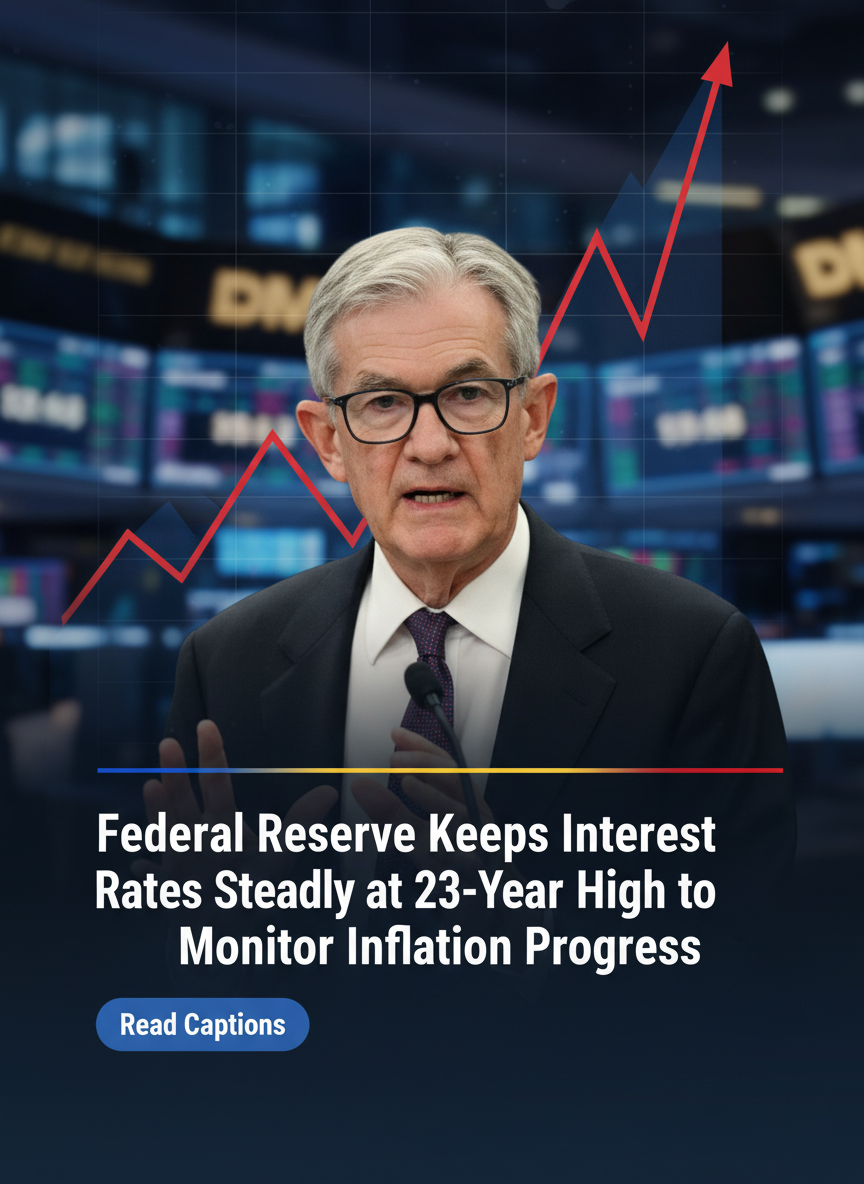
Federal Reserve Holds Interest Rates Steady: A Strategic Pause in the War on Inflation
By Financial Desk News | Published March 18, 2024
In a move that has been closely watched by investors, homeowners, and economists alike, the Federal Reserve announced Wednesday that it will maintain its benchmark interest rate at its current level. This decision marks a continued period of observation for the central bank as it navigates the complex path of cooling inflation without tipping the U.S. economy into a recession.
The Federal Open Market Committee (FOMC) concluded its two-day policy meeting by keeping the federal funds rate in the range of 5.25% to 5.50%. This marks the fifth consecutive meeting where the Fed has chosen to hold rates steady, following a historic series of hikes that began in early 2022.
The “Wait-and-See” Approach
The central bank’s decision reflects a cautious optimism. While inflation has significantly retreated from its 40-year high seen in mid-2022, it remains stubbornly above the Fed’s long-term target of 2%. By holding rates steady, Chair Jerome Powell and the FOMC are signaling that they need more “confidence” that inflation is on a sustainable downward trajectory before they begin the process of lowering borrowing costs.
“The Committee does not expect it will be appropriate to reduce the target range until it has gained greater confidence that inflation is moving sustainably toward 2 percent,” the Fed stated in its official release. This language suggests that while the era of rate hikes may be over, the era of rate cuts is not yet upon us.
Economic Resilience and the Labor Market
One of the primary reasons the Fed has been able to maintain these elevated rates without causing an economic collapse is the surprising resilience of the U.S. labor market. Despite higher borrowing costs for businesses, hiring has remained steady, and the unemployment rate continues to hover near historic lows.
However, Powell noted during his press conference that the central bank is monitoring signs of “softening” in the economy. The goal of a “soft landing”—bringing down inflation without a spike in unemployment—remains the primary objective. The Fed’s latest projections suggest that economic growth remains solid, but the pace of progress toward the 2% inflation goal will likely be “bumpy.”
What This Means for Consumers
For the average American, the Fed’s decision to hold rates steady means that the cost of borrowing will remain high for the foreseeable future. Interest rates on mortgages, credit cards, and auto loans, which are directly or indirectly tied to the federal funds rate, are unlikely to drop significantly in the coming weeks.
- Mortgages: Prospective homebuyers may continue to face rates near the 7% mark, keeping housing affordability a major concern.
- Credit Cards: Consumers carrying balances will continue to see high Annual Percentage Rates (APRs), making debt repayment more expensive.
- Savings: On the flip side, savers will continue to benefit from higher yields on Certificates of Deposit (CDs) and high-yield savings accounts.
Looking Ahead: When Will Cuts Come?
Wall Street is now turning its attention to the latter half of the year. Market analysts are split on whether the first rate cut will occur in June or later in the fall. The Fed’s “dot plot”—a chart showing the interest rate projections of each FOMC member—still suggests that three rate cuts remain a possibility for 2024, though that schedule is entirely dependent on upcoming Consumer Price Index (CPI) and employment data.
As the Federal Reserve maintains its restrictive stance, the global financial community remains on high alert. The “higher for longer” strategy is officially in full effect, and all eyes will be on the next round of economic indicators to see if the Fed’s gamble on patience will pay off.