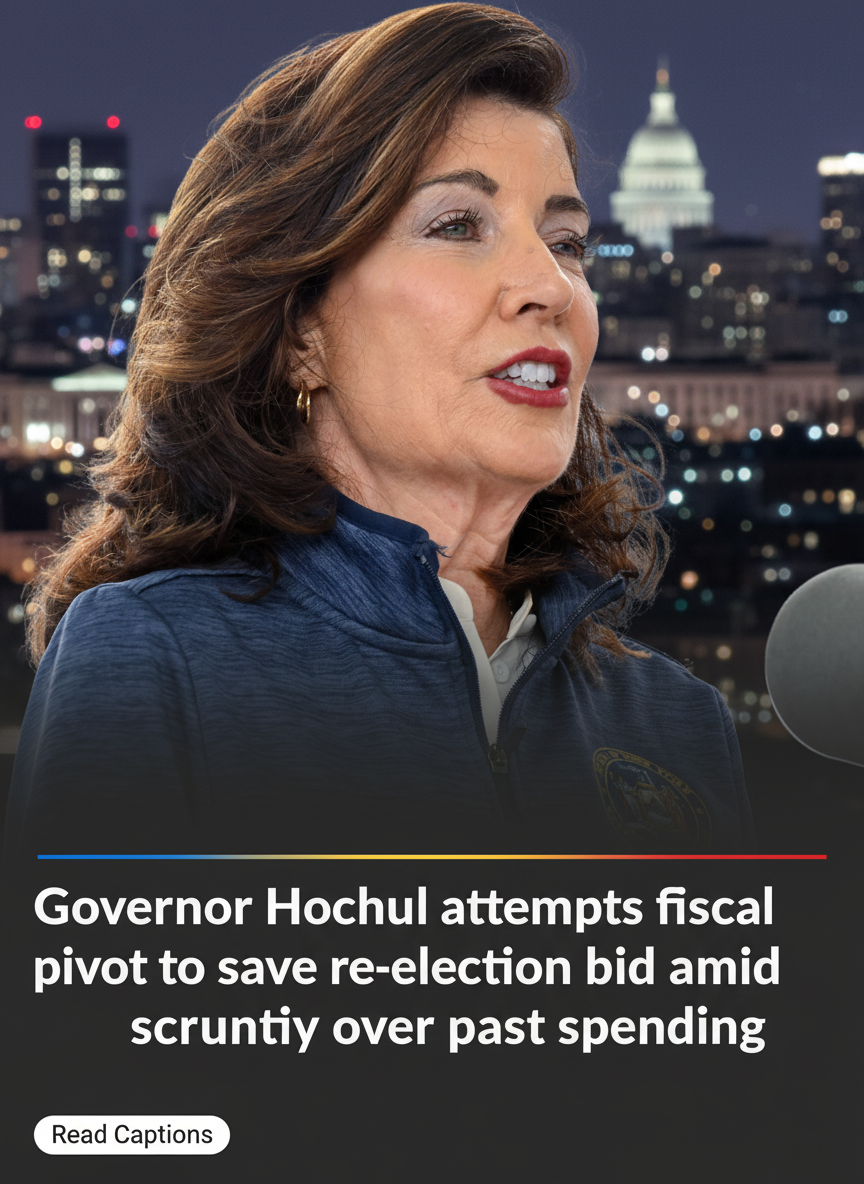
The Hochul Pivot: Can New York’s Governor Outrun Her Spending Record Amid a Rising Left-Wing Challenge?
As Governor Kathy Hochul gears up for a high-stakes re-election campaign, a stark transformation is taking place within the halls of the State Capitol. After years of presiding over historic budget expansions, the Governor is now attempting to reinvent herself as a champion of fiscal discipline—a move analysts suggest is a desperate attempt to neutralize Republican attacks and win over a wary electorate. However, a looming primary challenge from the far left threatens to derail this strategic pivot.
A Strategic Shift Toward Fiscal Austerity
For much of her tenure, Governor Hochul has overseen a period of unprecedented state spending. Under her watch, New York’s budget surged past the $230 billion mark, fueled by pandemic-era federal aid and a political climate that favored aggressive social investment. But as the 2026 election cycle approaches, the political winds in Albany are shifting.
Hochul’s latest budget proposals reflect a new reality. Facing a potential “fiscal cliff” and voter fatigue over high taxes, the Governor has signaled a desire to rein in spending growth, particularly in ballooning sectors like Medicaid. This “New Hochul” is a sharp departure from the executive who once seemed comfortable with the “tax-and-spend” label often applied to New York Democrats by their GOP rivals.
The Mamdani Factor: A Threat from the Left
The Governor’s move toward the center is not without significant risk. Assemblymember Zohran Mamdani, a prominent Democratic Socialist from Queens, has emerged as a potential primary challenger who could exploit the gap between Hochul and the party’s progressive base. Mamdani represents a wing of the party that views fiscal restraint as a betrayal of social equity goals.
Political strategists suggest that Hochul is trapped in a classic political pincer move. If she leans too far into fiscal conservatism to satisfy general election voters, she risks a bruising primary that could drain her resources and alienate the young, progressive voters she needs. Conversely, if she makes concessions to Mamdani and his allies to secure her flank, she hands the Republican opposition a powerful narrative: that she is a captive of the “radical left.”
The Cost of the Crisis: Medicaid and Migrants
Two major issues continue to complicate Hochul’s efforts to balance the books: the ongoing migrant crisis and the skyrocketing costs of Medicaid. The state has committed billions to managing the influx of asylum seekers, a cost that remains a major point of contention for suburban and upstate voters. Simultaneously, Hochul’s efforts to trim Medicaid spending have met fierce resistance from healthcare unions and progressive legislators.
The Governor’s ability to navigate these crises while maintaining her new image of fiscal responsibility will be the defining test of her administration over the next year. Critics argue that her “high-spending past” is a record that cannot be easily erased by a single budget cycle of restraint.
The 2026 Outlook
Republicans have already begun sharpening their messaging, pointing to New York’s high out-migration rates as evidence that the “Hochul era” of spending has made the state unlivable for many. By attempting to moderate her stance now, Hochul is effectively acknowledging that the state’s current fiscal trajectory is a political liability.
Whether voters will embrace this transformation—or whether a challenge from Zohran Mamdani will force her back to the left—remains the central question of New York politics. As the budget battles in Albany intensify, Kathy Hochul is finding that her greatest opponent in 2026 may not be a Republican, but the fiscal legacy she spent years building.
For more updates on New York state politics and the 2026 gubernatorial race, stay tuned to our political desk.