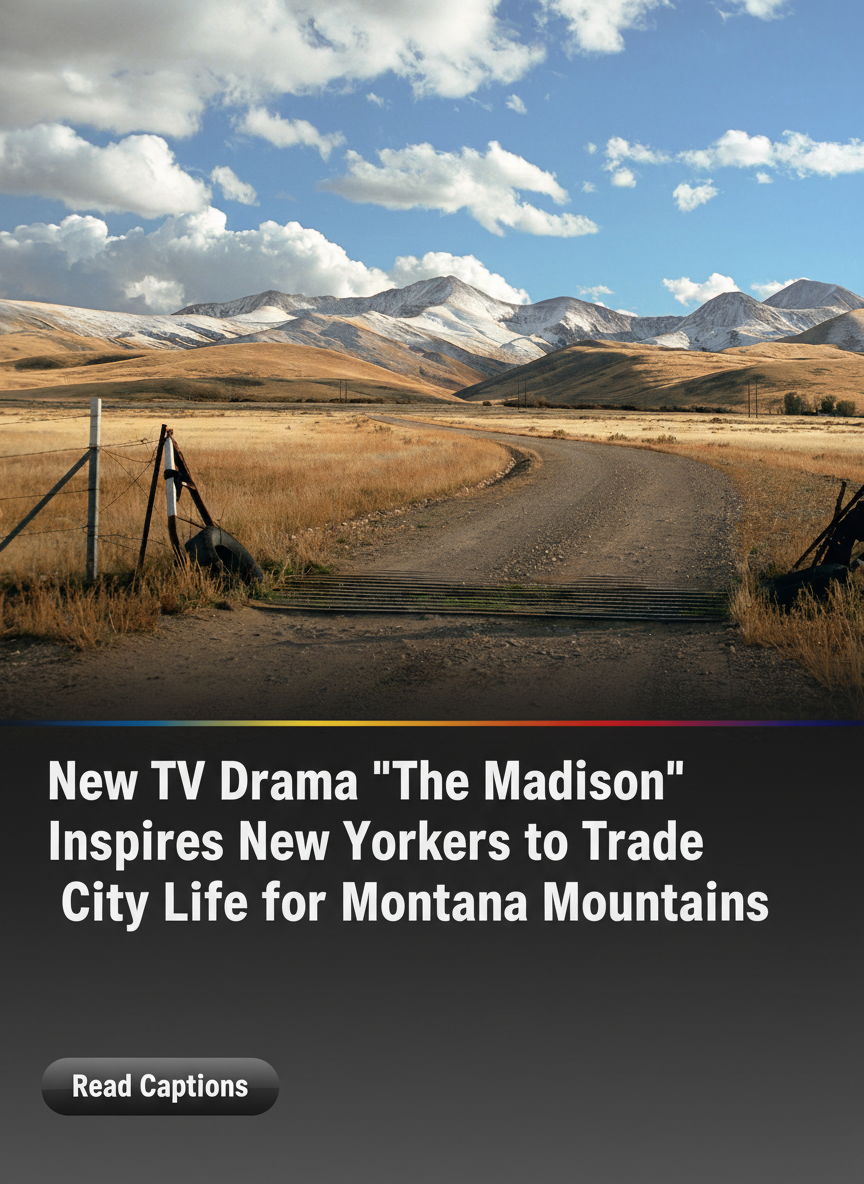
Big Sky Ambition: How ‘The Madison’ Is Fueling a New York Exodus to Montana
For decades, the “New York minute” was the pace the rest of the world tried to match. But lately, the city that never sleeps is looking for a long, quiet nap under a canopy of stars. A new cultural phenomenon is sweeping through the glass towers of Manhattan and the brownstones of Brooklyn, and it isn’t a new fitness craze or a Michelin-starred pop-up. It’s “The Madison.”
Move over, Yellowstone. While the original Kevin Costner-led epic introduced the world to the rugged beauty of the Dutton Ranch, Taylor Sheridan’s latest drama, The Madison, is hitting closer to home for urbanites. The show, which follows a wealthy New York family relocating to the Madison River valley after a personal tragedy, is acting as a glossy, cinematic brochure for a life away from the subway grates and sidewalk traffic.
The “Sheridan Effect” 2.0
Real estate agents in the Big Sky State are reporting a surge in inquiries from the 212 and 917 area codes. What was once a trickle of interest during the “Yellowstone” boom has turned into a flood, as The Madison presents a narrative that New Yorkers find deeply relatable: the fish-out-of-water transition from high-society galas to high-altitude ranches.
“We’ve seen this before, but this time it feels different,” says local Montana broker Sarah Jenkins. “With Yellowstone, people wanted to be cowboys. With The Madison, they want to be themselves—just in a much prettier, much quieter place. They see Michelle Pfeiffer’s character navigating the wilderness and think, ‘If she can trade her heels for hiking boots, so can I.’”
The Cost of the Dream
The allure isn’t just about the scenery; it’s about the space. In a city where a two-bedroom apartment can cost $5 million, the prospect of owning 50 acres of pristine riverfront property for the same price is proving irresistible. However, the influx of New York capital is causing a stir in local markets. Towns like Ennis and Bozeman are seeing property values soar, leading to a “Manhattanization” of the mountains that has some locals wary.
For New Yorkers like Julianne Vance, a corporate lawyer who recently closed on a home near the Madison River, the decision was sparked by a Sunday night viewing session. “You watch the show and you see that crisp morning light on the water, and then you look out your window at a brick wall in Chelsea,” Vance said. “The show gave us the permission to admit we were tired of the grind.”
Reality vs. Television
Despite the romanticized portrayal on screen, experts warn that the transition isn’t always as seamless as a scripted montage. The harsh Montana winters, the isolation from 24-hour amenities, and the cultural shift from a fast-paced metropolis to a community-focused rural town can be jarring.
“There’s no DoorDash in the Madison Valley at 2:00 AM,” notes lifestyle consultant Mark Thorne. “In the show, the drama is about family secrets. In real life, the drama is often about a frozen pipe or a 40-minute drive to the nearest grocery store. But for many New Yorkers right now, that’s a trade-off they are more than willing to make.”
Conclusion: A New Frontier
As The Madison continues to dominate the ratings, the “Montana Fever” shows no signs of breaking. Whether this is a fleeting trend driven by peak television or a permanent shift in how Americans view urban living remains to be seen. For now, the trail from JFK to Bozeman Yellowstone International Airport is well-traveled, as a new generation of pioneers trades their MetroCards for mountain views.
The message from the mountains is clear: The Big Apple is great, but the Big Sky is calling.