Avian Flu Fears Grip Hamptons as Hundreds of Geese Found Dead in Southampton Pond
SOUTHAMPTON, NY — The serene, high-end landscape of the Hamptons has been jarred by a grim environmental crisis this week. Hundreds of Canada geese have been discovered dead around a prominent Southampton pond, triggering an emergency response from local officials and sparking deep concerns over a potential surge in highly pathogenic avian influenza (HPAI).
A Grim Discovery in Paradise
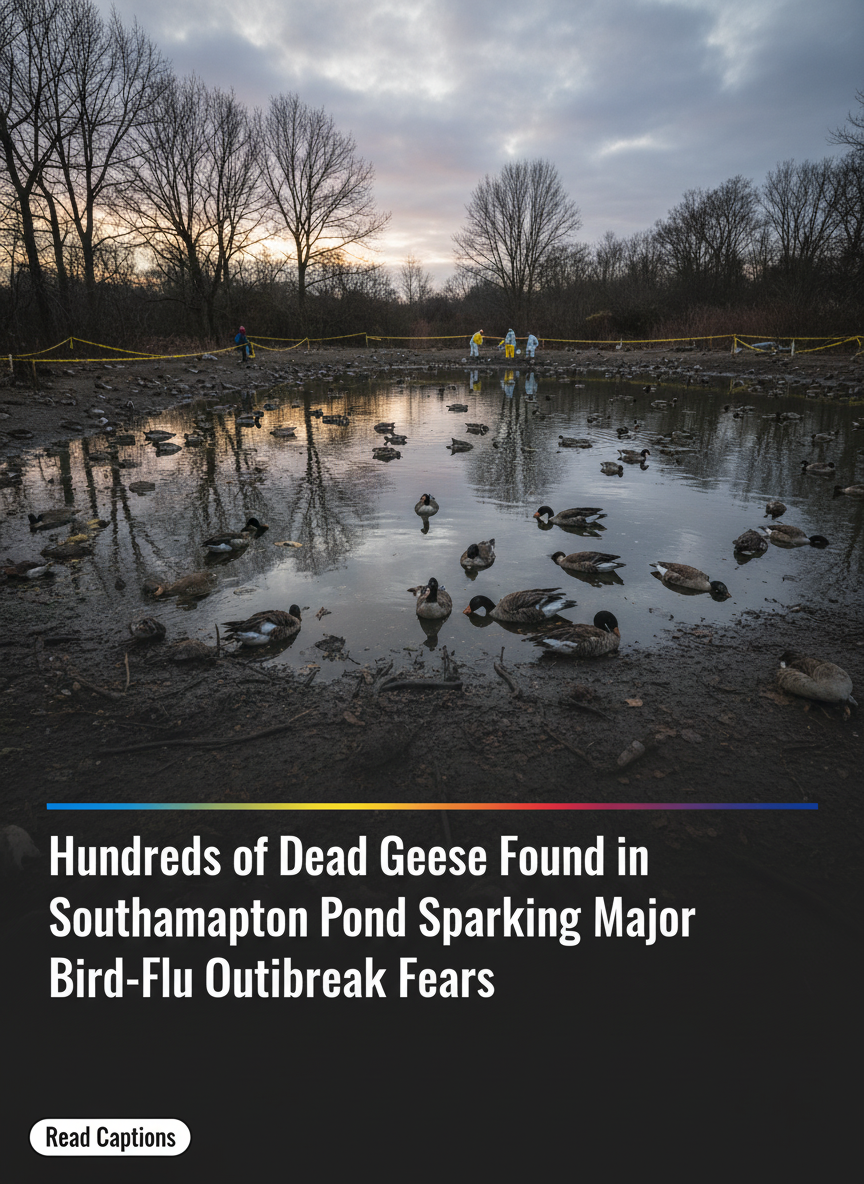
What is typically a scenic vista for local residents and tourists has turned into a site of intensive cleanup operations. Over the past several days, the shores of a picturesque pond in Southampton have become littered with the carcasses of hundreds of geese. The scale of the die-off is unprecedented for the area, prompting the Town of Southampton to authorize an immediate emergency cleanup to remove the remains and mitigate further risks.
Workers in protective hazmat suits were seen patrolling the shoreline over the weekend, carefully bagging the birds. Local residents reported a “disturbing and heartbreaking” scene, noting that the sheer volume of dead wildlife has transformed the local landmark into a restricted zone.
Bird Flu Suspected as Primary Cause
While official lab results from the New York State Department of Environmental Conservation (DEC) are still pending, environmental experts and local authorities are pointing toward a rampant outbreak of bird flu. The H5N1 strain, which has plagued various parts of the United States over the last few years, is known for its high mortality rate among waterfowl and its ability to spread rapidly through migratory populations.
“The speed and concentration of these deaths are classic indicators of an avian influenza outbreak,” said a regional wildlife biologist. “When you have hundreds of birds dying in a single localized area over such a short period, it strongly suggests a highly contagious pathogen is moving through the flock.”
Public Health and Environmental Safety
The sudden die-off has raised alarms beyond the local bird population. Health officials are urging the public to exercise extreme caution. Residents have been advised to keep their distance from any sick or dead wildlife and to ensure that domestic pets, particularly dogs, are kept on leashes and away from the water’s edge.
While the risk of transmission to humans remains low, the “spillover” potential of H5N1 into other mammals is a documented concern. Additionally, local farmers and backyard poultry owners in the East End have been put on high alert to tighten biosecurity measures to prevent the virus from reaching domestic flocks, which could lead to devastating economic consequences.
The Path Forward
The Town of Southampton is working in tandem with state environmental and health agencies to monitor the situation. Beyond the immediate cleanup, officials are testing water quality and tracking other local bird populations to see if the die-off is spreading to neighboring ponds or wetlands.
As the community awaits the final necropsy results, the focus remains on containment and public education. For now, the “picturesque” ponds of the Hamptons remain under a shadow of biological concern, serving as a stark reminder of the vulnerability of local ecosystems to global wildlife epidemics.
This is a developing story. Residents who encounter dead wildlife are encouraged to contact local environmental authorities rather than attempting to handle the animals themselves.