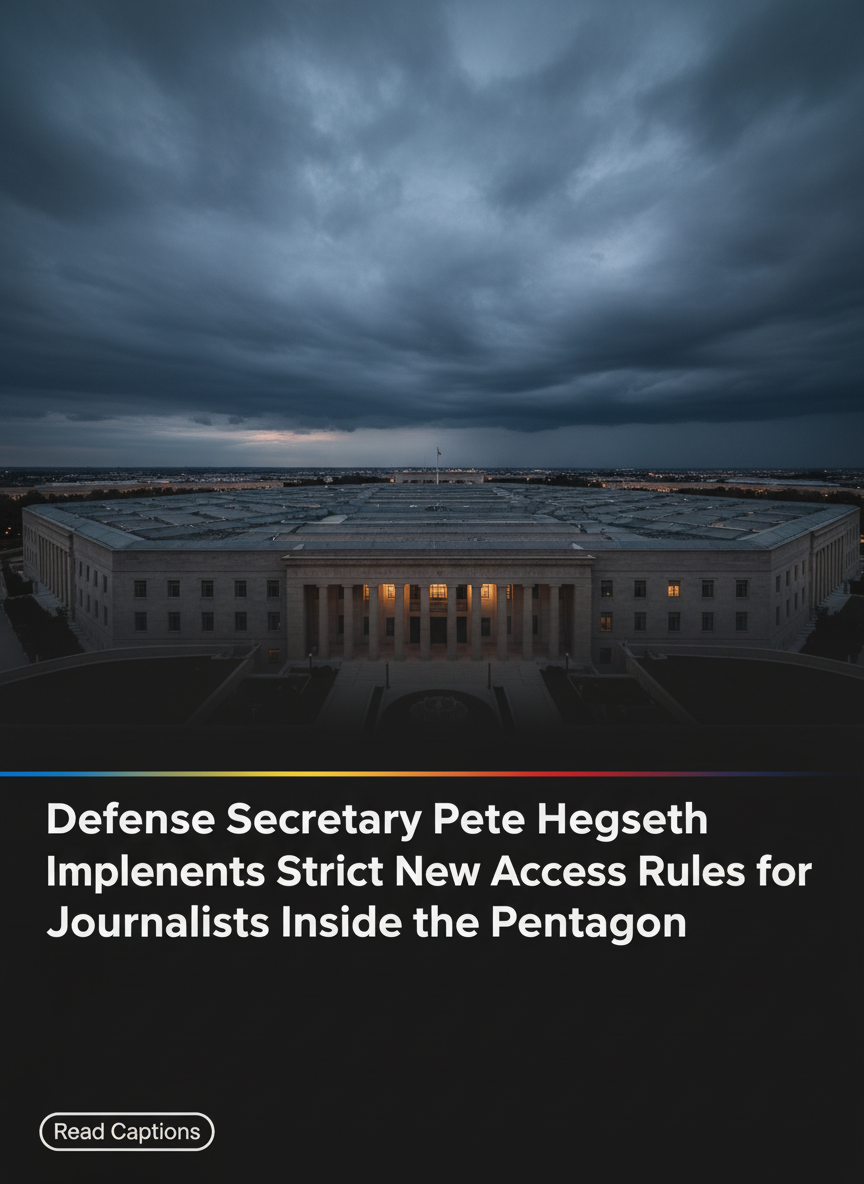
The New Front Line: Inside Pete Hegseth’s Hostile Pentagon Briefing Room
WASHINGTON D.C. — It is Day 13 of America’s sudden, high-stakes war with Iran. By a grim twist of fate, it is also Friday the 13th. Inside the windowless, labyrinthine corridors of the Pentagon, the atmosphere is thick with a mixture of sleep deprivation, high-level tension, and a visible shift in the way the Department of Defense interacts with the public record.
For those tasked with chronicling this conflict, the battlefield starts long before the first drone strike is reported. It begins at 5:00 AM, the hour necessary to clear security checkpoints that have become increasingly draconian under the leadership of Defense Secretary Pete Hegseth. Since his appointment and the subsequent tightening of Department regulations last year, the Pentagon has transformed from a place of managed access to one of strict containment.
The Fortress Mentality
The new reality for the Pentagon press corps is one of total surveillance. Journalists are no longer permitted to navigate the building’s five rings independently; every movement requires a military escort. This includes trips to the restroom and, most agonizingly for the weary press corps, trips to find caffeine. Under Hegseth’s revised protocol, outside beverages are banned, and the “no-escort” policy ensures that if an official guide isn’t available, reporters remain tethered to their seats in the briefing room, staring at empty desks.
The physical restrictions reflect a broader ideological shift. The Secretary has made little secret of his disdain for traditional media outlets, often framing the press not as a component of a functioning democracy, but as an obstacle to military efficiency. This morning’s briefing was less of an information exchange and more of a televised reprimand.
“You’re Not on the Team”
When Secretary Hegseth took the podium at 8:00 AM, he didn’t lead with casualty counts or strategic updates. Instead, he opened with a scolding directed at the seasoned war correspondents occupying the front rows. He questioned the patriotism of those asking for transparency regarding civilian casualties and criticized the “obsession” with international law over tactical success.
In a move that baffled many veteran reporters, the seating chart for this critical wartime briefing appeared to have been intentionally disrupted. Reporters who had never covered a conflict—this writer included—found themselves placed in “prime” seats usually reserved for the deans of the press corps. The message seemed clear: the established hierarchy of the media was being dismantled in favor of an environment where the Secretary could more easily dominate the narrative.
A War of Information
As Hegseth spoke, the delirium of a coffee-less, 5:00 AM start began to set in for many in the room. The Secretary’s rhetoric was sharp, frequently bypassing the specifics of the ongoing strikes in the Persian Gulf to focus on the “weakness” of the previous administration’s military-media relations. To Hegseth, the press is no longer a guest of the Pentagon, but a distraction from the mission at hand.
The “surprise war” with Iran has caught many off guard, but the war on the press has been brewing since Hegseth took office. By stripping away the small dignities of the job—the ability to walk the halls, the access to a cup of coffee, the respect for tenured expertise—the Department of Defense is sending a loud signal about who is in control.
Conclusion: The Cost of Silence
As the briefing concluded and we were marched back out of the building by our escorts, the weight of the moment was palpable. In the middle of a hot war with a major regional power, the flow of information is being restricted more tightly than at any point in modern history. Pete Hegseth isn’t just leading a military campaign; he is leading a cultural one, and the first casualty in the Pentagon’s new briefing room appears to be the transparency that the public relies on most in times of crisis.
For now, the reporters return to their laptops, delirious and thirsty, wondering what Day 14 will bring to a Pentagon that has become as much a fortress against the truth as it is against the enemy.