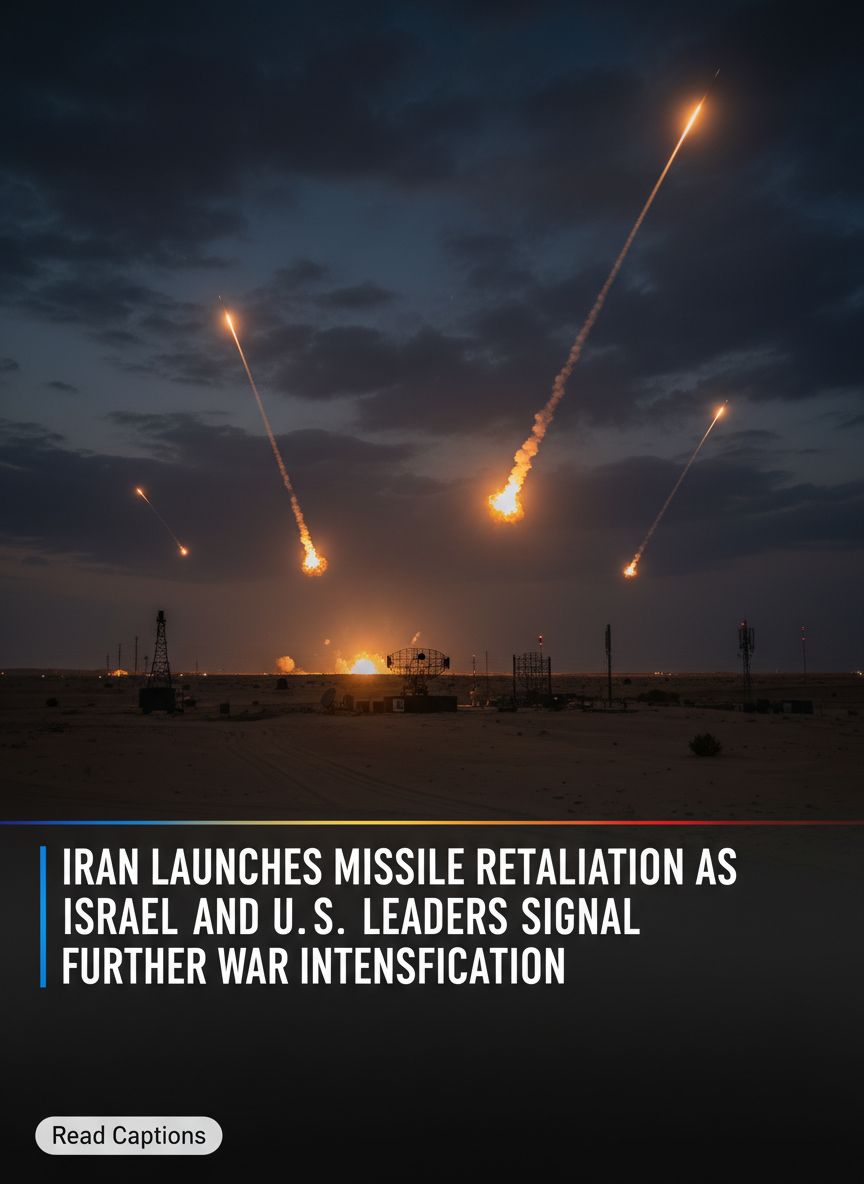
Regional Brinkmanship: Iran Launches Missile Barrage as Israel Vows No Let-up in Conflict
TEHRAN/JERUSALEM — The shadow of a wider regional conflict darkened across the Middle East on Wednesday as Iran launched a significant missile offensive against Israeli interests, marking a dramatic escalation in a war that has now entered its nineteenth day. The retaliatory strikes come as both Israeli Prime Minister Benjamin Netanyahu and U.S. President Donald Trump signal that the military campaign is far from over, despite mounting international calls for restraint.
Iran Strikes Back Following High-Profile Assassinations
Tehran’s decision to “lash out” with ballistic and cruise missiles follows a series of precision strikes attributed to Israel that targeted high-ranking Iranian military officials and proxy leaders. Iranian state media characterized the barrage as a “necessary and proportional response” to what it called Israeli aggression and the violation of its sovereignty. The strikes have once again put the Persian Gulf and the strategic Strait of Hormuz—a vital artery for global energy supplies—on high alert, with shipping companies reporting increased security measures.
Netanyahu: The War is “Still Intensifying”
In a televised address from Tel Aviv, Prime Minister Benjamin Netanyahu remained defiant, dismissing any immediate prospects for a ceasefire. Netanyahu emphasized that the Israeli Defense Forces (IDF) are operating at “maximum capacity” to dismantle threats on multiple fronts. “We are in the midst of a campaign to ensure our survival for generations to come,” Netanyahu stated. “The war is not winding down; it is intensifying. We will continue until every objective is met.”
The Trump Factor and U.S. Coordination
Adding a layer of geopolitical complexity is the stance of the United States. President Donald Trump, maintaining a hardline “maximum pressure” rhetoric, has offered unwavering support for Israel’s offensive. In recent statements, Trump indicated that the U.S. would continue to provide the necessary military and intelligence support to counter Iranian influence in the region. This alignment between Washington and Jerusalem suggests a unified front that leaves little room for the diplomatic de-escalation being sought by European and Arab mediators.
A Region on the Edge
The conflict, now nearly three weeks old, has displaced tens of thousands and sparked a humanitarian crisis that threatens to spill across borders. Military analysts warn that if the cycle of “assassination and retaliation” continues, the risk of a full-scale conventional war between Iran and Israel becomes almost inevitable. The global economy is also feeling the tremor, as oil prices fluctuated sharply following reports of the Iranian missile launches near the Persian Gulf.
Conclusion: No End in Sight
As the sun sets on the nineteenth day of hostilities, the prospect of peace seems more distant than ever. With Iran demonstrating its reach through missile power and the Israel-U.S. alliance doubling down on a total military victory, the Middle East remains a powder keg. The coming days will be critical in determining whether the conflict can be contained or if the world is witnessing the beginning of a transformative and devastating regional war.