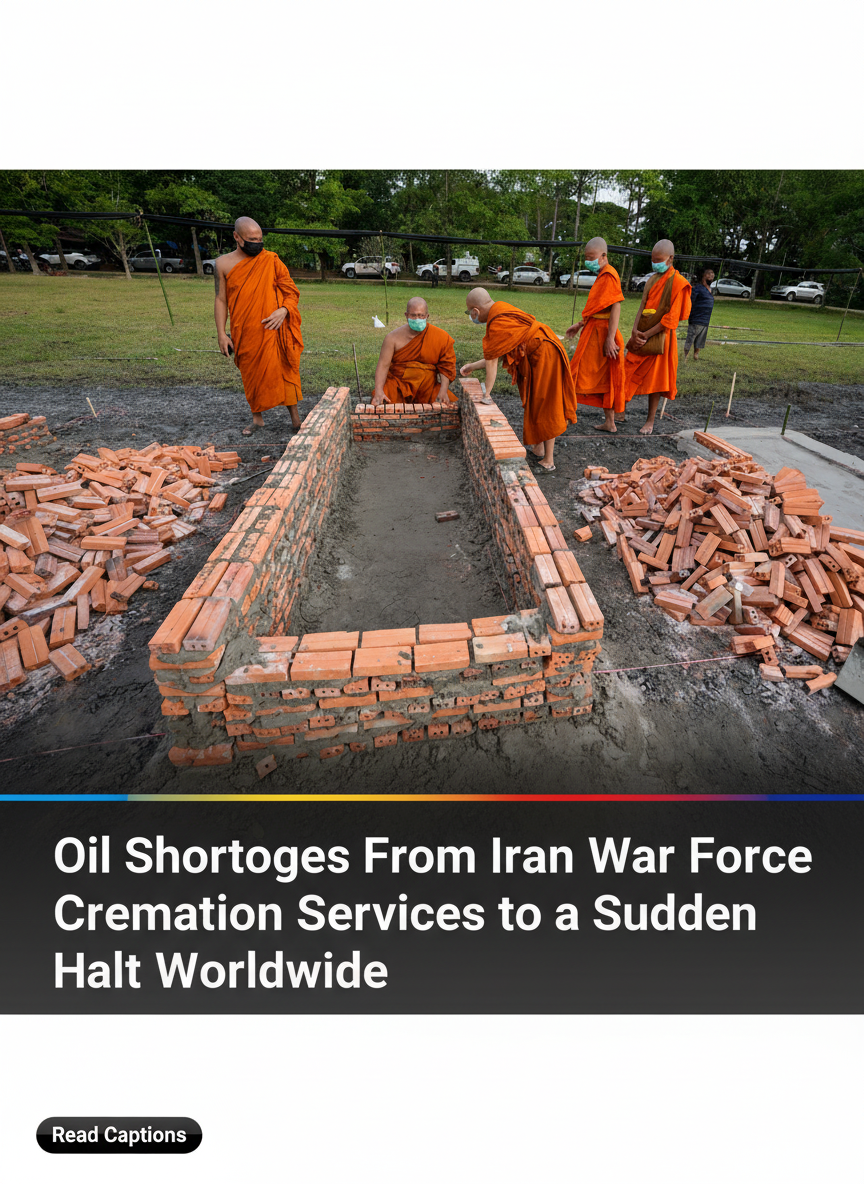
No Rest for the Weary: Global Oil Shortage Forces Crematoriums to Halt Operations Amid Iran Conflict
By Global News Dispatch | Published March 17, 2026
The geopolitical shockwaves of the escalating conflict in Iran have reached a grim and unexpected destination: the funeral industry. As global oil supplies tighten and energy prices soar to record highs, crematoriums across the globe are being forced to extinguish their burners, leaving thousands of grieving families in a state of agonizing limbo.
The energy crisis, sparked by the total disruption of the Strait of Hormuz and targeted strikes on regional oil infrastructure, has sent the price of natural gas and heating oil—essential for the cremation process—beyond the reach of most municipal and private facilities. In many regions, the supply has simply dried up entirely, prioritized for emergency services and military logistics.
‘Never Seen Anything Like This’
For mortuary directors, the current situation is unprecedented. Historically, the funeral industry has been considered “recession-proof,” but the sheer physical requirement of fuel to operate cremation chambers has proven to be an Achilles’ heel.
“We have navigated pandemics and economic collapses, but we have never seen anything like this,” said Arthur Sterling, a funeral director with over 40 years of experience. “Cremation requires a consistent, high-intensity fuel source. Without it, we are effectively paralyzed. We currently have a backlog of 45 families, and we have no timeline to give them.”
The “just-in-time” supply chain for fuel that many suburban crematoriums rely on has collapsed. Facilities that once processed a dozen services a day have been dark for nearly a week, leading to a mounting logistical crisis in morgue capacity.
A Logistical and Humanitarian Nightmare
The suspension of services is creating a ripple effect across the healthcare and death-care sectors. With crematoriums offline, hospital morgues and city coroners are reporting that they are reaching maximum capacity. In some major metropolitan areas, refrigerated trailers—reminiscent of the early days of the COVID-19 pandemic—have once again appeared outside hospitals to store the deceased.
The crisis is also placing an immense financial and emotional burden on families. Traditional burials, which are significantly more expensive than cremations and require available land, are being sought as a desperate alternative. However, even the machinery used for interments—backhoes and transport hearses—is struggling under the weight of fuel rationing and skyrocketing diesel costs.
Alternative Solutions and Environmental Impact
As the “Death-Care Crisis” deepens, some are looking toward alternative methods. “Green burials” and alkaline hydrolysis (often called water cremation) are seeing a surge in inquiries. However, the infrastructure for these methods is not yet scaled to handle the current demand.
Industry analysts warn that even if a ceasefire were reached tomorrow, the energy market’s volatility would likely keep prices high for months. “The energy grid is under such strain that non-essential industrial gas use—which, unfortunately, includes crematoriums in many jurisdictions—is being throttled,” said energy consultant Marcus Thorne. “This isn’t just a supply issue; it’s a priority issue.”
The Search for a Path Forward
Legislators are currently debating whether to classify funeral services as “critical infrastructure” to grant them priority access to fuel reserves. For now, however, the industry remains at the mercy of the conflict in the Middle East.
Until a diplomatic or logistical breakthrough occurs, the dead remain caught in the crossfire of a war for energy. For the families waiting to say their final goodbyes, the shortage of oil has turned a time of mourning into a period of prolonged, frustrating uncertainty. The silence of the crematoriums stands as a haunting reminder of how deeply the modern world—in both life and death—is bound to the flow of oil.