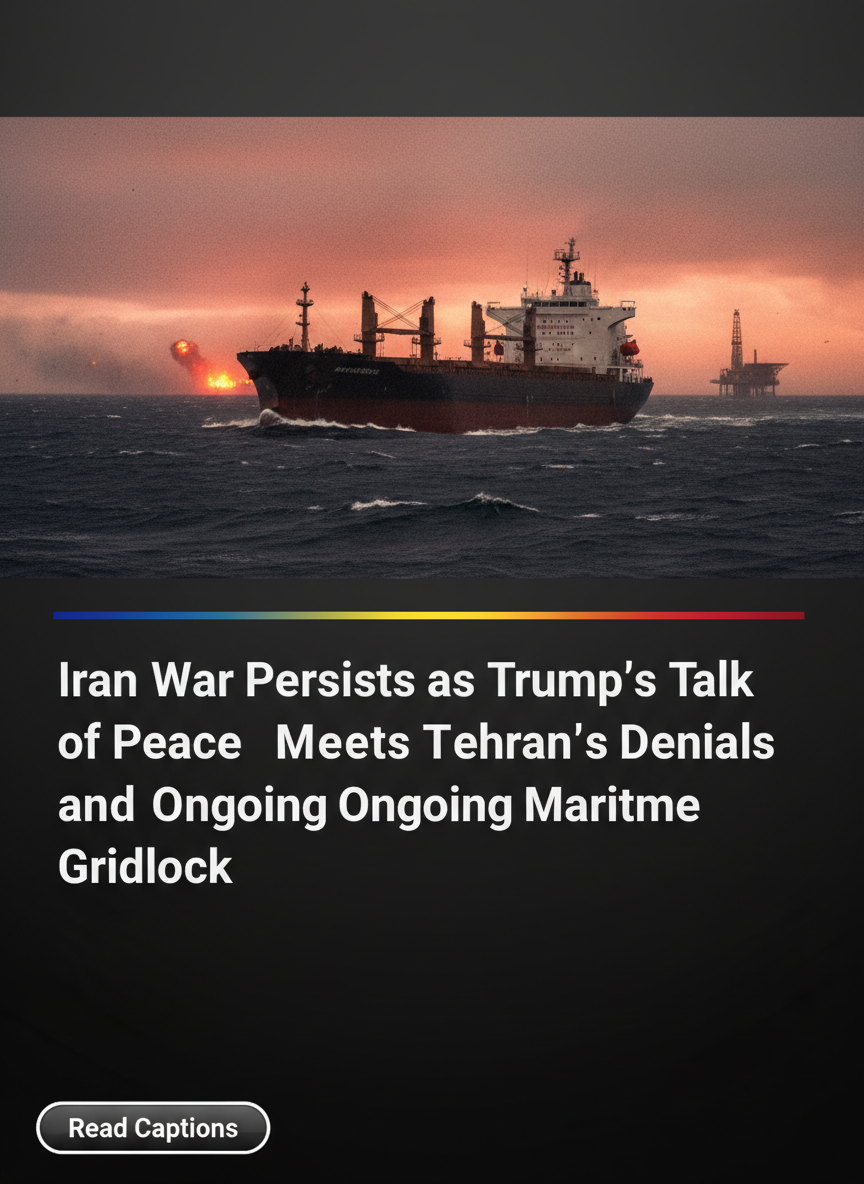
Diplomatic Deadlock: Tehran Rebuffs Trump’s Overtures as Conflict in the Strait of Hormuz Intensifies
WASHINGTON / TEHRAN — The volatile standoff between the United States and Iran reached a new peak of uncertainty this week as President Donald Trump expressed a characteristic optimism regarding potential negotiations—only to be met with a cold dismissal from Iranian leadership. While the rhetoric in Washington suggests a path toward de-escalation, the reality on the ground remains defined by military gridlock and mounting economic anxiety.
Conflicting Signals from the Oval Office and the Ayatollah
In recent statements, President Trump has signaled a willingness to move toward the bargaining table, suggesting that Tehran is “ready to make a deal” to end the crippling economic sanctions and the specter of a broader regional war. Trump’s narrative paints a picture of a regime under pressure, eager to find a diplomatic exit ramp. “They want to talk, they want to see if they can work something out,” Trump told reporters, emphasizing his preference for economic leverage over sustained military intervention.
However, the response from the Islamic Republic has been swift and contradictory. Tehran’s foreign ministry issued a stern denial, asserting that no secret or official talks are currently underway. Iranian officials characterized Trump’s optimism as a “media ploy” intended to project strength while the U.S. remains mired in a complex geopolitical trap. This fundamental disconnect highlights a widening gap between American diplomatic strategy and Iranian domestic resolve.
The Strait of Hormuz: A Global Chokepoint Under Siege
While the war of words escalates in the halls of power, the physical conflict continues to choke global trade routes. The Strait of Hormuz, a narrow waterway vital for the transport of one-fifth of the world’s petroleum, remains in a state of high-alert gridlock. Recent skirmishes involving maritime drones and missile exchanges between Iranian-backed forces and regional actors have forced major shipping conglomerates to reroute vessels or halt transit altogether.
Military analysts warn that the “shadow war” at sea is rapidly evolving into a war of attrition. With Israel continuing its targeted strikes against proxy infrastructure and Tehran doubling down on its defensive posture, the shipping lanes have become the primary barometer for the conflict’s intensity. The resulting logistical delays are creating a “perpetual state of crisis” for international logistics.
Markets Bracing for Impact: Oil and Stocks React
The uncertainty has sent shockwaves through global financial centers. Crude oil prices saw a sharp uptick following the latest reports of naval confrontations, as traders priced in the risk of a total closure of the Persian Gulf. Energy analysts suggest that while the U.S. has increased domestic production, a sustained disruption in the Middle East could push gas prices to historic highs, complicating the domestic economic outlook for the White House.
On Wall Street, stock indices showed significant volatility. Defense sector shares saw modest gains, but broader retail and manufacturing sectors dipped as investors fretted over the inflationary pressure of rising energy costs. The “wait-and-see” approach from the Federal Reserve has only added to the market’s skittishness, as the possibility of a full-scale conflict looms over economic forecasts.
A Fragile Future
As the “Iran war” grinds on, the international community remains caught between the hope for a “Grand Bargain” and the fear of a miscalculation that could ignite a larger conflagration. For now, the conflicting messages from Washington and Tehran suggest that any breakthrough remains a distant prospect. Without a verifiable diplomatic channel, the Strait of Hormuz will likely remain the world’s most dangerous flashpoint, keeping both global markets and military commanders on edge.
Reporting by International Correspondents.