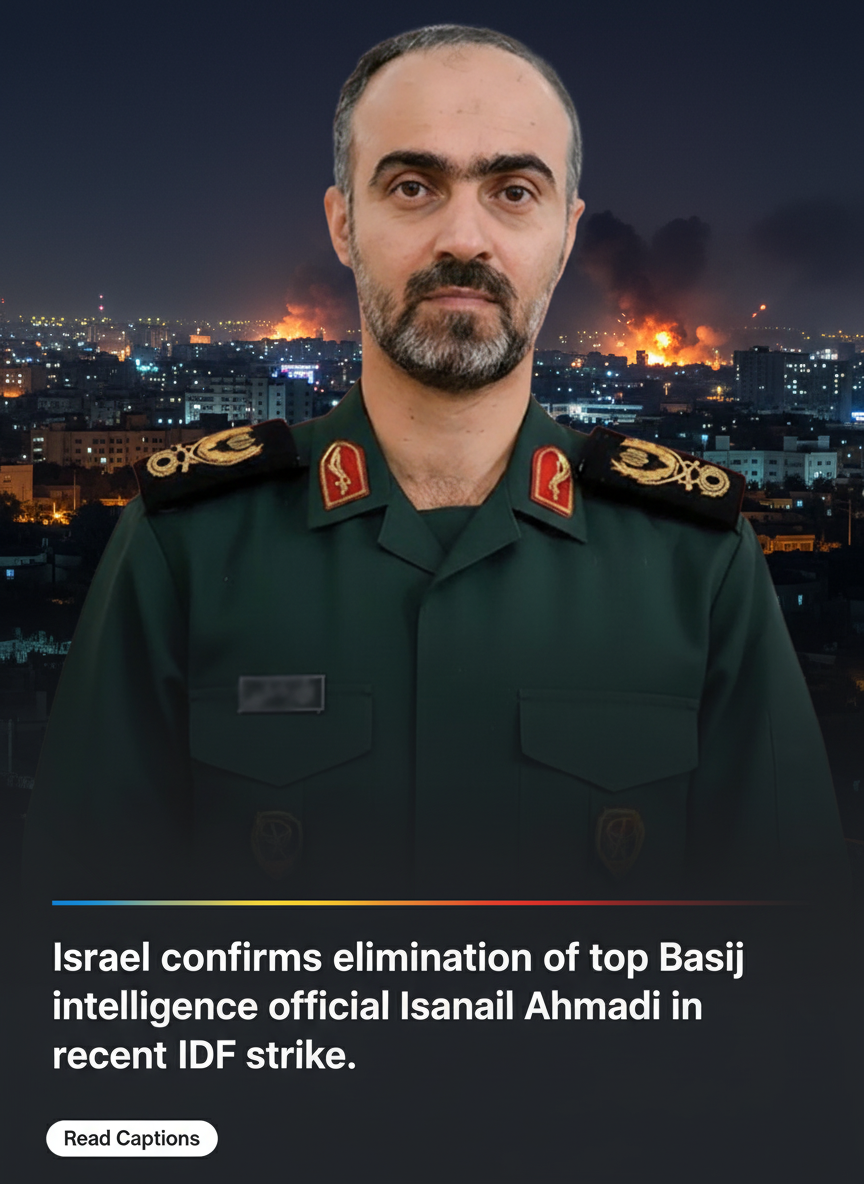
Israel Eliminates Top Iranian Intelligence Chief in High-Stakes Decapitation Strike
JERUSALEM — The Israel Defense Forces (IDF) confirmed on Friday that a precision airstrike earlier this week successfully eliminated Ismail Ahmadi, the top intelligence official for Iran’s Basij paramilitary force. The announcement marks a significant escalation in the ongoing shadow war between Israel and the Islamic Republic, further crippling the leadership of Tehran’s internal and external security apparatus.
A Dual Blow to Iranian Command
According to a statement released by the IDF on social media platform X, Ahmadi was killed in the same targeted strike that took out General Gholam Reza Soleimani, a high-ranking commander in the Islamic Revolutionary Guard Corps (IRGC), earlier this week. Military analysts suggest that the simultaneous elimination of both a top general and a chief intelligence officer indicates a profound breach in Iranian operational security.
“Ismail Ahmadi was a key architect in the Basij’s intelligence operations, responsible for both domestic suppression and the coordination of regional proxy activities,” the IDF stated. “His removal represents a severe blow to the command and control of the Iranian regime’s paramilitary forces.”
The Role of the Basij
The Basij, a massive volunteer paramilitary group under the umbrella of the IRGC, serves as a cornerstone of the Iranian regime’s power. While it is often utilized to crush domestic dissent and enforce social codes, its intelligence wing—which Ahmadi headed—plays a vital role in gathering tactical data for regional operations and monitoring internal threats to the clerical leadership.
Experts believe that losing Ahmadi, especially alongside Gen. Soleimani, creates a power vacuum that will be difficult for Tehran to fill quickly. The intelligence chief was reportedly involved in streamlining communications between the Basij and IRGC foreign operations, making him a high-value target for Israeli defense forces seeking to disrupt the “Axis of Resistance.”
Rising Tensions in the Middle East
The strike comes during a period of unprecedented friction in the region. Israel has increasingly signaled its willingness to target high-level Iranian officials directly, moving beyond the traditional targeting of weapon shipments and local proxies. The IDF’s decision to publicly claim credit for the strike on X underscores a shift toward a more overt strategy of deterrence.
Tehran has yet to provide an official comment on Ahmadi’s death, though state-affiliated media had previously reported on the “martyrdom” of Gen. Soleimani. In the past, such losses have been met with vows of “harsh revenge,” raising concerns among international observers about a potential retaliatory strike against Israeli interests or international shipping lanes.
Conclusion: A New Phase of Conflict
The elimination of Ismail Ahmadi and Gen. Soleimani serves as a stark reminder of the reach and precision of Israeli intelligence and air power. As the dust settles from the strike, the focus shifts to how the Iranian regime will reorganize its fractured leadership and whether this loss will temporarily dampen the Basij’s operational capabilities.
For now, the region remains on a knife-edge. With the IDF continuing its operations and Iran weighing its response, the “shadow war” appears to have moved decisively into the light, with significant implications for the future of Middle Eastern security.