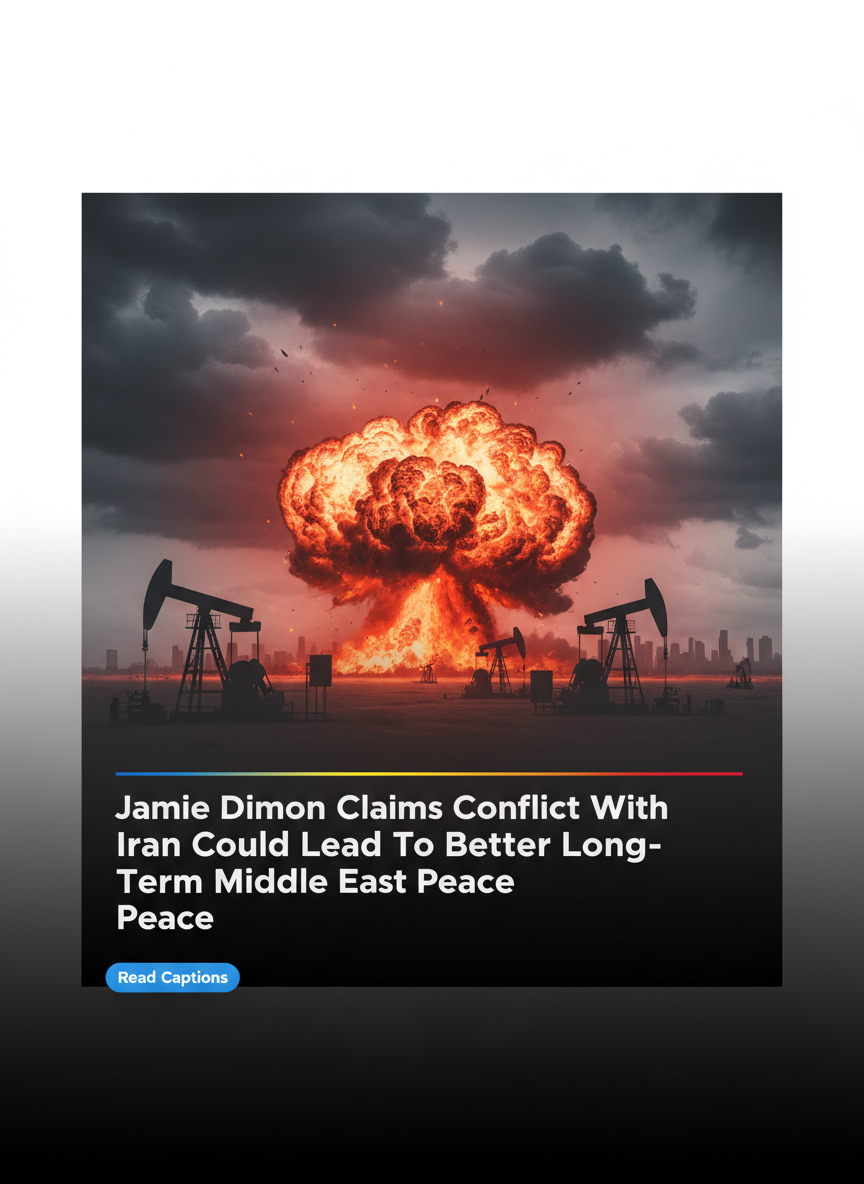
The Silver Lining of Conflict: Jamie Dimon Forecasts Long-Term Middle East Stability Amid Iran War
NEW YORK — In a move that has sparked intense debate across global financial and geopolitical circles, JPMorgan Chase Chairman and CEO Jamie Dimon has issued a contrarian and optimistic outlook regarding the ongoing conflict with Iran. While the world watches the escalating hostilities with trepidation, the head of the nation’s largest bank suggests that the current war may inadvertently pave the way for a more durable and integrated peace in the Middle East over the long term.
A Strategic Reset for the Region
Speaking weeks into a military conflict that has rattled global energy markets and heightened international tensions, Dimon addressed the situation during an interview on Tuesday. While acknowledging the immediate tragedy and human cost of the war, he argued that the confrontation represents a definitive “clearing of the air” that could dismantle decades of geopolitical stalemate.
“It’s a horrific situation in the short term, and nobody wants to see the loss of life or the destruction we are witnessing,” Dimon stated. “However, if you look at the tectonic plates of the Middle East, this conflict is fundamentally reshaping the security architecture. By addressing the primary source of regional destabilization, we are potentially looking at a future where normalization between Israel and its neighbors—including Saudi Arabia—becomes not just possible, but inevitable.”
Economic Resilience and Geopolitical Realignment
Dimon’s comments come at a time when JPMorgan Chase is closely monitoring the impact of the war on global supply chains and oil prices. Despite the volatility, Dimon noted that the global economy has shown more resilience than many analysts predicted. He suggested that once the “Iranian shadow” is removed from the equation, the Middle East could transition from a region defined by proxy wars to one defined by economic cooperation and infrastructure development.
The CEO pointed toward the potential for a “New Middle East,” where the Abraham Accords are expanded and the region becomes a global hub for trade, technology, and renewable energy. According to Dimon, the resolution of the “Iran problem” removes the single greatest barrier to a unified regional market that could rival other major global trade blocs.
The Risks of Optimism
Critics and humanitarian groups have been quick to point out the dangers of such a “long-term” perspective while the conflict remains active. Political analysts warn that the path to this theorized peace is fraught with risks, including the potential for a wider regional contagion, domestic unrest within neighboring states, and the immense cost of post-war reconstruction.
However, Dimon maintained that history often sees profound stability emerge from periods of intense upheaval. He compared the current situation to previous historical shifts that led to long periods of prosperity after the resolution of deep-seated ideological conflicts.
Conclusion: A Vision for 2030 and Beyond
As the war continues, Dimon’s stance serves as a reminder of the “big picture” view often taken by the world’s most powerful financial leaders. For JPMorgan and its investors, the focus is increasingly on the post-war landscape—a world where a stabilized Middle East could become a primary engine of global growth.
“We have to be prepared for the volatility of today, but we cannot lose sight of the potential for a much more peaceful and prosperous tomorrow,” Dimon concluded. “The road is painful, but the destination could be a Middle East that we haven’t seen in our lifetimes—one that is integrated, peaceful, and open for business.”
Reported by Financial News Network. For more updates on the Middle East conflict and its impact on global markets, stay tuned to our latest coverage.