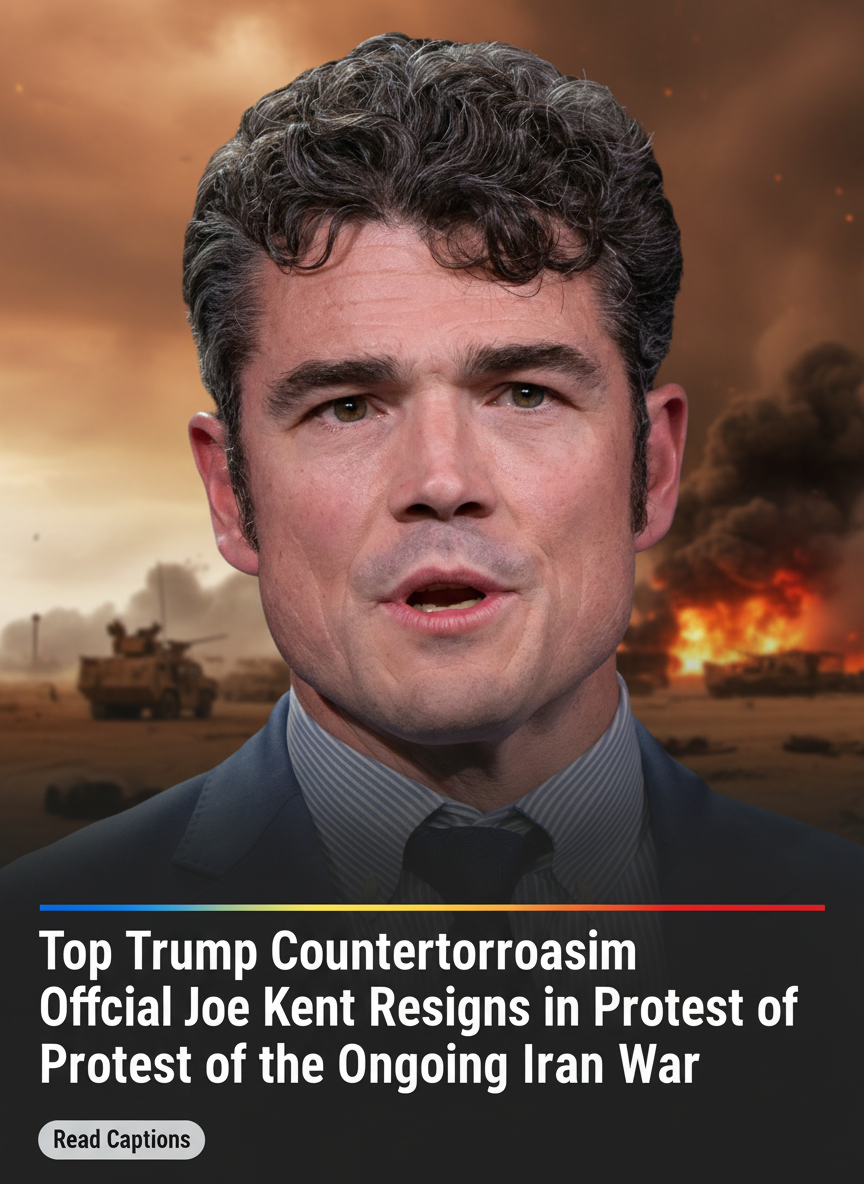
High-Ranking Counterterrorism Official Joe Kent Resigns, Citing Opposition to Iran Conflict
By Political Correspondent | March 17, 2026
WASHINGTON — Joe Kent, the Deputy Assistant to the President for Counterterrorism and a key figure in the Trump administration’s national security circle, resigned Tuesday in a move that signals a deepening rift within the White House over the escalating military conflict with Iran.
Kent’s departure makes him the highest-ranking administration official to step down in direct protest of the war. In a resignation letter obtained by reporters, Kent—a retired Special Forces officer and a prominent “America First” advocate—expressed grave concerns that the current trajectory of the conflict contradicts the non-interventionist promises that defined the administration’s foreign policy platform.
A ‘Forever War’ Reborn
“I joined this administration to end the era of endless wars, not to facilitate the start of a new one,” Kent wrote in his statement. “The current push for a full-scale kinetic engagement with Iran serves neither the interests of the American worker nor the security of our borders. We are repeating the catastrophic mistakes of the last two decades.”
The resignation comes at a precarious moment for the White House. As military operations in the Persian Gulf intensify, the administration has faced mounting pressure from both traditional hawks and a growing faction of populist skeptics. Kent, who lost his wife, Senior Chief Petty Officer Shannon Kent, to an ISIS suicide bombing in 2019, has long been a vocal critic of expansive overseas commitments, frequently arguing that U.S. resources should be focused domestically.
A Complicated Legacy
While Kent was viewed as a vital link between the administration and its populist base, his tenure was not without controversy. He has frequently drawn fire from mainstream political figures and intelligence veterans for his public flirtations with fringe ideologies and conspiracy theories.
Critics point to Kent’s past statements regarding the 2020 election and his defense of individuals involved in the January 6 Capitol riot as evidence of a radicalized worldview. However, within the West Wing, Kent was seen as an essential loyalist—until the administration’s stance on Iran shifted toward sustained military engagement. His exit suggests that even for those most aligned with the President’s “insurgent” political brand, the realities of a new Middle Eastern war are a bridge too far.
Fallout in the West Wing
The White House issued a brief statement on Tuesday afternoon, thanking Kent for his service but downplaying the significance of his departure. “The President remains committed to his mission of maximum pressure to ensure the safety of the American people from the world’s leading state sponsor of terrorism,” a spokesperson said. “Personnel changes will not deter the Commander-in-Chief from his strategic objectives.”
Behind the scenes, however, sources suggest that Kent’s resignation may embolden other skeptics within the Pentagon and the State Department. For months, a quiet tug-of-war has persisted between the “restraint” wing of the administration and the more traditional interventionists who have gained influence in recent weeks.
The Road Ahead
As Kent returns to private life, his resignation is likely to turn him into a rallying point for the anti-interventionist right. By framing his departure as a matter of principle against the “Deep State” and the “War Machine,” Kent may continue to exert influence over the political discourse from outside the halls of power.
For the Trump administration, the challenge will be maintaining unity as the costs of the Iran conflict—both fiscal and human—continue to mount. With the loss of a top counterterrorism official who carried significant weight with the “America First” movement, the White House faces a narrowing path to keep its most ardent supporters on board with a war they did not vote for.