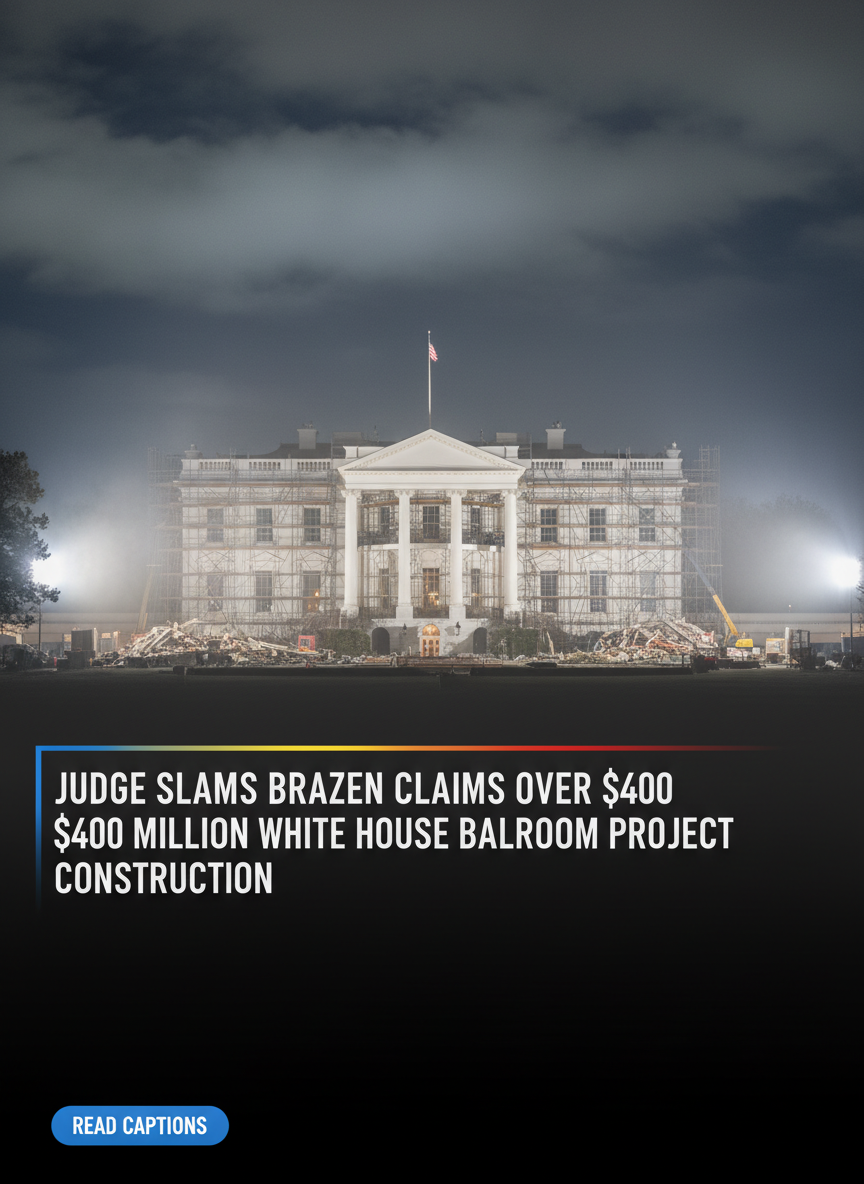
Legal Battle Over Trump’s $400 Million White House Ballroom Intensifies as Judge Slams ‘Brazen’ Claims
WASHINGTON — A federal judge on Tuesday leveled sharp criticism at the Trump administration’s legal justifications for a controversial $400 million White House ballroom expansion, describing the arguments presented by presidential aides as “brazen” and “detached from historical precedent.”
In a high-stakes hearing in the U.S. District Court for the District of Columbia, Judge Richard Leon signaled that he may be prepared to freeze construction on the massive project, which has become a centerpiece of President Trump’s infrastructure and legacy-building agenda. The ruling, expected by the end of the month, could deliver a significant blow to a project the administration has prioritized despite fierce opposition from historical preservationists and fiscal hawks.
‘A Question of Necessity’
The proposed ballroom, a glass-and-marble addition intended to host lavish state dinners and international summits, has been under fire since its inception. While the administration argues the current State Dining Room is “woefully inadequate” for modern diplomacy, critics have labeled the $400 million price tag an egregious use of taxpayer funds.
During Tuesday’s proceedings, Judge Leon focused on the administration’s attempt to bypass standard environmental and historical impact reviews. Aides to the President argued that the project should be fast-tracked under national security exemptions, claiming the existing practice of erecting temporary tents on the South Lawn poses a “grave vulnerability” to the First Family and visiting dignitaries.
“To suggest that a lack of a permanent ballroom constitutes a national security crisis is, frankly, brazen,” Judge Leon said from the bench. “The court is struggling to find the legal bridge between architectural preference and executive emergency.”
A Top Priority for the President
For President Trump, the ballroom is more than just an addition; it is a signature project. In various social media posts and public remarks, the President has frequently lamented the “cramped” nature of the White House, comparing it unfavorably to the grand palaces of foreign heads of state.
White House counsel argued during the hearing that the President has the constitutional authority to manage the “efficiency and dignity” of the executive mansion. They contended that the project would ultimately save money by eliminating the recurring costs of temporary event structures and security sweeps for outdoor functions.
However, the plaintiffs—a coalition of historical preservation groups and government oversight non-profits—argue that the construction would “irreparably mar” the historic character of the 226-year-old building. They allege the administration has ignored the National Historic Preservation Act in its rush to break ground.
The Road Ahead
The tension in the courtroom was palpable as Judge Leon pressed government lawyers on why they hadn’t sought more traditional avenues for funding and approval. At several points, the judge interrupted the administration’s legal team to question the “unprecedented” speed at which the construction contracts were awarded.
“This isn’t just about a room; it’s about the process,” said Sarah Jenkins, lead counsel for the preservationist coalition, following the hearing. “You cannot simply bulldoze over federal law because you want a bigger space for parties.”
Judge Leon indicated he is aware of the time-sensitive nature of the dispute, as site preparation on the South Lawn has already begun. He told both parties that he intends to issue a ruling on the preliminary injunction by the end of March. If granted, the injunction would immediately halt all work on the site, potentially tying the project up in litigation for the remainder of the term.
For now, the cranes remain stationed outside the White House, but their future—and the President’s vision for a grander executive mansion—now rests in the hands of the court.