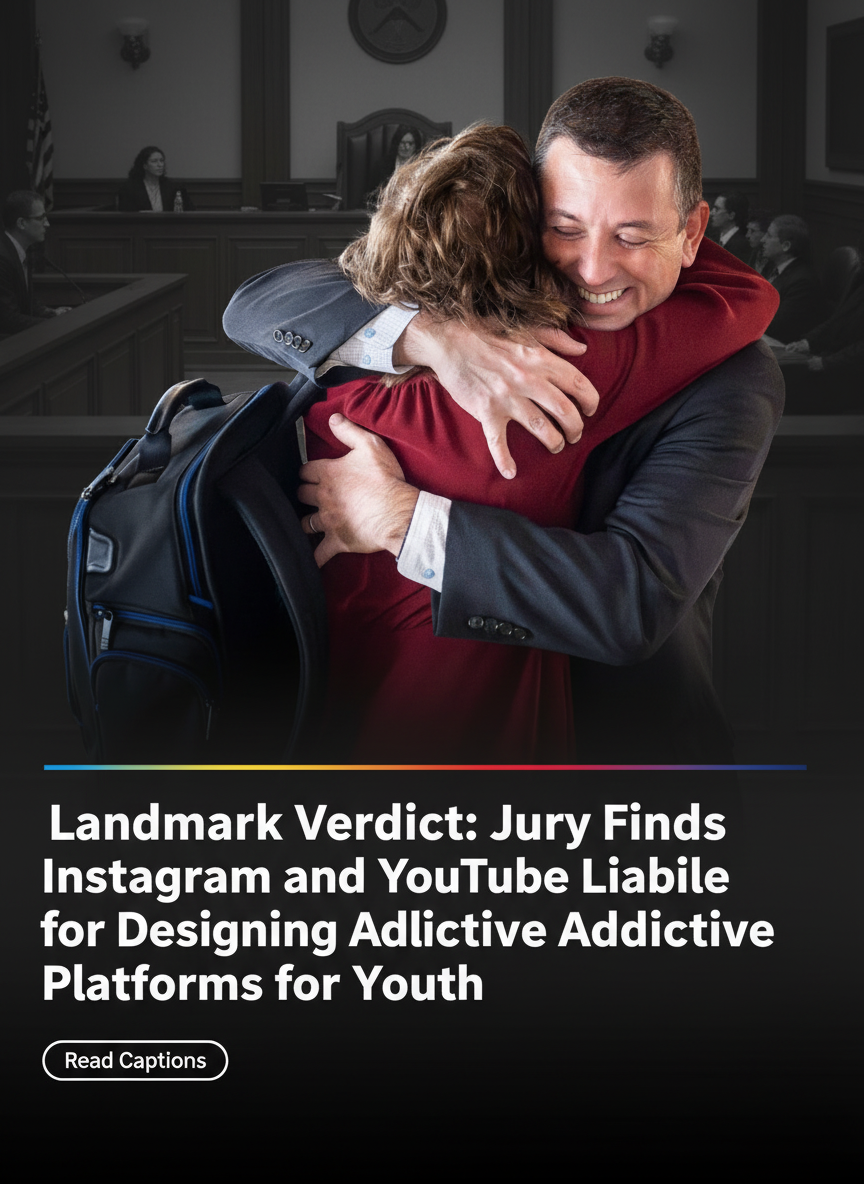
Tech Giants Held Accountable: Jury Finds Instagram and YouTube Liable in Landmark Social Media Addiction Trial
LOS ANGELES — In a historic ruling that could fundamentally alter the legal landscape for Big Tech, a California jury has found Meta and YouTube liable for the addictive nature of their platforms. The decision marks the first time a jury has held social media giants financially responsible for prioritizing engagement-driven design over the mental health and well-being of young users.
A Multi-Million Dollar Verdict
Following a high-stakes trial in Los Angeles, the jury on Wednesday ordered Meta, the parent company of Instagram, and YouTube, owned by Google, to pay millions of dollars in damages to a 20-year-old woman. The plaintiff alleged that the platforms’ sophisticated algorithms and design features were intentionally engineered to “hook” her during her formative years, leading to severe psychological distress and long-term harm.
The verdict comes after weeks of testimony detailing how internal research at these companies allegedly highlighted the risks of platform addiction, even as executives publicly downplayed those dangers. The jury’s decision reflects a growing societal and legal consensus that the “attention economy” may carry significant liabilities when it targets minors.
The “Design to Addict” Argument
The core of the plaintiff’s case rested on the argument that social media addiction is not a byproduct of user choice, but a result of deliberate engineering. Legal counsel for the plaintiff presented evidence of features such as “infinite scroll,” push notifications, and AI-driven recommendations designed to trigger dopamine responses similar to gambling.
“This wasn’t about the content on the platforms; it was about the architecture of the platforms themselves,” said a legal analyst following the trial. “The jury agreed that these companies designed a product that was inherently dangerous to the developing brains of adolescents, and they did so without adequate warnings or safeguards.”
A Precedent for Thousands of Pending Cases
While this specific trial centered on one individual, the implications are vast. There are currently thousands of similar lawsuits pending across the United States, filed by school districts, state attorneys general, and grieving families. This verdict provides a “proof of concept” for the legal theory that social media companies can be held liable under product liability laws, rather than being shielded by Section 230 of the Communications Decency Act.
Section 230 has long protected tech companies from being sued over content posted by third parties. However, by focusing on the design and functionality of the apps rather than the specific posts, the plaintiff’s team successfully navigated around this traditional legal shield.
Industry Response and Future Outlook
Meta and YouTube have expressed their intent to appeal the decision. In statements released following the verdict, both companies defended their safety records, pointing to the introduction of parental supervision tools, “take a break” reminders, and age-verification processes.
“We have developed over 30 tools to support teens and their families,” a spokesperson for Meta stated. “We disagree with this verdict and believe the evidence shows our commitment to fostering a safe experience for young people.”
Despite the planned appeals, the verdict is expected to ramp up pressure on Congress to pass stricter federal regulations regarding child online safety. For now, Silicon Valley faces a new reality: the algorithms that fueled their meteoric growth may now be their greatest legal liability.
Conclusion
As the tech industry reels from this unprecedented loss, the legal community views Wednesday’s decision as a watershed moment. For the millions of young users and their families watching from the sidelines, the trial serves as a stark reminder of the hidden costs of the digital age—and a signal that the era of tech company immunity may be drawing to a close.