Underground Desperation: LA Homelessness Crisis Hits Horrifying New Low as Residents Take to Living in Sewers
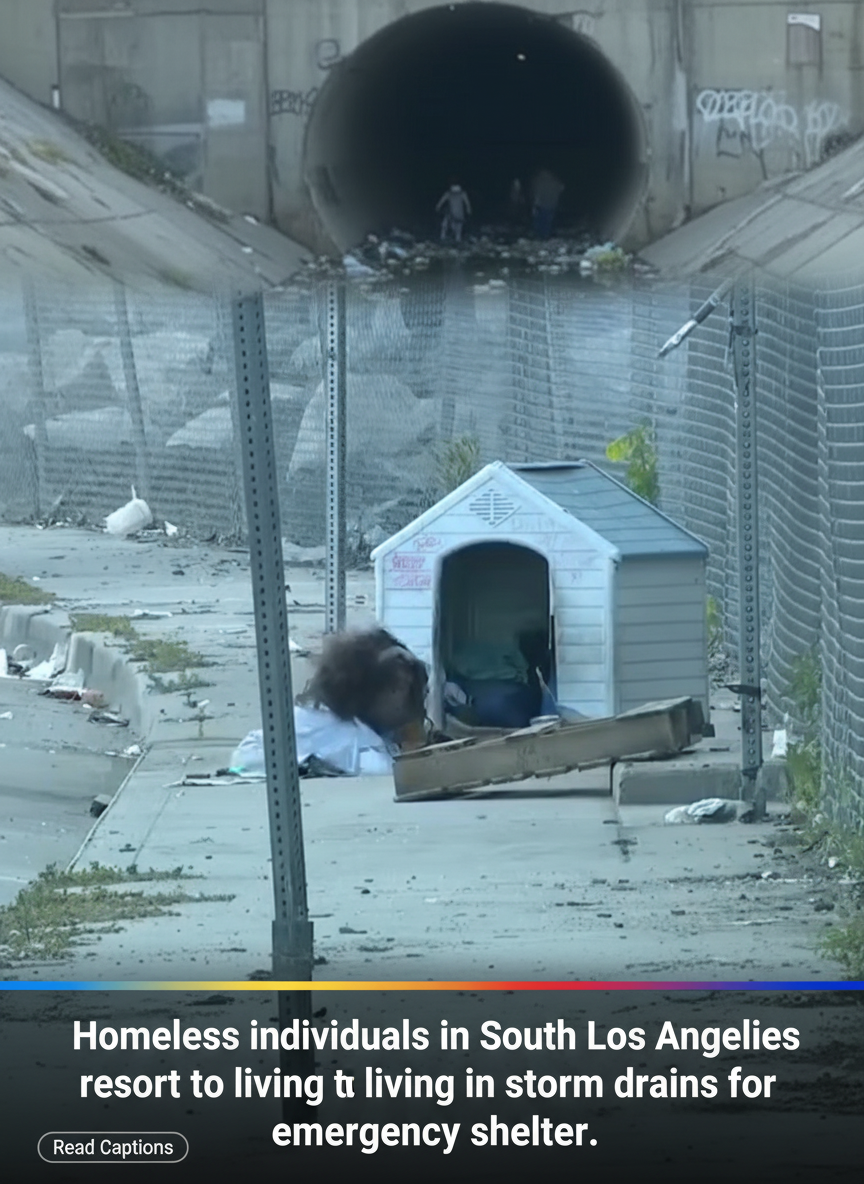
LOS ANGELES — In a chilling testament to the escalating housing crisis gripping Southern California, new footage has emerged showing a segment of the city’s homeless population seeking refuge within the subterranean storm drain systems of South Los Angeles. The discovery marks a harrowing new chapter in the city’s struggle to manage its unhoused population, as individuals trade the dangers of the street for the dark, damp, and hazardous confines of the sewer system.
The footage, which has sent shockwaves through the local community and city hall, reveals makeshift living quarters carved out of the cold concrete walls of storm drains. Sheltered from the wind but exposed to extreme dampness and the constant threat of flash flooding, those living underground describe a life of absolute invisibility.
A Descent into Desperation
In the heart of South Los Angeles, where street encampments have long been a fixture of the urban landscape, the move underground represents a strategic, albeit desperate, attempt to find privacy and security. For many, the storm drains provide a temporary escape from the rising violence and theft common in surface-level encampments. However, the trade-off is a life lived in near-total darkness, surrounded by the stench of stagnant water and industrial waste.
“It’s about as low as it gets,” said one advocate for the unhoused who visited the site. “When people feel safer in a concrete pipe than on a public sidewalk, it tells you everything you need to know about the state of our social safety net. These aren’t just ‘dwellings’; they are death traps.”
Hidden Dangers and Health Hazards
City engineers and public health officials have expressed grave concerns over the development. Unlike traditional shelters or even street tents, the storm drain system is designed to move massive volumes of water during California’s unpredictable rain cycles. A sudden downpour could turn these makeshift homes into underwater tombs within minutes.
Beyond the risk of drowning, the environment poses severe health risks. The lack of ventilation, coupled with the presence of rodents, bacteria, and toxic runoff, creates a breeding ground for respiratory infections and skin diseases. Outreach workers note that providing medical aid to those living deep within the sewer system is nearly impossible, further isolating a population that is already critically underserved.
A City in Crisis
The revelation comes at a time when Los Angeles is under intense pressure to deliver on its promises to reduce homelessness. Despite billions of dollars in allocated funding and numerous “State of Emergency” declarations over the past several years, the number of individuals living without permanent shelter continues to reach record highs in 2026.
Critics of the city’s current strategy argue that the move underground is a direct result of increased “clearing” operations on the surface. As police and sanitation crews dismantle tents in parks and under overpasses, those with nowhere else to go are forced into increasingly hidden and dangerous locations to avoid citation or displacement.
The Road Ahead
Local officials have stated that they are working on a plan to conduct “wellness checks” and encourage those in the storm drains to move into bridge housing. However, trust between the unhoused community and the city remains at an all-time low. For many currently living beneath the streets of South Los Angeles, the concrete walls of the sewer—cold and dark as they may be—offer the only sense of permanence they have left.
As the city grapples with this horrifying “new low,” the images of residents living among the city’s infrastructure serve as a stark reminder of the human cost of the ongoing housing shortage. For now, the darkness of the South LA sewers remains a sanctuary for those the city has yet to find a place for.