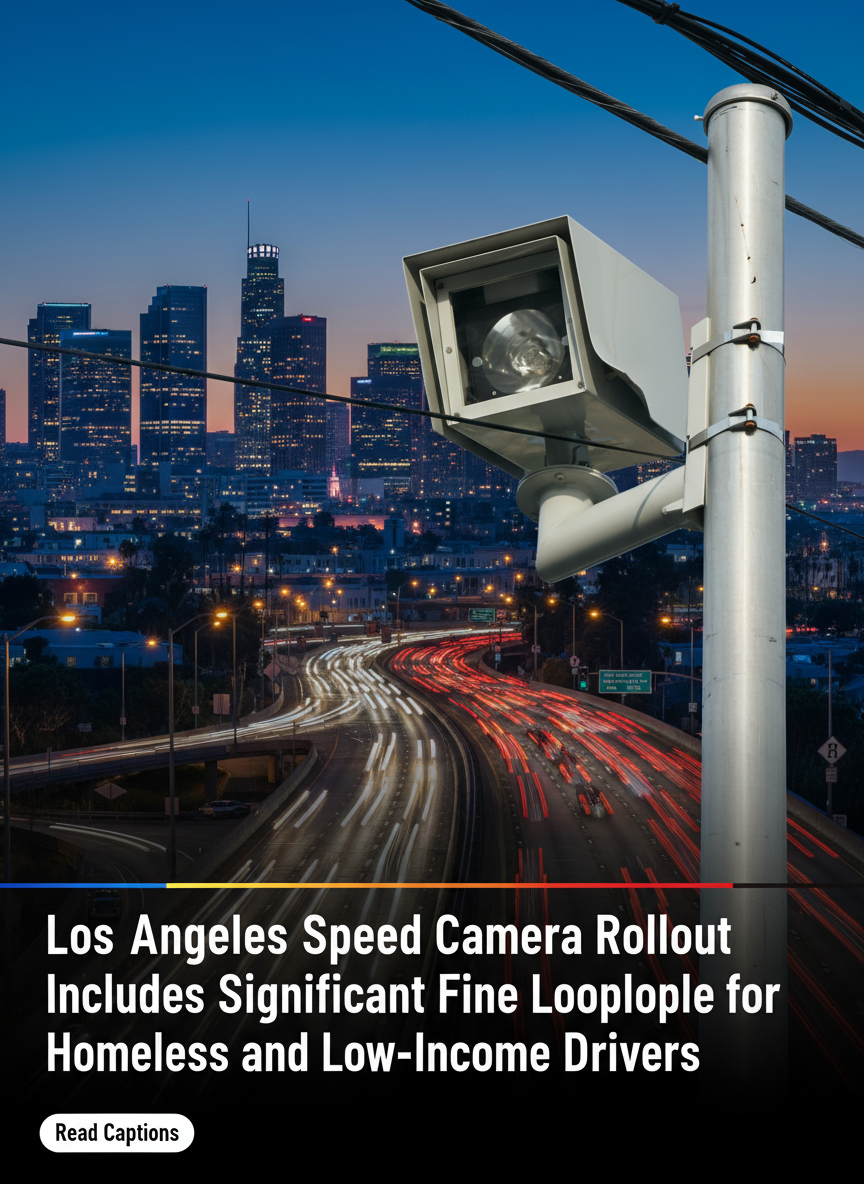
Fast Lanes and Fair Play: Los Angeles Unveils Speed Camera Program with Controversial ‘Homeless Loophole’
LOS ANGELES — In an ambitious effort to curb a rising tide of traffic fatalities, Los Angeles is officially rolling out its much-anticipated Speed Safety Pilot Program. However, the initiative is already drawing fire for a specific “equity” provision that critics have dubbed a “homeless loophole,” potentially exempting the city’s unhoused population and low-income residents from the full weight of the law.
A High-Tech Solution to a Deadly Problem
The program, authorized by California Assembly Bill 645, allows Los Angeles to install speed cameras across 64 locations designated as “high-injury networks.” These automated systems are designed to capture license plates of vehicles traveling at least 11 miles per hour over the posted limit, automatically mailing citations to the registered owners.
City officials argue the move is a necessity. According to data from the Los Angeles Department of Transportation (LADOT), traffic-related deaths have reached record highs in recent years, often surpassing the number of homicides in the city. “Speed is the number one factor in whether someone survives a crash,” city planners noted during the program’s proposal phase. “These cameras are a proven tool to change driver behavior.”
The Equity Clause: Reduced Fines and Waivers
While the standard fines range from $50 to $500 depending on the severity of the violation, the program includes a tiered penalty structure designed to prevent “regressive taxation” on the city’s most vulnerable populations.
Under the new guidelines, individuals living below 250% of the federal poverty level are eligible for a 50% reduction in their fines. Furthermore, the program allows for community service in lieu of payment. However, the most controversial aspect of the rollout is the provision for individuals experiencing homelessness. According to the policy, those who can demonstrate they are unhoused may have their fines waived entirely or deferred indefinitely.
Critics Decry ‘Two-Tiered Justice’
The “homeless loophole” has sparked a fierce debate among residents and policy analysts. Critics argue that traffic laws should be applied universally to ensure public safety, regardless of a driver’s socioeconomic status.
“A speeding car is a deadly weapon whether the person behind the wheel lives in a mansion or a tent,” said one local advocacy group spokesperson. “By creating a system where certain groups feel they can violate the law without financial consequence, the city is undermining the very safety goals it claims to prioritize.”
There are also logistical concerns regarding the enforcement of tickets against the unhoused. With no fixed address to mail citations to, and a policy that leans toward waivers, skeptics wonder if the cameras will have any deterrent effect on a significant portion of the driving population in Los Angeles.
The Case for Compassion in Enforcement
Supporters of the loophole, including many social justice advocates and the bill’s original sponsors, argue that the provision is a vital safeguard. They contend that a $500 speeding ticket can be a “death spiral” for someone living on the edge, leading to car impoundment, loss of employment, and deeper cycles of poverty.
“The goal is safety, not revenue,” said a representative for the pilot program. “We want people to slow down. If we bankrupt a family over a single traffic violation, we aren’t making the city safer; we are just creating more social instability. The equity provisions ensure that the punishment fits the financial reality of the offender.”
What’s Next for LA Drivers?
The pilot program is scheduled to run for five years, with the first cameras currently being calibrated for active duty. During the first 60 days of operation, drivers caught speeding will receive warning notices rather than actual tickets, a “grace period” intended to acclimate the public to the new surveillance.
As Los Angeles joins other California cities like San Francisco and San Jose in this experiment, the eyes of the nation will be on the “homeless loophole.” Whether this policy successfully balances public safety with social equity—or simply creates a bypass for accountability—remains to be seen as the first round of automated tickets hits the streets later this year.