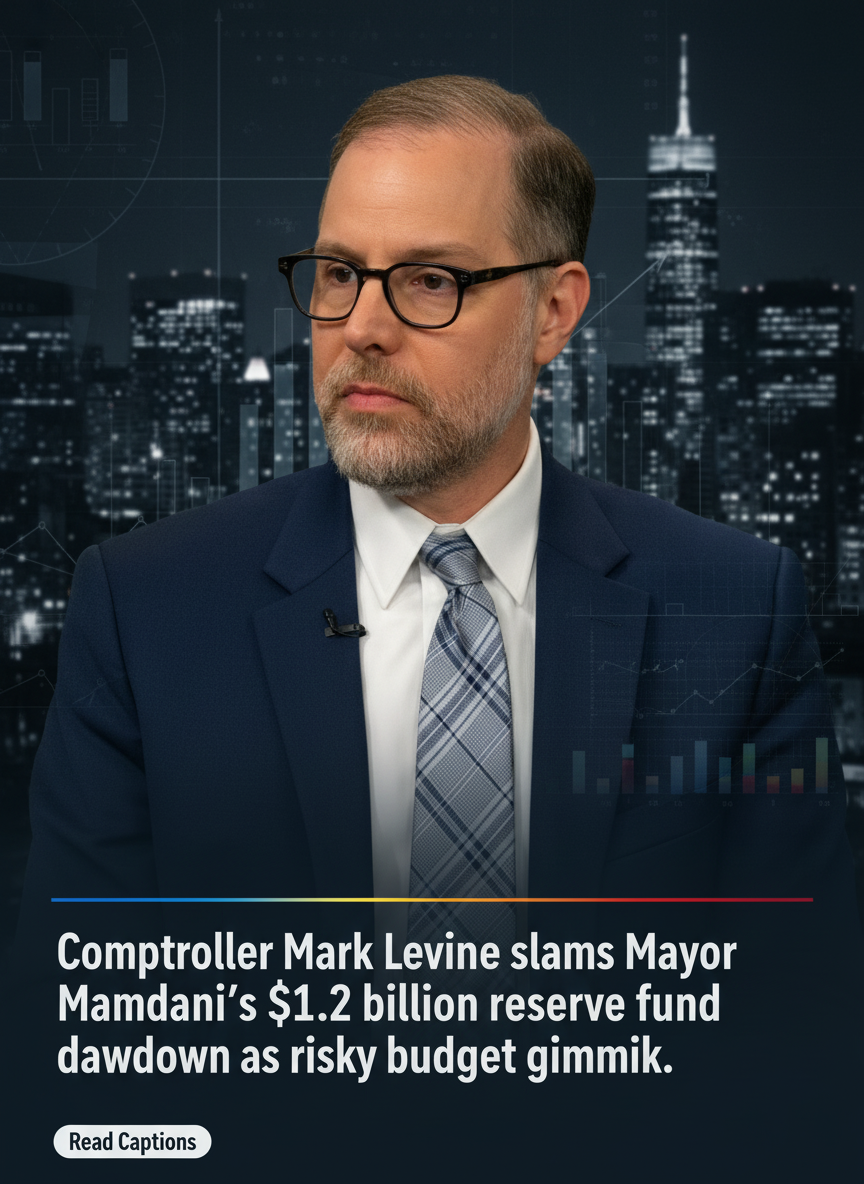
Fiscal Cliff Warnings: Comptroller Levine Slams Mayor Mamdani’s $1.2 Billion Budget ‘Gimmick’
NEW YORK — A high-stakes financial battle is erupting at City Hall as New York City Comptroller Mark Levine issued a blistering critique of Mayor Zohran Mamdani’s latest fiscal strategy. At the center of the controversy is a proposal to draw down $1.2 billion from the city’s reserve funds to balance the upcoming budget—a move Levine warns is a “gimmick” that could leave the Big Apple facing a catastrophic financial shortfall next year.
A ‘Short-Sighted’ Solution
In a report released Sunday, Comptroller Levine argued that Mayor Mamdani’s reliance on one-time reserve transfers creates a dangerous illusion of fiscal stability. While the move would technically balance the current books without immediate, painful service cuts, Levine contends it effectively kicks the can down the road, making the projected deficit for the following fiscal year significantly harder to manage.
“Using our ‘Rainy Day’ funds to plug a structural hole isn’t a policy; it’s a gimmick,” Levine stated. “By exhausting $1.2 billion in reserves now, the administration is ensuring that next year’s budget crisis will be even more severe. We are essentially borrowing from our future to pay for a lack of discipline today.”
The $1.2 Billion Gamble
The Mamdani administration has defended the plan as a necessary measure to protect essential city services amidst shifting tax revenues and rising operational costs. Supporters of the Mayor argue that the reserves are intended for periods of economic uncertainty and that utilizing them now prevents immediate harm to education, sanitation, and public safety programs.
However, fiscal watchdogs side with Levine, noting that reserve funds are traditionally reserved for unforeseen emergencies—such as natural disasters or extreme economic recessions—rather than routine budget balancing. By tapping into these funds during a period of relative economic growth, Levine argues the city is stripping itself of its primary defense mechanism against a true financial downturn.
Projecting a Fiscal Cliff
The Comptroller’s office released updated projections suggesting that if the $1.2 billion drawdown proceeds, the city’s budget gap for the 2027 fiscal year could balloon to unmanageable levels. This “fiscal cliff” would likely force the city to implement drastic measures later, including potential tax hikes or significant layoffs, which the current administration is currently trying to avoid.
“The math simply doesn’t add up for the long term,” said one senior official in the Comptroller’s office. “You can only spend your savings once. Once that $1.2 billion is gone, the structural deficit remains, but the safety net is missing.”
Political Fallout and Future Negotiations
The public disagreement marks a significant rift between the city’s top fiscal officer and the Mayor’s office. As budget negotiations continue, the City Council is expected to face intense pressure from both sides. Progressive allies of the Mayor may favor the drawdown to maintain social spending, while fiscal conservatives and moderate Democrats are expressing growing concern over the city’s credit rating and long-term solvency.
As the deadline for the final budget approaches, all eyes will be on City Hall to see if Mayor Mamdani will pivot toward more sustainable cost-saving measures or double down on the reserve drawdown. For now, Comptroller Levine’s warning remains clear: the city is currently on a path that prioritizes short-term political comfort over long-term economic survival.
Reporting by City Hall Bureau