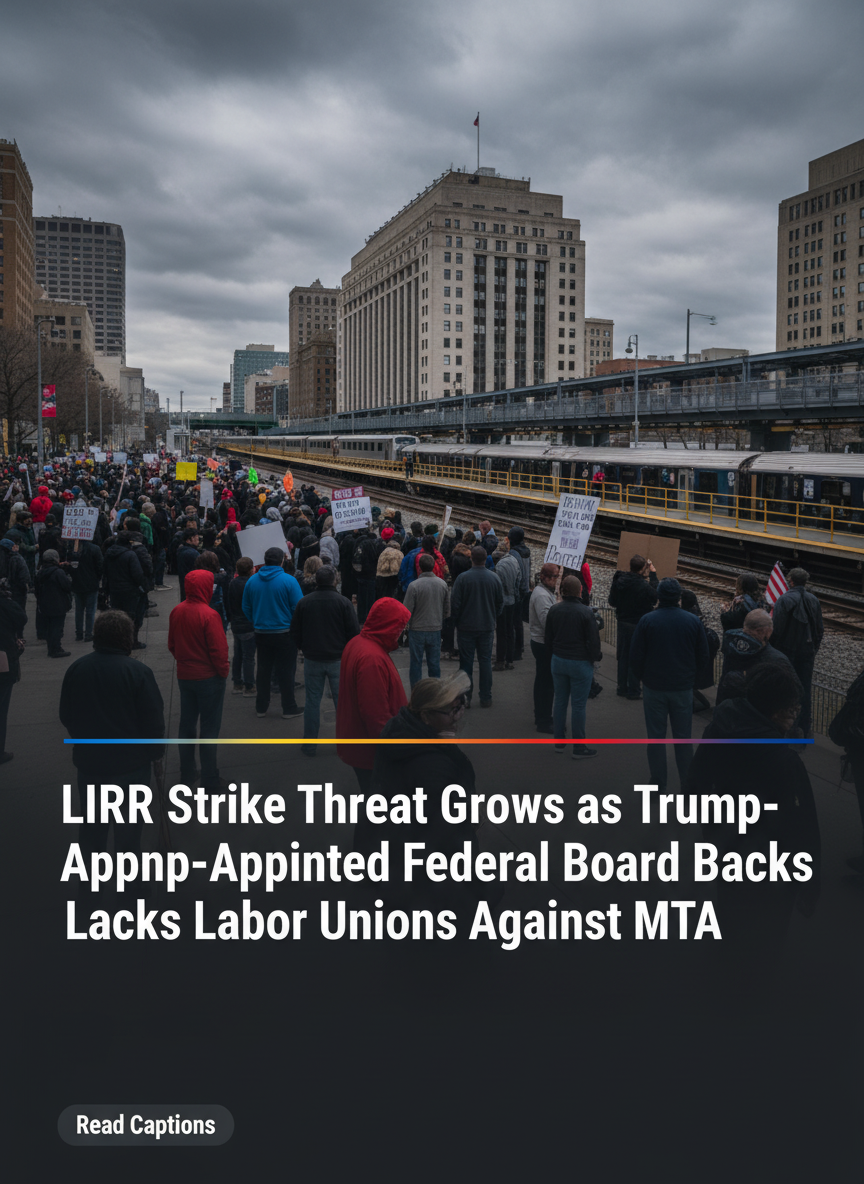
LIRR Strike Threat Intensifies After Federal Board Backs Unions in Bitter Contract Dispute
NEW YORK — The prospect of a crippling shutdown for the nation’s busiest commuter railroad has moved one step closer to reality. A federally appointed mediation board has officially sided with Long Island Rail Road (LIRR) labor unions, putting immense pressure on the Metropolitan Transportation Authority (MTA) to meet worker demands or face a potential strike.
Federal Mediators Side with Labor
In a significant blow to the MTA’s negotiating position, Presidential Emergency Board (PEB) 254—a panel appointed by President Donald Trump—issued its recommendations on Monday. The board’s report largely favors the coalition of unions representing thousands of LIRR employees, marking the second time a federal panel has rejected the MTA’s “ability to pay” arguments in favor of the unions’ wage and benefit proposals.
The PEB was established to intervene in the long-standing contract stalemate, serving as a neutral third party to prevent a disruption in service that would leave hundreds of thousands of daily commuters stranded. However, by backing the unions, the board has effectively signaled that the MTA’s current offers are insufficient based on industry standards and the cost of living in the New York metropolitan area.
The Growing Rift: Wages vs. Deficits
At the heart of the dispute is a fundamental disagreement over financial responsibility. The LIRR unions, which represent conductors, engineers, and maintenance staff, have argued for fair wage increases that keep pace with inflation and reflect the essential nature of their work. They have pointed to the MTA’s recent investments in infrastructure as proof that funds are available for human capital.
Conversely, the MTA has maintained a stance of fiscal austerity. Facing significant budget deficits and a precarious financial future, agency officials have argued that meeting the unions’ demands would necessitate drastic fare hikes or service cuts. The MTA had hoped the Trump-appointed board would recognize the agency’s financial constraints; instead, the board’s recommendation aligns with a previous federal panel’s findings, suggesting that the burden of the agency’s debt should not fall solely on the workforce.
A “Cooling-Off” Period with High Stakes
The release of the PEB recommendations triggers a mandatory 30-day “cooling-off” period under the Railway Labor Act. During this time, neither side can engage in “self-help” measures, such as a strike or a lockout. This window is intended to force both parties back to the bargaining table to reach a voluntary agreement based on the board’s findings.
However, union leaders have expressed a renewed sense of leverage. If the MTA refuses to adopt the board’s recommendations by the end of the cooling-off period, the unions could legally walk off the job, effectively paralyzing the region’s transportation network. A strike would not only affect Long Island residents but would have a domino effect on New York City’s economy and traffic congestion.
Commuters Left in Limbo
As the clock ticks down, the pressure is shifting to state and federal lawmakers to intervene if a deal cannot be reached. For the 300,000 daily riders who rely on the LIRR, the news of the board’s decision is a double-edged sword: while it brings the negotiation closer to a conclusion, it also elevates the immediate risk of a total service stoppage.
For now, the MTA has stated it is reviewing the board’s report. “Our goal remains to reach an agreement that is fair to our employees and responsible to the taxpayers and riders who fund the system,” the agency said in a brief statement. Meanwhile, union representatives have called the board’s decision a “validation of the hard work and dedication” of LIRR employees, urging the MTA to “finally do the right thing.”
If no agreement is reached following the cooling-off period, the dispute could eventually move to Congress, which has the power to legislate a contract settlement to prevent a national economic disruption. Until then, New York commuters are left watching the calendar with growing anxiety.