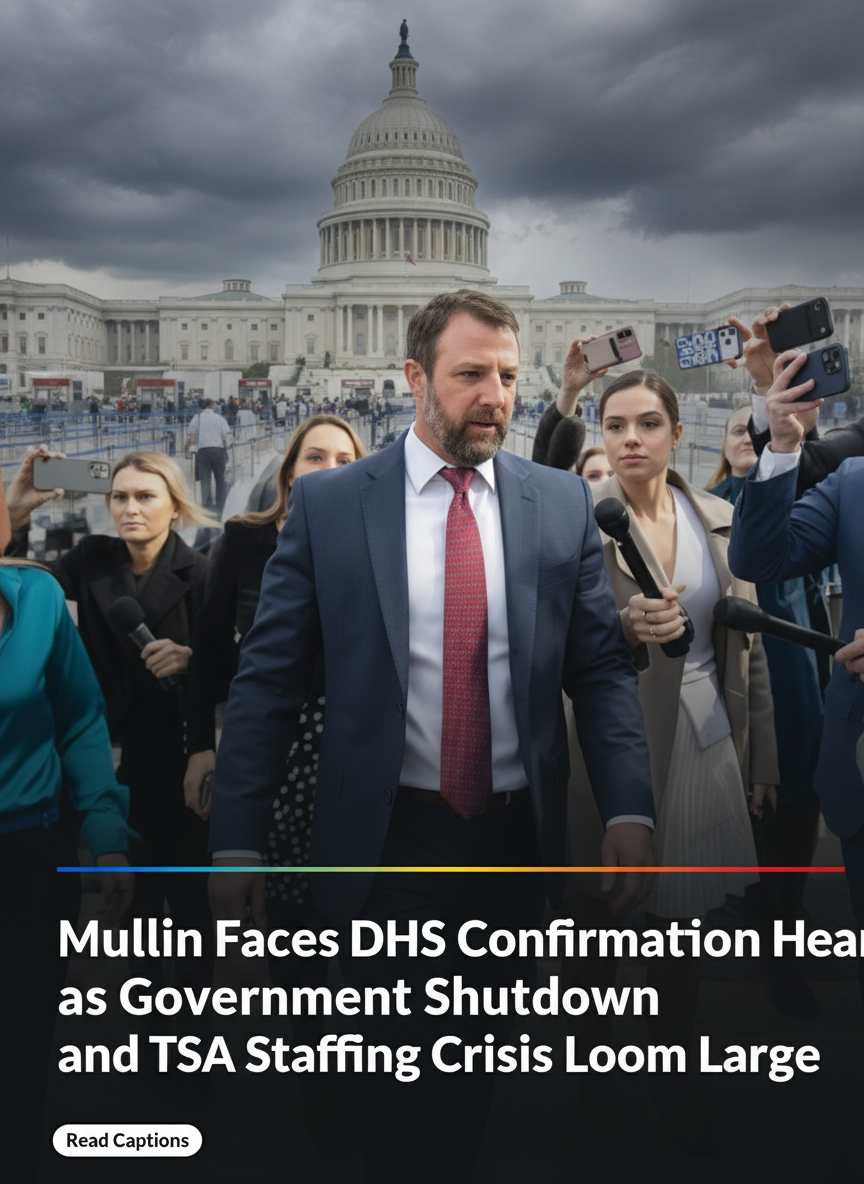
High Stakes at DHS Confirmation: Mullin and Paul Raise Alarms Over TSA Staffing and Looming Shutdown
WASHINGTON D.C. — The halls of Congress were charged with tension on Wednesday as Senator Markwayne Mullin (R-OK) took a leading role in a high-stakes Department of Homeland Security (DHS) confirmation hearing. The proceedings, intended to vet key leadership for the agency, quickly pivoted into a heated debate over national security readiness, a potential government shutdown, and a brewing crisis within the Transportation Security Administration (TSA).
A Confrontational Hearing
Senator Markwayne Mullin, known for his direct and often confrontational questioning style, spearheaded the GOP’s scrutiny of the administration’s current trajectory. Mullin focused heavily on the intersection of budgetary management and operational efficiency, questioning whether the DHS is prepared to handle its core mandates if Congress fails to reach a funding agreement by the end of the week.
“We are looking at a departmental leadership that asks for more while the American people see less in terms of border security and travel efficiency,” Mullin stated during his opening remarks. The Senator’s line of questioning suggested a deep skepticism of the administration’s ability to manage the agency’s sprawling responsibilities during a period of fiscal uncertainty.
Rand Paul Joins the Fray
Adding to the pressure, Senator Rand Paul (R-KY) became a focal point of the day’s trending political discourse. Paul, a long-time advocate for fiscal restraint and civil liberties, echoed Mullin’s concerns but shifted the lens toward the constitutional and financial implications of the agency’s current policies. Paul’s insistence on strictly defined budgetary parameters for the DHS has made him a central figure in the ongoing negotiations to avert a shutdown.
The “Rand Paul” trending status reflected a broader national conversation regarding how much “essential” government functions should cost—and whether the current DHS leadership has earned the public’s trust to manage those funds during a crisis.
TSA Staffing and the Shutdown Shadow
Perhaps the most pressing issue raised during the hearing was the state of TSA staffing. With the threat of a government shutdown looming, lawmakers expressed grave concerns about the morale and retention of TSA agents. Historically, during shutdowns, TSA officers—deemed “essential” employees—are required to work without immediate pay, a situation that has previously led to increased “call-outs” and massive delays at major U.S. airports.
DHS officials testified that any disruption in funding could “catastrophically” impact travel safety and commerce. However, Mullin and his colleagues countered that the administration has had ample time to streamline operations and prioritize staffing needs before reaching this breaking point.
National Security vs. Fiscal Responsibility
The hearing highlighted a familiar but deepening divide in Washington. On one side, the administration and its supporters argue that a shutdown would jeopardize national security by hollowing out the front-line workforce. On the other, Senators like Mullin and Paul argue that the threat of a shutdown is being used as a political lever to bypass necessary oversight and fiscal accountability.
As the hearing concluded, the path forward for the nominee remained murky. With the clock ticking toward a weekend deadline, the focus now shifts from the hearing room to the Senate floor, where the fate of DHS funding—and the stability of the nation’s travel infrastructure—will be decided.
Conclusion
The confrontation led by Senator Mullin serves as a stark reminder of the volatility currently defining the nation’s capital. With TSA staffing levels on the line and a government shutdown appearing increasingly likely, the American public is left watching a high-stakes game of political brinkmanship. Whether the DHS can maintain its integrity under such intense fiscal and political pressure remains the defining question of the week.
Stay tuned for further updates as this story develops.