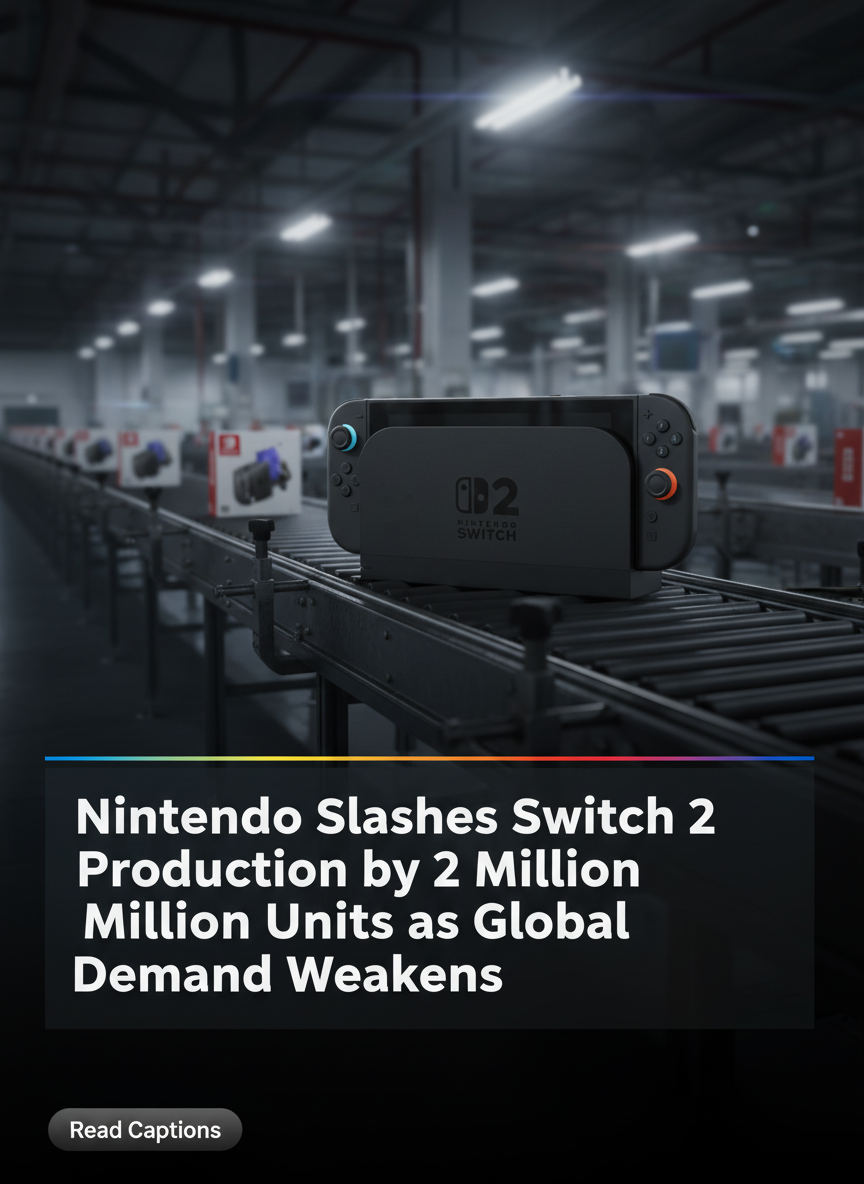
Nintendo Scales Back Switch 2 Production as US Demand Cools Following Record Launch
KYOTO, Japan — In a significant shift for the gaming industry’s newest heavy hitter, Nintendo has reportedly moved to slash production targets for its Switch 2 console. The decision comes as the Japanese gaming giant grapples with a sudden cooling of consumer interest in the United States, a key market that has historically driven the company’s hardware cycles.
Production Targets Slashed by One-Third
According to a report from Bloomberg, citing unnamed sources familiar with the company’s manufacturing pipeline, Nintendo now expects to produce approximately four million units of the Switch 2 this quarter. This represents a substantial 33% decrease from the six million units originally projected. Sources indicate that this reduced manufacturing pace is not a temporary hiccup but is expected to continue through April.
The adjustment suggests that the initial “honeymoon phase” of the console’s lifecycle may be ending sooner than anticipated. While the Switch 2 enjoyed a record-breaking debut in June of last year—solidifying its status as the fastest-selling console in Nintendo’s storied history—the momentum appears to be hitting a wall in the North American market.
Leadership Acknowledges Global Headwinds
The report aligns with recent candid admissions from Nintendo’s executive suite. During a recent earnings call, Nintendo President Shuntaro Furukawa noted that while the console remains a global flagship, “overseas sales were somewhat weaker than expected.”
Industry analysts suggest that the slowdown in the U.S. may be attributed to several factors, including a tightening of discretionary consumer spending and a software release calendar that has seen a lull following the blockbuster titles that accompanied the console’s launch window. Without a steady stream of “must-have” first-party titles to maintain the fervor, the hardware is seeing a natural dip in sell-through rates.
Market Impact and Future Outlook
For Nintendo, the stakes are high. The original Nintendo Switch was a generational phenomenon that bridged the gap between home and portable gaming. The Switch 2 was designed to build on that hybrid legacy with enhanced power and features. However, the production cut highlights the volatility of the current hardware market, where supply chain stability is often met with the unpredictability of post-launch demand.
Despite the current scale-back, Nintendo remains in a strong position. The company is known for its “evergreen” titles, and many expect a renewed surge in hardware sales as major franchises—such as the next entries in the Legend of Zelda or Super Mario series—eventually make their way to the platform.
Conclusion
While a reduction in production targets often signals caution to investors, it also demonstrates Nintendo’s agility in managing inventory to avoid the pitfalls of oversupply. As the company navigates a softer U.S. market, all eyes will be on its upcoming software showcase to see if Nintendo can reignite the spark that made the Switch 2 a record-breaker just months ago.
For more updates on gaming hardware and industry trends, stay tuned for further coverage.