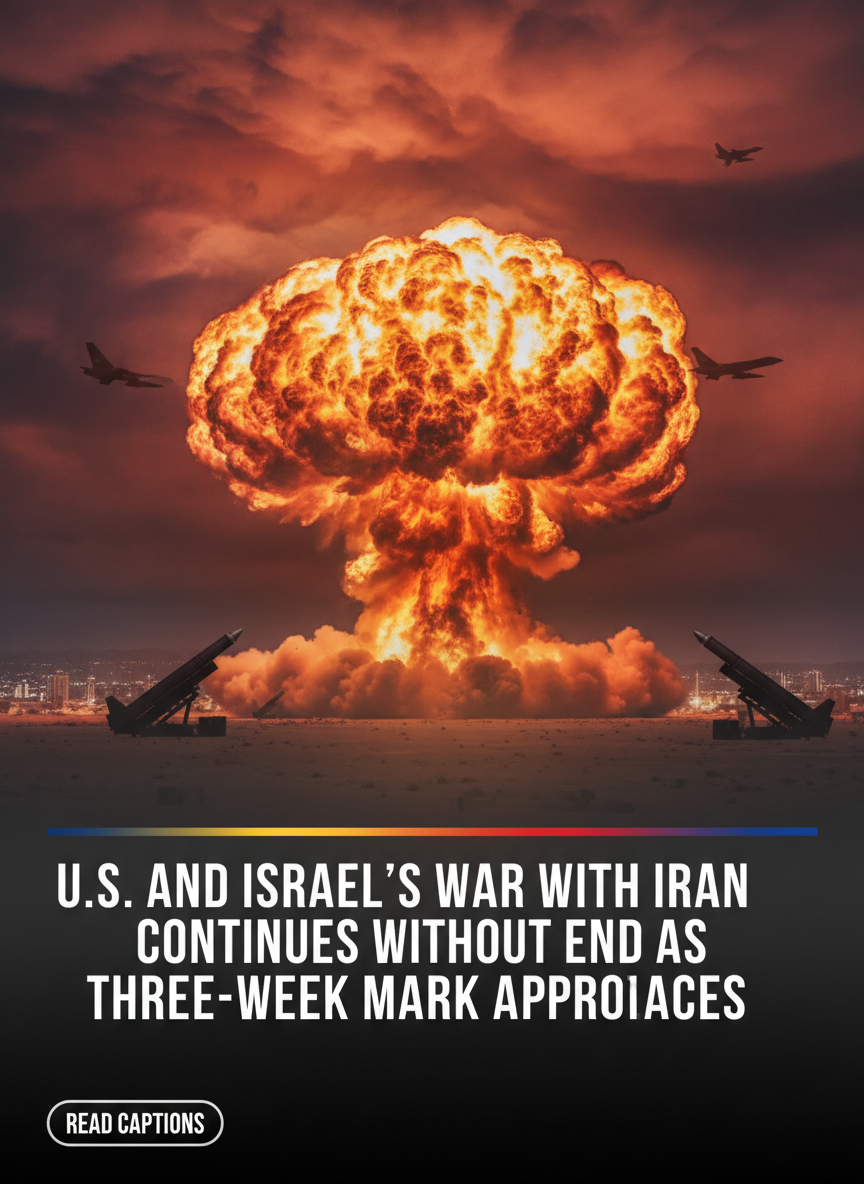
No End in Sight: U.S.-Iran Conflict Nears Three-Week Mark as Trump Administration Warns Regime is ‘Down but Not Out’
WASHINGTON — As the conflict between the United States, Israel, and Iran approaches its twenty-first day, the drums of war show no signs of fading. On the eve of the three-week milestone, the Trump administration issued a sobering assessment of the hostilities, characterizing the Iranian regime as severely weakened but still possessing the capability and will to resist.
A “Down but Not Out” Adversary
In a series of briefings on Friday, administration officials provided the most detailed look yet at the progress of the military campaign. Describing the impact of sustained aerial strikes and naval engagements, officials stated that while the autocratic regime in Tehran has been “knocked down” by the sheer force of U.S. and Israeli coordination, it remains “not out” of the fight.
National security advisors pointed to the resilience of Iran’s unconventional warfare units and its remaining missile stockpiles as evidence that the conflict has entered a grueling secondary phase. Despite significant damage to command-and-control centers, the administration has notably declined to provide a timeline for the cessation of hostilities, sparking concerns on Capitol Hill regarding a potential long-term entanglement.
Global Markets and the Strait of Hormuz
The economic repercussions of the war are being felt globally, centered primarily on the volatile energy markets. The Strait of Hormuz—a vital artery for the world’s oil supply—remains a primary flashpoint. Fears of a total blockade or sustained sabotage by Iranian-aligned forces have sent oil and gas prices surging to heights not seen in years.
Energy analysts warn that if the conflict continues into a second month, the “war premium” on crude oil could trigger a significant slowdown in global manufacturing and consumer spending. “The market is pricing in the uncertainty of a ‘forever war’ in the heart of the world’s energy corridor,” said one senior market strategist.
The U.S.-Israel Alliance
Throughout the three weeks of combat, the coordination between the Trump administration and Prime Minister Benjamin Netanyahu’s government has remained airtight. Israel has conducted numerous sorties aimed at neutralizing Iranian-backed proxies and preventing the shipment of advanced weaponry. Netanyahu has reiterated that Israel will do “whatever is necessary” to ensure the regime cannot reconstitute its nuclear or regional ambitions.
However, the unity of the alliance is being tested by the mounting “deadly and costly” nature of the operations. As casualty counts rise and the financial burden of the war reaches into the billions, domestic critics in both nations are beginning to demand a clearer definition of what “victory” actually looks like.
A Conflict Without a Deadline
The most striking aspect of the current situation remains the lack of an exit strategy. When pressed on how long American forces would remain engaged in active combat, the Trump administration remained non-committal. The focus, they insist, remains on “maximum pressure” applied through military means until the regime’s behavior fundamentally changes.
As the sun sets on the twentieth day of the war, the world watches with bated breath. What began as a series of escalations has morphed into a significant regional conflict with no clear end in sight, leaving both the global economy and regional stability hanging in the balance.
This is a developing story. Stay with CBS News for live updates on the conflict, energy prices, and diplomatic efforts.