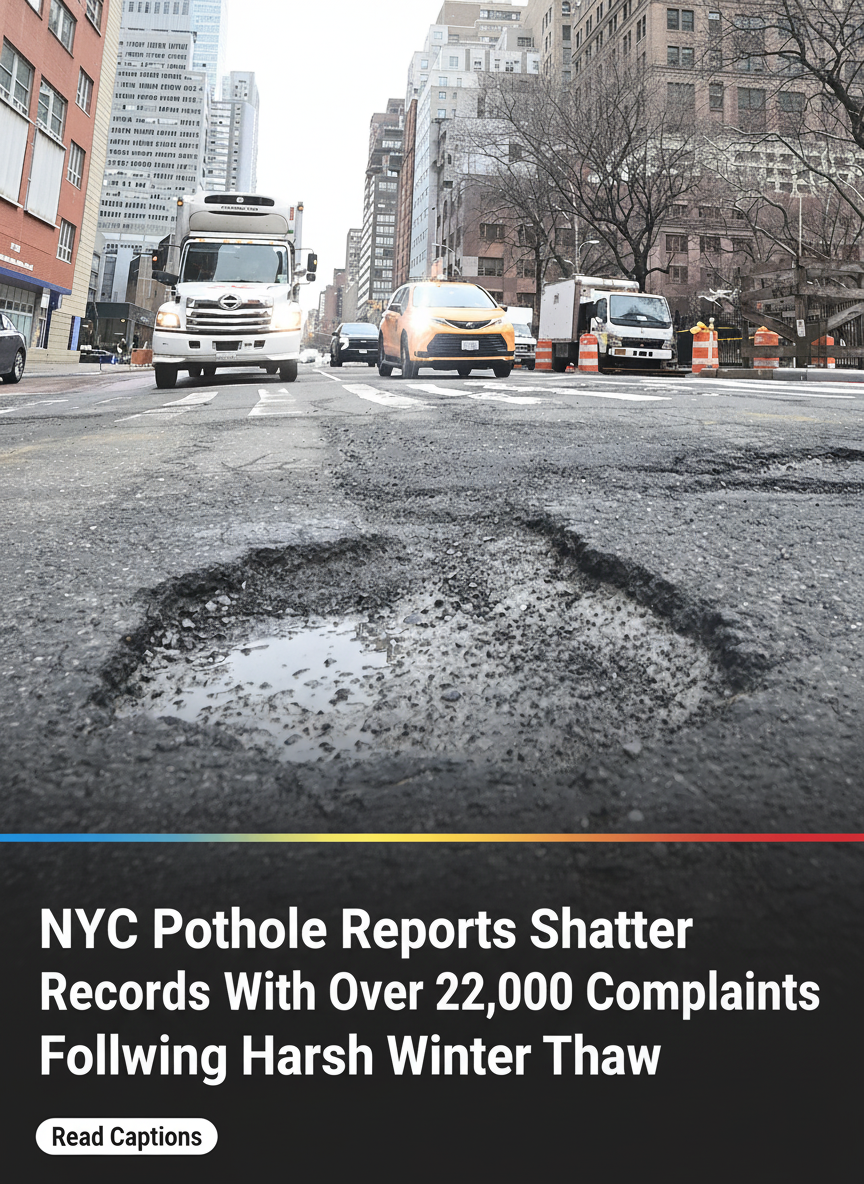
A Bumpy Road Ahead: NYC Pothole Reports Shatter Records with Unprecedented 2026 Spike
NEW YORK — As the final remnants of a brutal winter fade, New York City motorists are finding that the spring thaw brings a treacherous new reality to the five boroughs. According to the latest city data, pothole complaints have surged to record-breaking levels, with 2026 marking the most significant spike in reports in the city’s history.
Unprecedented Numbers at 311
New York City’s 311 system has been inundated with calls from frustrated drivers, tallying over 22,000 unique pothole reports since the beginning of the year. This figure represents a staggering triple-digit percentage increase compared to the same period in previous years, signaling a crisis of infrastructure that has caught both residents and city officials off guard.
For the first time since record-keeping began, the daily volume of calls regarding road craters has consistently hit triple digits, leaving the Department of Transportation (DOT) struggling to keep pace with the sheer volume of repair requests.
The “Great Thaw” of 2026
Experts attribute this year’s “pothole season” to an unusually icy and volatile winter. The science behind the craters is a classic freeze-thaw cycle exacerbated by extreme weather. Water from the heavy snowfalls seeped into cracks in the asphalt; as temperatures plummeted, that water expanded into ice, pushing the pavement upward.
When the record-breaking cold finally gave way to a rapid spring thaw, the ice melted, leaving hollow gaps beneath the road surface. Under the weight of heavy city traffic and MTA buses, these weakened sections of the road collapsed, creating the thousands of jagged pits currently lining the city’s streets.
Commuter Chaos and Costly Repairs
The impact on New Yorkers has been immediate and expensive. Auto repair shops across the city are reporting a surge in customers seeking help for blown-out tires, bent rims, and damaged suspension systems. In some neighborhoods in Brooklyn and Queens, residents have taken to placing orange cones or even trash cans inside particularly deep potholes to warn fellow motorists of the danger.
“It’s like driving through a minefield,” said Michael Rossi, a delivery driver who frequents the BQE. “You can’t swerve because of traffic, so you just have to hold your breath and hope your axle doesn’t snap. I’ve never seen it this bad in twenty years of driving in this city.”
City Response and the Road to Recovery
In response to the record-setting numbers, City Hall has announced a “blitz” strategy, redirecting additional crews to the hardest-hit corridors. However, officials warn that the sheer volume of 22,000 reports means that many secondary roads may have to wait weeks for permanent repairs.
The DOT has encouraged New Yorkers to continue reporting hazards via the 311 app, noting that GPS-tagged photos help crews prioritize the most dangerous “wheel-eaters.” While the city aims to fill the majority of these craters by the start of the summer season, the 2026 surge serves as a stark reminder of the vulnerability of urban infrastructure in the face of increasingly volatile weather patterns.
Conclusion
As the city grapples with this record-shattering spike, the message to New York drivers is clear: stay vigilant and keep the 311 app ready. With over 22,000 potholes already on the books, 2026 is officially the year the city’s roads reached their breaking point.