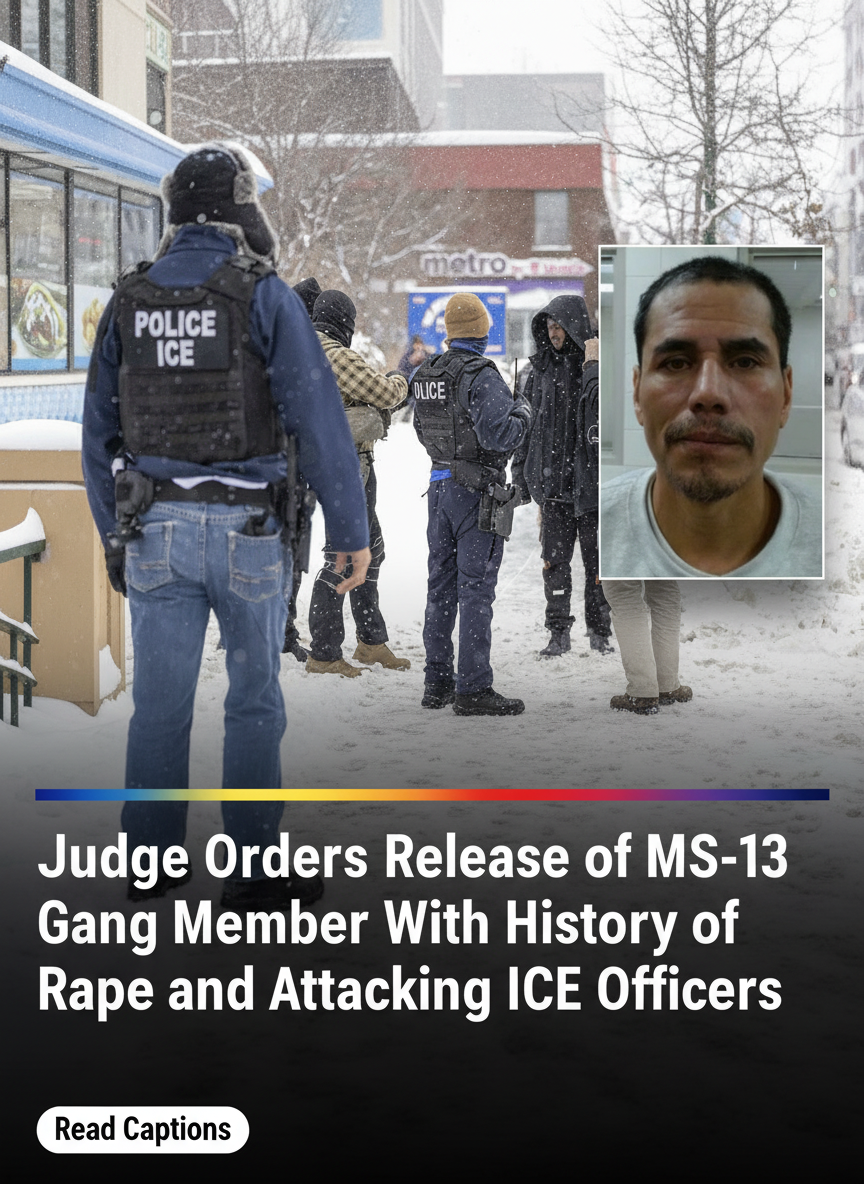
Obama-Appointed Judge Sparks Outrage After Ordering Release of MS-13 Member with Violent History
By Staff Reporter | National Security & Legal Affairs
In a decision that has sent shockwaves through the Department of Homeland Security (DHS), a federal judge has ordered the release of a high-ranking MS-13 gang member into the United States interior. The individual, identified as Carlos Antonio Flores-Miguel, has a documented criminal history involving rape, robbery, and physical assaults on federal law enforcement officers.
The ruling, issued by U.S. District Judge Rudolph Contreras—an appointee of former President Barack Obama—has drawn immediate and sharp condemnation from immigration officials and public safety advocates who argue the move poses a direct threat to the community.
A History of Violence
Carlos Antonio Flores-Miguel is not a stranger to the American legal system. According to court records and reports from Immigration and Customs Enforcement (ICE), Flores-Miguel is a confirmed member of the notorious MS-13 international criminal enterprise. His criminal record includes convictions for serious felonies, most notably rape and robbery.
Furthermore, federal officials have highlighted his volatility while in custody. Documentation presented during legal proceedings detailed multiple instances where Flores-Miguel allegedly attacked ICE officers. Despite this pattern of violent behavior and his status as an undocumented immigrant with ties to organized crime, the court determined that his continued detention was no longer legally viable.
The Legal Justification
Judge Contreras’s decision hinges on the duration of Flores-Miguel’s detention. Under current legal precedents, the government cannot hold a non-citizen indefinitely if their deportation is not “significantly likely in the reasonably foreseeable future.” In this instance, the defense argued that the length of time Flores-Miguel had spent in ICE custody violated his due process rights.
While the government argued that Flores-Miguel’s violent history and gang affiliation made him an exceptional case for continued detention, the court ruled that the government had failed to provide a concrete timeline for his removal. As a result, the judge ordered his release under certain supervision conditions, rather than keeping him behind bars until his deportation could be finalized.
DHS and Law Enforcement React
The Department of Homeland Security issued a blistering response to the order, expressing “grave concern” for public safety. Officials emphasized that MS-13 is known for its extreme violence and that releasing a member with a history of sexual assault and attacks on law enforcement undermines the core mission of border security and interior enforcement.
“The release of a dangerous, violent gang member back into our streets is a setback for public safety,” a DHS spokesperson stated. “Our officers work tirelessly to remove individuals who pose a threat to our neighborhoods, and decisions like these make that mission significantly more difficult and dangerous.”
Broader Implications
This case highlights the ongoing tension between judicial interpretations of due process and the executive branch’s efforts to prioritize the deportation of violent criminals. Critics of the ruling argue that it sets a dangerous precedent, potentially allowing other high-risk detainees to seek release based on the length of their administrative hold.
As of this week, Flores-Miguel is expected to be processed for release. While he will reportedly be subject to GPS monitoring and periodic check-ins, law enforcement officials remain skeptical that such measures are enough to mitigate the risk posed by a man with a proven history of defying the law and committing acts of violence.