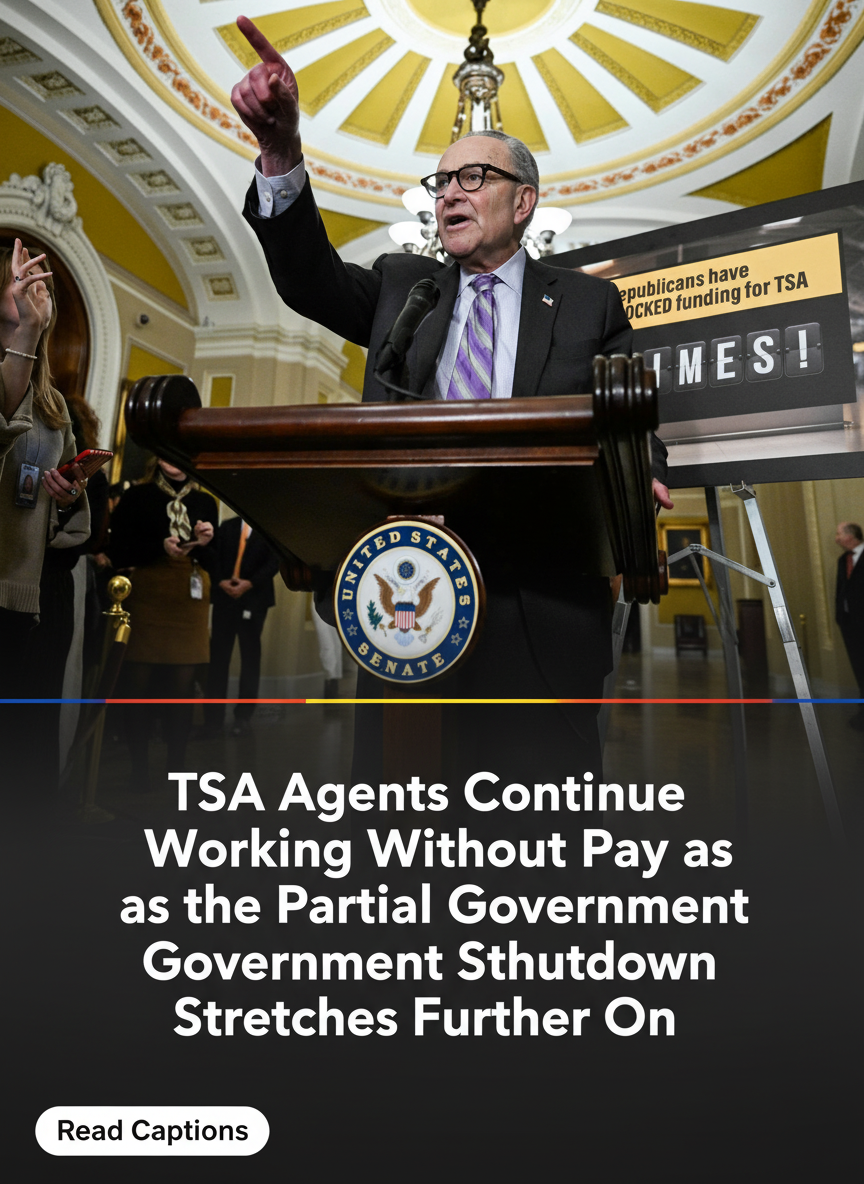
Unpaid and On the Front Lines: Public Outcry Grows as TSA Agents Bear the Brunt of Government Shutdown
NEW YORK — As the current partial government shutdown enters another grueling week, the silence in the halls of Congress stands in stark contrast to the growing tension at the nation’s airports. While lawmakers remain deadlocked over budget negotiations, the burden of the stalemate has fallen squarely on the shoulders of essential federal employees—most notably the Transportation Security Administration (TSA) agents who continue to report for duty without a paycheck.
The Human Cost of Political Gridlock
Across the country, the financial strain on the federal workforce is moving from a quiet concern to a public crisis. According to recent reports and a flood of correspondence from concerned citizens, TSA agents are reaching a breaking point. Required by law to work through the shutdown because of their “essential” status, these officers are now facing the reality of missing multiple paychecks while being expected to maintain the highest standards of national security.
In letters recently published by the New York Post, readers have voiced their mounting frustration and empathy for those manning the checkpoints. For many, the sight of TSA agents diligently performing their duties while unable to pay for their own commutes or groceries has become a symbol of a broken political system. One reader noted that it is “unconscionable” to expect security personnel to remain focused on complex threats when they are worried about looming rent payments and childcare costs.
A Crisis of Morale and Security
The implications of the shutdown extend beyond individual financial hardship. Industry experts warn that an unpaid workforce is a vulnerable one. Morale at major hubs like JFK, LaGuardia, and Newark is reportedly at an all-time low. While the TSA has officially stated that security remains uncompromised, the specter of increased “call-outs”—where agents miss shifts due to the inability to afford transportation or to seek temporary alternative income—threatens to lengthen wait times and stretch thin the remaining staff.
“You cannot expect a person to perform a high-stakes security job with a 100% success rate when they are distracted by the prospect of eviction,” said one retired aviation security consultant. “The public sees the long lines, but the real danger is the invisible stress on the front-line officers.”
Public Sentiment Shifts Toward Urgency
The discourse among the American public is shifting from partisan bickering to a unified call for a resolution. The recent wave of “Letters to the Editor” indicates that even those who may support the underlying political goals of the shutdown are losing patience with the method. The consensus among travelers and observers is clear: the safety of the national airspace should not be used as a bargaining chip.
Some readers have even suggested that if members of Congress were forced to forgo their own salaries during a shutdown, a resolution would be reached within hours. This sentiment highlights a growing disconnect between the decision-makers in Washington and the working-class federal employees who keep the country’s infrastructure moving.
Looking Ahead: Is a Resolution in Sight?
As the shutdown stretches on toward April, the pressure on Washington is reaching a fever pitch. While some regional airports have seen localized community efforts to provide food pantries and assistance to federal workers, these are temporary fixes for a systemic problem.
For now, the men and women in blue uniforms will continue to stand at the checkpoints, patting down luggage and monitoring scanners. They are the faces of a government that, for the moment, has ceased to function—working on a promise of backpay that offers little comfort in the face of immediate bills. The question remains: how much longer can the nation’s security be sustained by the goodwill and sacrifice of an unpaid workforce?
Reporting by NYP News Desk | March 26, 2026