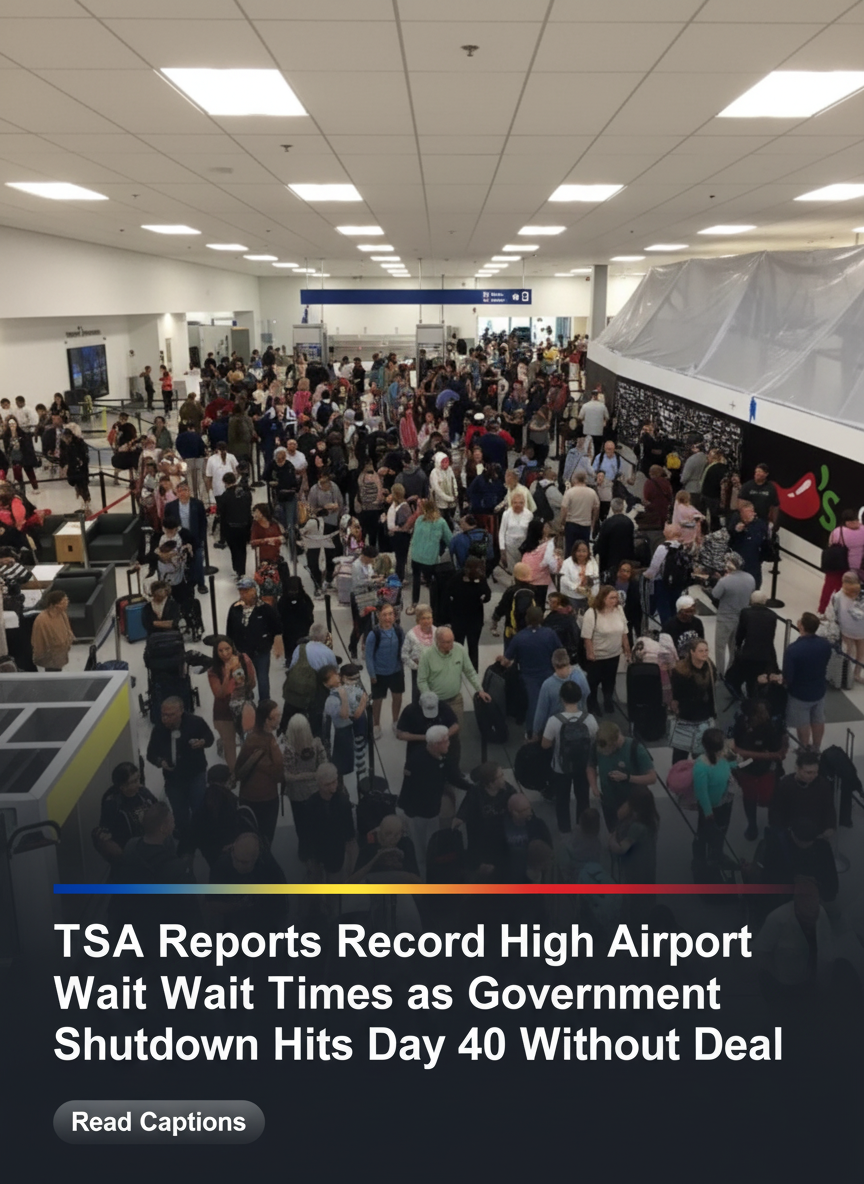
Turbulence at the Terminal: Record Wait Times Grip U.S. Airports as Shutdown Enters Day 40
WASHINGTON — As the federal government shutdown reaches a staggering 40-day milestone, the ripple effects are being felt most acutely at the nation’s security checkpoints. On Wednesday, the acting head of the Transportation Security Administration (TSA) delivered a sobering report to Congress: air travelers are currently facing the longest wait times in the agency’s history.
A System Strained to the Breaking Point
Testifying before a House subcommittee, TSA leadership confirmed that the operational capacity of the agency is being severely tested. With thousands of screeners working without pay for over a month, “call-outs” and staffing shortages have spiked, forcing the closure of various security lanes and even entire checkpoints at major international hubs.
The record-high wait times are not merely an inconvenience for vacationers; they represent a significant logistical bottleneck for the American economy. Business travel, cargo transport, and international tourism are all feeling the friction of a security apparatus that is underfunded and overextended.
Financial Hardship on the Front Lines
The human element of the crisis remains at the forefront of the debate. TSA officers, many of whom live paycheck to paycheck, are struggling to cover basic costs such as childcare, fuel, and groceries. While the agency has attempted to provide small bonuses and incentives where possible, the lack of a consistent paycheck has led many veteran officers to seek employment in the private sector.
“Our officers are dedicated professionals who want to do their jobs,” a TSA spokesperson noted in a supplemental statement. “But the financial reality of a 40-day lapse in funding is becoming an insurmountable hurdle for many families.”
Political Gridlock Continues
Despite the mounting pressure at airports and the growing outcry from the traveling public, a resolution in Washington remains elusive. The standoff, primarily centered on budget allocations for border security and the proposed wall, has left hundreds of thousands of federal employees—and the millions of citizens who rely on their services—in a state of limbo.
Lawmakers on both sides of the aisle expressed concern during Wednesday’s hearing, yet no definitive deal was brokered. While there have been several proposals to provide back pay or temporary funding, the fundamental disagreements regarding national security spending continue to prevent a full reopening of the government.
What Travelers Need to Know
For those brave enough to navigate the skies during this period of uncertainty, experts recommend arriving at the airport significantly earlier than usual—at least three hours for domestic flights and four hours for international departures. Travelers are also encouraged to check their local airport’s social media feeds and website for real-time updates on checkpoint closures.
Conclusion: A Precarious Future
As the shutdown moves into uncharted territory, the resilience of the U.S. aviation system is being pushed toward a tipping point. Without a legislative breakthrough, the record-high wait times seen this week may only be the beginning. For now, the nation watches and waits, hoping that the turbulence on the ground will settle before the system sustains permanent damage.
This story is developing and will be updated as more information becomes available.