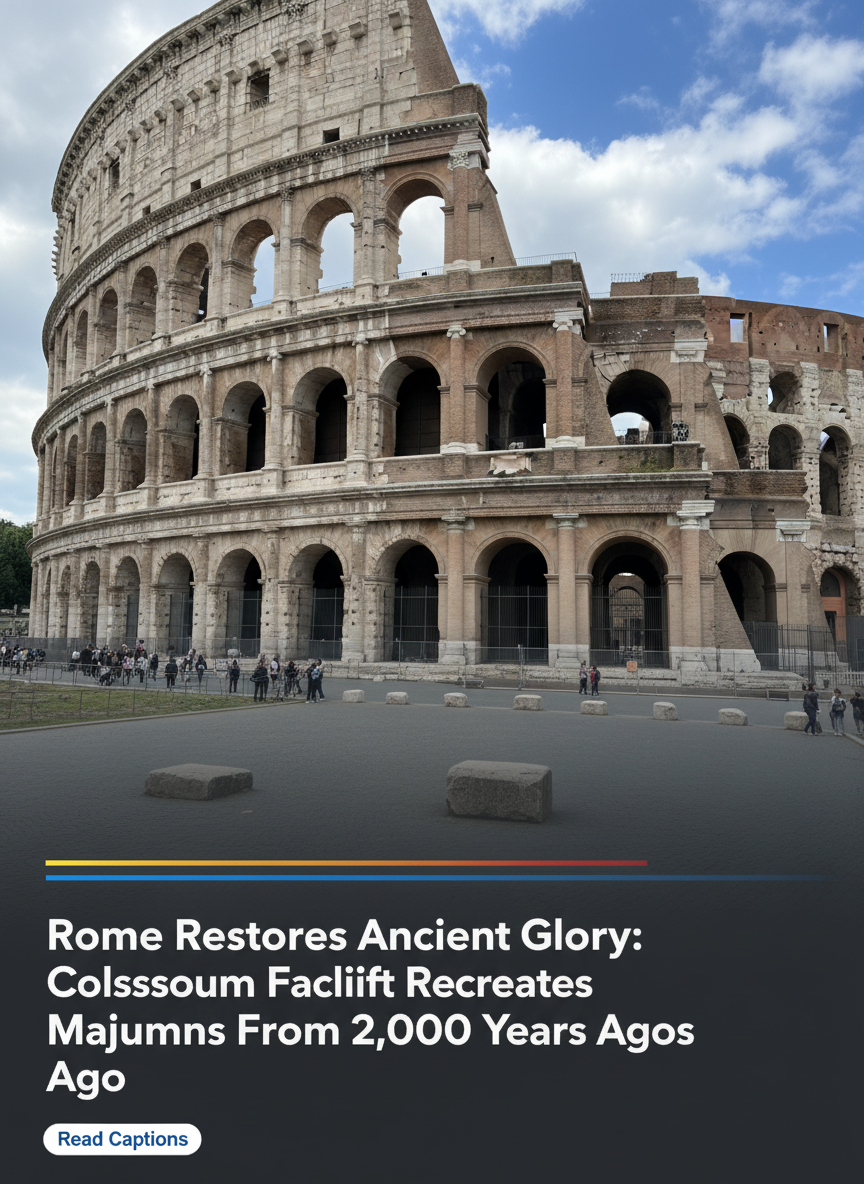
A Glimpse into Antiquity: Rome Unveils Major Restoration of Colosseum’s Iconic Columns
ROME — The Flavian Amphitheatre, known globally as the Colosseum, is undergoing a historic transformation. Italian heritage authorities have launched an ambitious restoration project designed to “recreate” the grandeur of the ancient world by reinstating a series of massive columns that once defined the structure’s interior and exterior majesty nearly 2,000 years ago.
The restoration, described by officials as a “facelift for the ages,” involves the careful reconstruction of several levels of columns using a combination of original marble fragments and modern, historically accurate materials. This effort aims to provide visitors with a more immersive and accurate representation of how the arena looked during the height of the Roman Empire.
Blending Ancient Craftsmanship with Modern Engineering
The project utilizes a technique known as anastylosis, a process where ruined architectural elements are reassembled using the original materials as much as possible. For areas where the original stone has been lost to time or medieval looting, experts are using specialized limestone and marble that match the chemical composition and aesthetic of the 1st-century originals.
Architects and archaeologists working on the site have noted that the goal is not to create a “new” building, but to restore the structural rhythm of the Colosseum. By raising these columns, the visual “skeleton” of the arena’s upper tiers is returned, allowing the public to better understand the vertical scale and complex engineering of the world’s most famous amphitheater.
A Surge in Global Tourism
The timing of the project comes as Rome experiences a massive boom in international travel. In 2025, the Colosseum solidified its status as Italy’s most popular tourist destination, hosting a staggering nine million visitors. The surge in foot traffic has prompted the Italian Ministry of Culture to invest more heavily in the site’s preservation and visitor experience.
“We are not just preserving ruins; we are breathing life back into history,” said a spokesperson for the Parco Archeologico del Colosseo. “With nine million people walking through these arches last year alone, it is our responsibility to ensure that the story of Rome is told with clarity and grandeur.”
Enhancing the Visitor Experience
Beyond the aesthetic improvements, the restoration of the columns is part of a broader plan to modernize the site’s infrastructure. This includes the ongoing development of a high-tech retractable floor, which will eventually allow visitors to stand where gladiators once fought, looking up at the newly restored tiers of columns.
Travel experts believe these updates will further cement Rome’s position as a global cultural capital. For the millions of tourists expected in 2026, the sight of the newly erected columns will offer a “once-in-a-lifetime” view of the arena that hasn’t been possible for centuries.
Conclusion
As the scaffolding begins to descend on various sections of the monument, the Colosseum continues to stand as a testament to Roman ingenuity. By recreating the pillars of the past, Italy is ensuring that its most iconic landmark remains a vibrant, evolving piece of history rather than a static relic. For the millions who flock to the Eternal City, the “facelift” provides a rare opportunity to see the ancient world through a restored lens, bridging the gap between 80 AD and the present day.