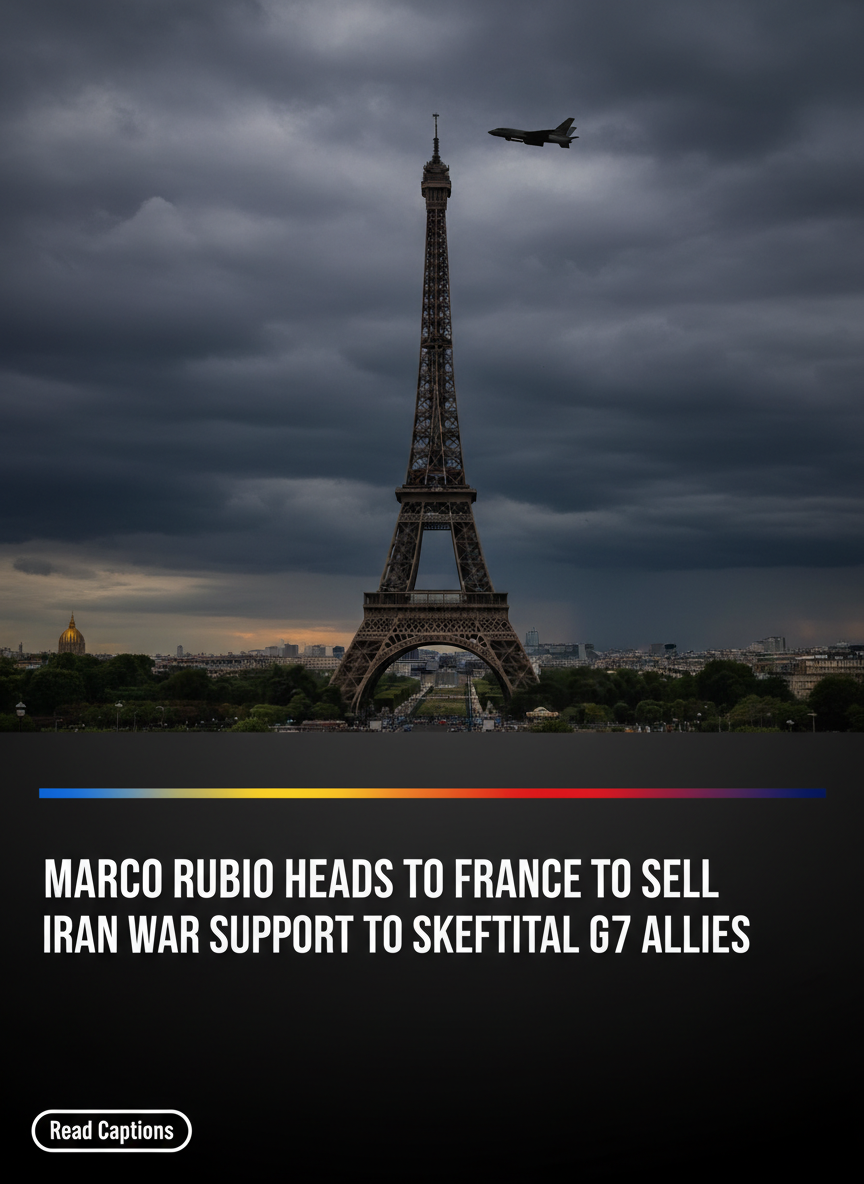
Rubio Embarks on High-Stakes Diplomatic Mission to France, Seeking G7 Support for Iran Conflict Amid Global Energy Crisis
PARIS — Secretary of State Marco Rubio is scheduled to arrive in France this week for a series of high-pressure summits aimed at a singular, daunting objective: persuading America’s closest allies to provide full-throated support for the ongoing military conflict in Iran. The mission comes at a critical juncture as the Group of Seven (G7) nations grapple with the economic fallout of a war that has sent global fuel prices to historic highs and strained international diplomatic ties.
Navigating a Skeptical Coalition
The Secretary’s visit is viewed by political analysts as a “make-or-break” moment for the administration’s foreign policy. While the United States has maintained that its military actions are necessary to neutralize regional threats and ensure long-term stability, G7 partners—including France, Germany, and Japan—have expressed increasing apprehension. These nations are facing intense domestic pressure as their populations endure the brunt of a tightening energy market and inflation sparked by the disruption of Middle Eastern oil exports.
In Paris, Rubio is expected to meet with foreign ministers to present intelligence briefings and strategic justifications intended to bridge the growing rift between Washington and its European and Asian counterparts. The Secretary is expected to argue that a unified front is the only way to bring the conflict to a swift and favorable conclusion.
The Economic Toll of Conflict
The backdrop of the visit is a global economy on edge. Since the onset of hostilities, the price of crude oil has surged, leading to record-breaking costs at the pump for consumers and increased operational costs for industries worldwide. This economic volatility has fueled anti-war protests across several G7 capitals, making it politically difficult for leaders to commit further resources or public support to the American-led effort.
“The Secretary understands the economic anxieties our partners are feeling,” said a senior State Department official speaking on the condition of anonymity. “But his message will be clear: the cost of inaction and a nuclear-capable or destabilized Iran is far higher than the temporary economic adjustments we are seeing today.”
Strategic Objectives in Paris
Beyond broad policy support, Rubio is reportedly seeking more concrete commitments, including increased intelligence sharing, logistics support, and a unified sanctions regime to further isolate the Iranian government. However, French officials have signaled that their support is contingent on a clear “exit strategy” and a more robust humanitarian plan for the region.
French President Emmanuel Macron, who has historically positioned himself as a mediator in Middle Eastern affairs, is expected to hold a private session with Rubio. Insiders suggest Macron will push for a ceasefire or a return to diplomatic channels, a move that could complicate Rubio’s mandate to consolidate a war coalition.
A Defining Moment for the Administration
As Rubio prepares to land in the French capital, the stakes could not be higher. If he fails to secure a consensus, the United States risks finding itself increasingly isolated in a protracted and expensive conflict. Conversely, a successful diplomatic tour could solidify the G7’s resolve and present a formidable challenge to Tehran.
The world will be watching closely as the Secretary of State attempts to navigate the delicate balance between national security interests and the pressing economic realities of the global community. The outcome of these meetings may well determine the trajectory of the Iran conflict and the stability of the Western alliance for years to come.
Reporting by NPR Staff. Published March 25, 2026.