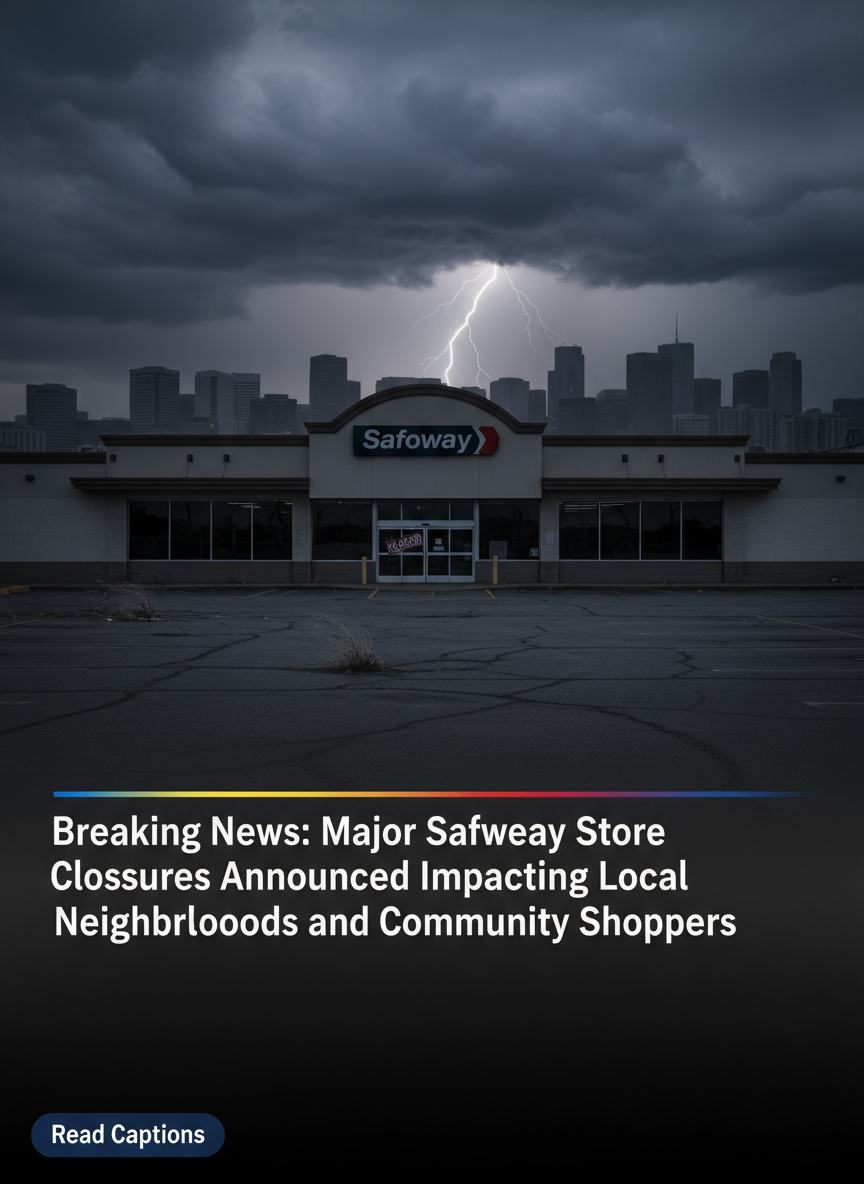
Retail Crossroads: Safeway Braces for Major Store Divestitures and Strategic Closures
The landscape of American grocery shopping is on the verge of its most significant transformation in decades. Safeway, a cornerstone of West Coast and Mid-Atlantic retail, is currently at the center of a complex web of underperforming store closures and a massive divestiture plan tied to the proposed $24.6 billion merger between its parent company, Albertsons Companies, and the Kroger Co.
The Current Wave: Strategic Shuttering and Community Impact
In recent months, Safeway has moved forward with the closure of several long-standing locations, citing underperformance and changing market dynamics. One of the most high-profile instances occurred in January 2024, when Safeway announced the closure of its Fillmore Street location in San Francisco. This store, a vital resource in a historically underserved neighborhood, was sold to a residential developer, sparking significant community backlash and intervention from local lawmakers.
Similar closures have been felt across the country. In September 2024, Safeway shuttered its location in Columbia, Maryland, after decades of operation, citing a failure to meet economic goals. These individual closures are often attributed to “shrink” (retail theft), rising labor costs, and the intense pressure of competing with low-cost leaders like Walmart and premium retailers like Whole Foods.
The Merger Factor: 579 Stores on the Line
While individual store closures are based on local performance, a much larger shift is looming. In April 2024, Kroger and Albertsons released a comprehensive list of 579 stores they intend to sell to C&S Wholesale Grocers if their merger is approved by federal regulators. This list includes a significant number of Safeway locations, particularly in states where the two giants have overlapping footprints, such as Washington, California, Oregon, and Colorado.
The Federal Trade Commission (FTC) filed a lawsuit in February 2024 to block the merger, arguing that the deal would eliminate competition, leading to higher grocery prices and lower wages for workers. The companies contend that the divestiture of these 579 stores to C&S—a well-capitalized wholesale company—will maintain a competitive market and prevent any store closures or frontline job losses as a direct result of the merger.
Context and Economic Pressures
The “safeway closures” narrative is not just about a single merger; it is a symptom of a shifting retail environment. Analysts point to three primary factors driving the current volatility:
- E-commerce Dominance: The rise of grocery delivery services and Amazon’s expansion into the fresh food market have thinned profit margins for traditional brick-and-mortar stores.
- Operational Costs: Significant increases in commercial real estate rents and the cost of labor have made older, less efficient store layouts difficult to maintain.
- Regulatory Scrutiny: The FTC’s aggressive stance on “food deserts” has forced companies to be more transparent about closures, though it has not always been able to prevent them.
A Century of History: From Skaggs to Albertsons
Safeway’s history is one of constant evolution. Founded in 1915 by Marion Barton Skaggs in American Falls, Idaho, the company grew into a retail powerhouse by prioritizing a “cash-and-carry” model that was revolutionary at the time. By the 1930s, Safeway was a dominant force on the West Coast, eventually expanding internationally.
The modern era of Safeway began in 2015 when it was acquired by Albertsons in a $9.2 billion deal backed by the private equity firm Cerberus Capital Management. This merger created a massive network of stores but also saddled the company with debt and a complex organizational structure. The current proposed merger with Kroger represents the next—and perhaps final—chapter in Safeway’s history as an independent brand identity, as many stores may be rebranded or integrated into the Kroger ecosystem.
Conclusion: What Lies Ahead for Shoppers
For the average consumer, the headlines regarding Safeway closures and the Kroger merger signal a period of uncertainty. While the companies promise that “no stores will close” as a direct result of the merger, history suggests that divestitures often lead to rebranding, shifts in product selection, and changes in pricing structures. As the legal battle between the FTC and the grocery giants heads toward a final resolution in late 2024 and early 2025, the fate of hundreds of Safeway locations remains in the balance, marking the end of one era of retail and the beginning of a more consolidated, tech-driven future.