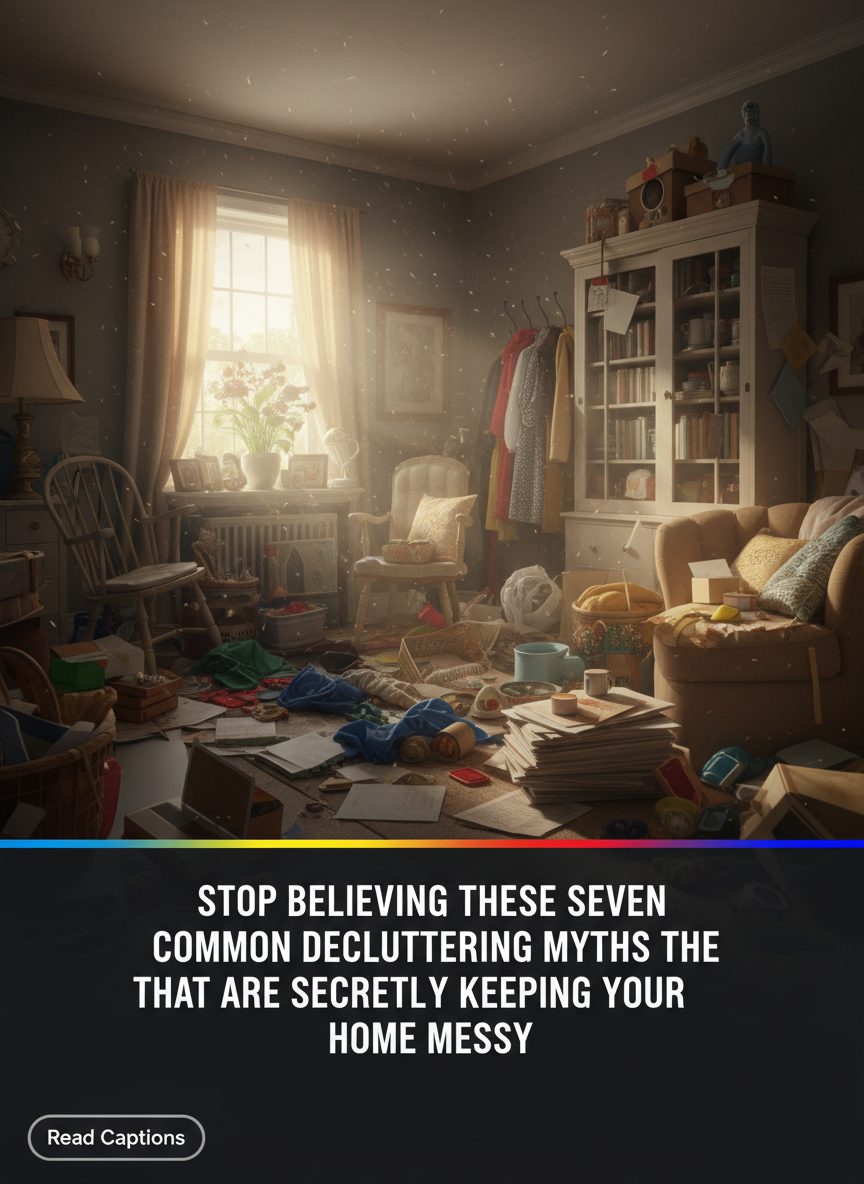
The 7 Biggest Decluttering Myths: Why Your Spring Cleaning Isn’t Working
By Lifestyle & Real Estate Desk
Published March 25, 2026
As the spring equinox passes and the urge to refresh our living spaces takes hold, millions of Americans are reaching for trash bags and storage bins. However, professional organizers say that most of us are approaching the task with a set of deeply ingrained misconceptions that actually prevent us from achieving a tidy home.
“People think decluttering is about finding better ways to hide their stuff,” says Elena Rodriguez, a veteran professional organizer based in New York. “In reality, it’s about a psychological shift in how we value our space versus our belongings. These myths act as mental roadblocks that keep us stuck in a cycle of perpetual mess.”
To help you navigate your spring cleaning more effectively, we’ve consulted with top industry experts to debunk the seven biggest decluttering myths currently holding you back.
Myth 1: You Should Buy Organizing Supplies First
It is the most common mistake: heading to a big-box store to buy matching acrylic bins and wicker baskets before even looking at the mess. Experts warn that this “solution” usually results in more clutter. You cannot organize your way out of having too much stuff. The rule of thumb is to declutter first, measure your remaining items, and only then purchase the specific containers you need.
Myth 2: You’ll Use It “Someday”
The “just in case” mentality is a primary driver of household overflow. Whether it’s a bread maker you haven’t touched in three years or a pair of jeans that might fit again after a fitness kick, “someday” items occupy valuable “prime real estate” in your home. If an item hasn’t been used in the last 12 months, the odds of it being used in the next 12 are statistically near zero.
Myth 3: Selling Your Clutter is Easy Money
With the rise of online marketplaces, many justify keeping items because they “plan to sell them.” However, the time spent photographing, listing, and haggling with buyers often outweighs the $20 profit. Experts suggest a “two-week rule”: if you haven’t listed the item and sold it within 14 days, donate it. The mental clarity of a clean room is worth more than a few extra dollars.
Myth 4: Keeping Items “Saves” You Money
There is a hidden cost to clutter—the “clutter tax.” When your home is disorganized, you often end up buying duplicates because you can’t find the original. Furthermore, the square footage occupied by unused items is space you are paying for in rent or mortgage. Professional organizers argue that you aren’t saving money by keeping a $5 gadget; you’re losing the utility of your living space.
Myth 5: Decluttering is a One-Time Event
Spring cleaning is a great start, but decluttering is a lifestyle, not a Saturday project. Thinking of it as a “one-and-done” task leads to the inevitable rebound effect where the mess returns within months. Successful organizers recommend a “one-in, one-out” policy: for every new item brought into the home, one must leave. Consistently editing your belongings is the only way to maintain a minimalist environment.
Myth 6: Getting Rid of a Gift is Ungrateful
Sentimental guilt is a powerful force. Many people keep gifts they don’t like because they feel it honors the giver. “The purpose of a gift is the act of giving,” says Rodriguez. “Once the gift has been received and the connection made, the object has served its purpose.” Holding onto an item out of guilt only breeds resentment toward your space.
Myth 7: You Need a Full Day to Make Progress
Waiting for a free eight-hour window is a recipe for procrastination. The myth that decluttering requires a massive time commitment prevents people from starting at all. Instead, experts advocate for “micro-decluttering”—spending just 15 minutes a day on a single drawer or shelf. These small wins build the momentum necessary to tackle larger projects without the burnout.
The Bottom Line
As you approach your spring cleaning this year, remember that your home is a place for living, not storage. By dismantling these seven myths, you can move past the guilt and the “what-ifs,” creating a space that finally feels as light and airy as the season itself. The goal isn’t to have a perfect home, but to have a home that supports the life you want to lead today—not the life you lived five years ago.