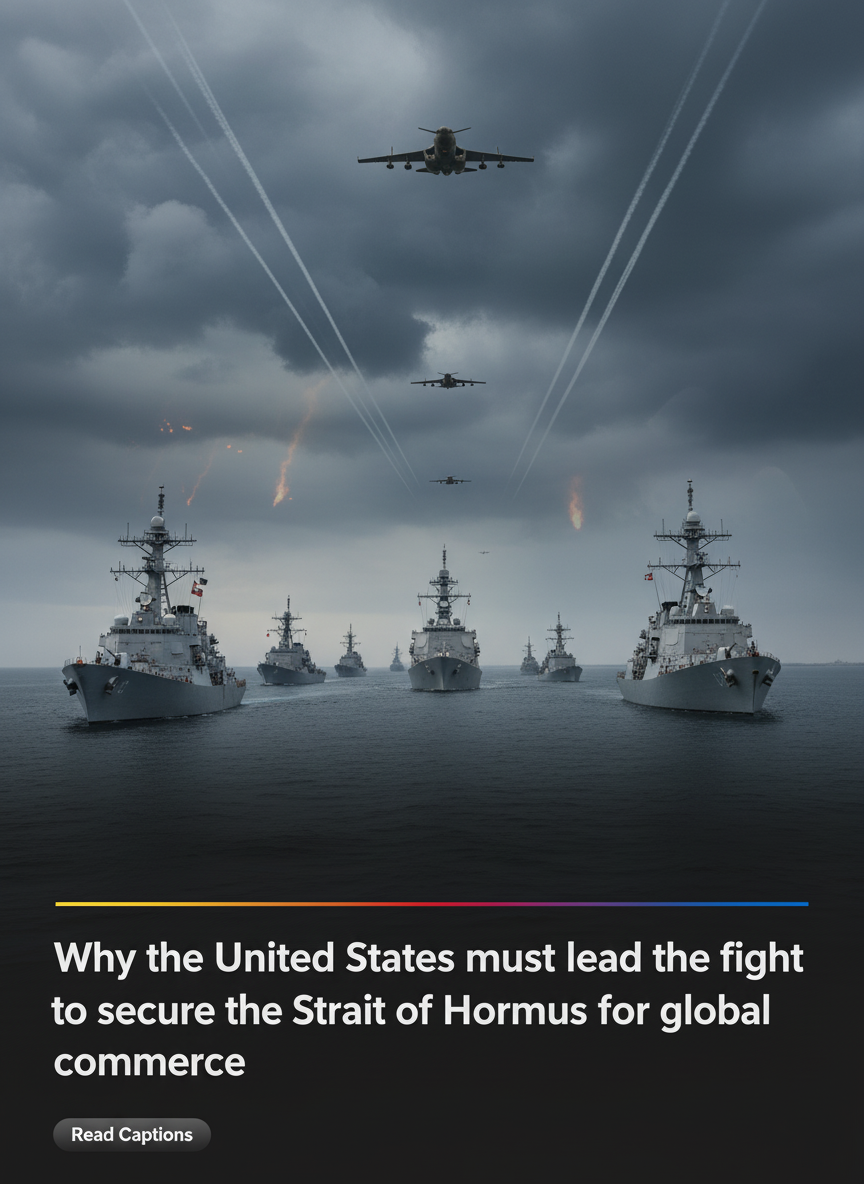
The ‘Silent Guardian’: Why Securing the Strait of Hormuz Remains America’s Historic Burden
As tensions simmer in the Middle East, a familiar geopolitical question has resurfaced in the halls of Washington and across global capitals: Who is responsible for keeping the world’s most vital maritime arteries open? According to a growing consensus of strategic analysts and historical scholars, the answer remains unchanged—the United States must bear the burden of policing the Strait of Hormuz.
The Strait, a narrow waterway separating the Persian Gulf from the Gulf of Oman, serves as the transit point for nearly a third of the world’s liquefied natural gas and approximately 20% of global oil consumption. Any disruption here does not just affect regional players; it sends shockwaves through the global economy, impacting everything from gas prices in the Midwest to manufacturing costs in East Asia.
A Legacy of Maritime Policing
The argument for American intervention is rooted in a centuries-old tradition. For nearly two hundred years, the protection of global commerce was the primary mandate of the British Royal Navy. Following the conclusion of World War II, that “trident” was passed to the United States. This Anglo-American commitment to “Freedom of Navigation” has been the bedrock of the modern globalized trade system.
Proponents of this view argue that the U.S. Navy acts as a “public good” for the world. By ensuring that no single nation can blockade these international waters, the United States maintains the stability of the global markets. This isn’t merely an act of altruism; it is a strategic necessity to prevent regional hegemons from using energy supplies as a tool of geopolitical blackmail.
The Current Crisis and the Necessity of Force
Recent escalations in the region—marked by drone strikes, ship seizures, and aggressive posturing by regional actors—have brought the fragility of the Strait back into the spotlight. While some domestic critics argue for a “pivot” away from Middle Eastern entanglements, military experts suggest that a vacuum in the Strait would lead to chaos.
Unlike other regions where regional alliances can manage local security, the Strait of Hormuz lacks a unified local force capable of—or interested in—impartial policing. Without a formidable American presence, the waterway risks becoming a theater of unchecked aggression, where smaller nations and commercial vessels are left at the mercy of the strongest regional power.
Why the U.S. Cannot Delegate the Task
The question often arises: Why can’t other major powers, such as China or the European Union, take the lead? While these nations are heavily dependent on the resources flowing through the Strait, they currently lack the “blue-water” naval capacity and the integrated command structure required to secure such a volatile chokepoint. Furthermore, the political will to enforce international maritime law consistently remains a unique hallmark of the U.S. strategic doctrine.
Analysts argue that delegating this responsibility to a less committed or less capable power could invite more instability, as different nations might prioritize their own commercial interests over the principle of open seas for all.
Conclusion: The Price of Leadership
Ultimately, freeing and securing the Strait of Hormuz is a task that carries significant financial and political costs. However, as history suggests, the cost of inaction—global energy spikes, economic recession, and the erosion of international law—is far higher.
As the United States navigates the complexities of the 21st century, the duty to guard the world’s sea lanes remains an inescapable part of its global leadership role. It is a burden inherited from history, maintained by necessity, and one that the U.S. must continue to bear to ensure the continued flow of global prosperity.