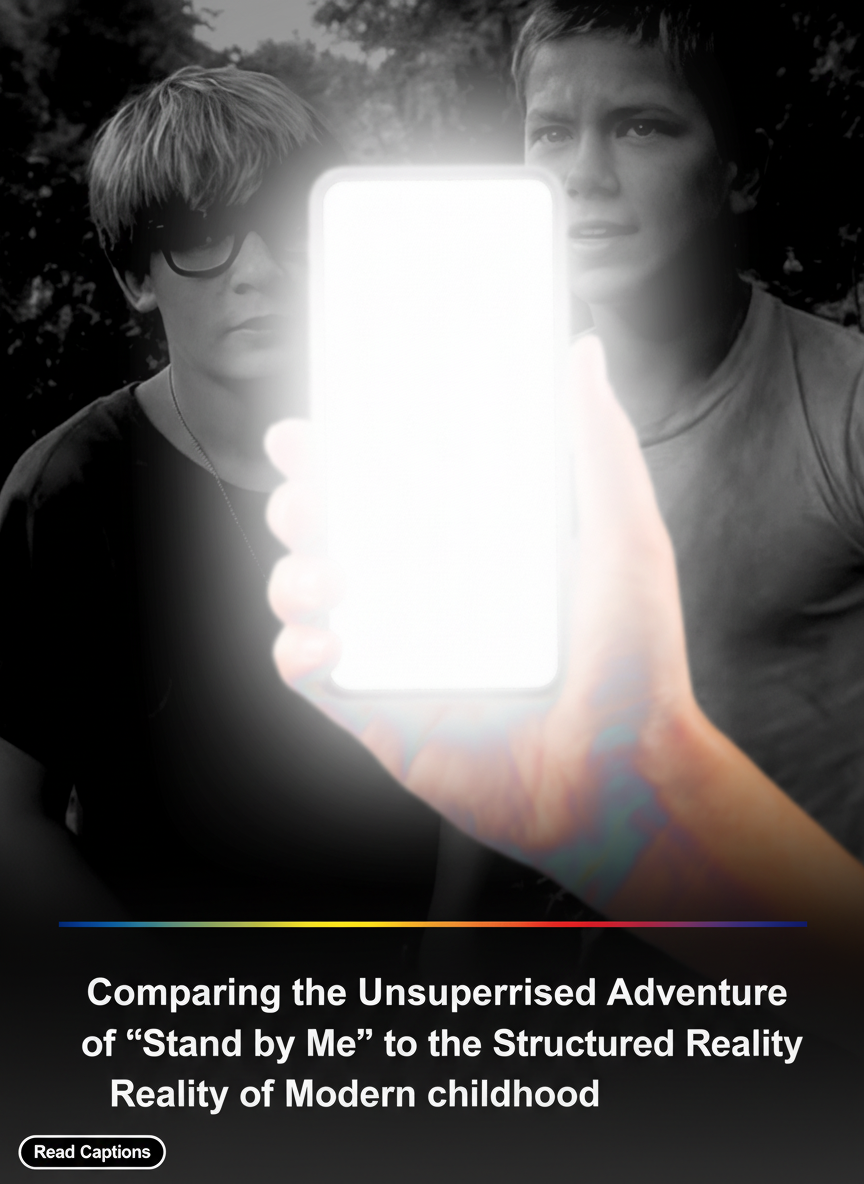
The Lost Summer: Why the ‘Stand by Me’ Childhood Has Vanished in the Age of Screens
By [Your Name/News Desk]
Published March 22, 2026
In the summer of 1959, four boys set out on a trek along a railroad track in Oregon to find a missing person’s body. They had no cellphones, no GPS, and no parental supervision. They had only a canteen, a sleeping bag, and the raw, unfiltered experience of adolescence. This was the premise of Stand by Me, the 1986 cinematic masterpiece directed by Rob Reiner and based on Stephen King’s novella, The Body.
Today, as the film marks its 40th anniversary, its creators are sounding an alarm. In a joint reflection, King and Reiner suggest that the “free-range” childhood depicted in the film has not just evolved—it has effectively gone extinct, replaced by a digital landscape that prioritizes constant connectivity over the formative power of solitude and physical adventure.
The Digital Leash
The core of Stand by Me’s enduring legacy is the independence of its protagonists. Gordie, Chris, Teddy, and Vern navigate dangerous trestles, evade local bullies, and confront their deepest fears without a “digital leash.” In 2026, that reality feels like a period piece from a distant era.
“In the 1950s, when the story is set, and even in the 80s when we made the film, a kid’s world ended where the sidewalk did,” says Rob Reiner. “Today, a kid’s world is infinite through their screen, yet they rarely leave their bedroom. We’ve traded physical danger for a different kind of psychological peril—the constant pressure of the curated, online self.”
Stephen King echoes this sentiment, noting that the “unsupervised space” is where children once learned resilience. “If those boys had smartphones, the movie would be fifteen minutes long,” King says. “They would have Googled the location, texted their parents, and been home by dinner. But they wouldn’t have discovered who they were.”
The Rise of the Screen-Time Epidemic
The shift from “free-range” to “screen-bound” is backed by more than just nostalgia. Recent sociological data shows that the average teenager now spends upwards of nine hours a day interacting with digital media. While this technology offers safety and information, it eliminates the “boredom” that Reiner and King argue is essential for creativity and self-reflection.
The “Stand by Me” childhood was defined by physical stakes. The boys faced leeches, trains, and the very real possibility of getting lost. Today’s risks are primarily social and reputational, played out on platforms that never sleep. Experts argue that this shift has contributed to a spike in adolescent anxiety, as children are never truly “away” from the gaze of their peers or their parents.
Resilience Through Risk
One of the most poignant themes in the film is the bond formed through shared hardship. King and Reiner argue that modern parenting, while well-intentioned, often “bubbles” children away from the very experiences that build character. The “helicopter” and “snowplow” parenting styles of the last two decades have removed the “treacherous railroad tracks” of life, leaving young adults less prepared for the realities of adulthood.
“There is a specific kind of magic that happens when a child realizes that no one is coming to save them, and they have to save themselves,” Reiner notes. “That’s what Gordie finds at the end of that journey. He finds his voice because he had to navigate the silence of the woods.”
Can We Go Back?
As we look toward the future, the question remains: Can the spirit of the “free-range” childhood be reclaimed? Both King and Reiner are skeptical but hopeful. They suggest that “analog windows”—designated times where technology is sidelined in favor of physical exploration—are no longer a luxury, but a necessity for developmental health.
The 40-year-old movie serves as a haunting reminder of a world that was louder, dirtier, and significantly more dangerous, yet perhaps more fulfilling. It asks a modern audience if the safety of the screen is worth the loss of the journey.
“I never had any friends later on like the ones I had when I was twelve,” goes the famous closing line of the film. In 2026, the creators of that story fear that if children don’t put down their phones and head out into the “woods” of the real world, they may never find those friends—or themselves—at all.
For more on the intersection of media and modern childhood, visit our culture section.