From Seoul to Main Street: The Calculated Rise of the Global Korean Wave
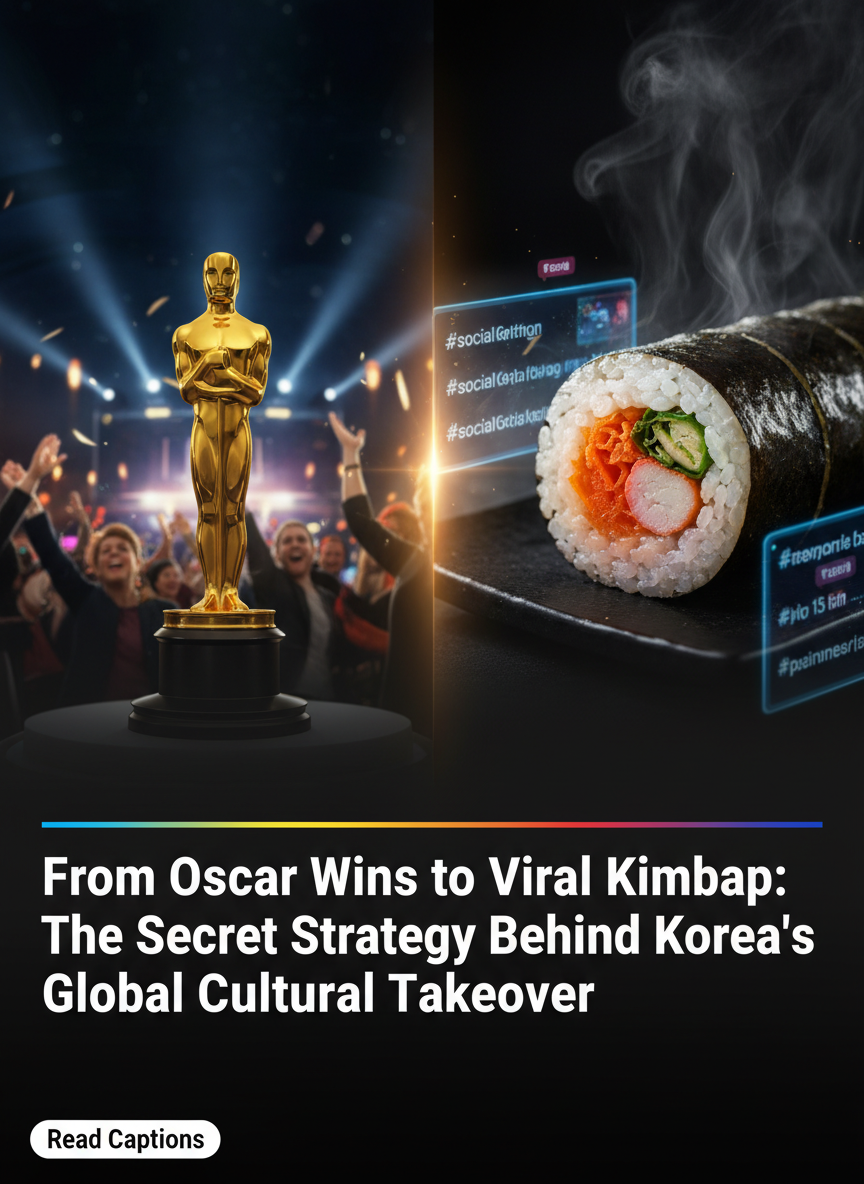
Even before the cast and crew of “KPop Demon Hunters” ascended the stage to claim their historic statuettes on Oscar night, the signals of a total cultural shift were everywhere. From the thunderous roar of sold-out stadiums hosting BTS to the frantic scramble for frozen kimbap at local Costcos, South Korean culture—once a niche interest for dedicated enthusiasts—has officially become the new global standard. But as industry insiders and cultural historians are quick to point out: none of this was an accident.
The Blueprint of a Cultural Superpower
What the world is currently witnessing is the fruition of a multi-decades-long master plan. Following the 1997 Asian financial crisis, the South Korean government made a radical pivot. Recognizing that the country’s future lay not just in hardware and semiconductors, but in “soft power,” the Ministry of Culture was given a mandate to export the Korean soul to the rest of the planet. Through massive subsidies, strategic infrastructure building, and a ruthless commitment to quality, the “Hallyu” (Korean Wave) was born.
“Korea doesn’t just produce content; they produce ecosystems,” says one industry analyst. “Whether it’s the rigorous training of K-pop idols or the high-concept writing of K-dramas, there is a level of intentionality that is rarely seen in other markets. They took the Hollywood playbook, refined it, and added a distinct aesthetic and emotional depth that resonates across borders.”
The “K-Everything” Effect: From Screens to Grocery Aisles
The cinematic triumph of “KPop Demon Hunters” serves as a punctuation mark on a sentence that has been building for years. The momentum began in earnest with the global explosion of Parasite and Squid Game, which proved that language barriers are “one-inch tall hurdles” in the age of streaming. However, the conquest has moved far beyond the screen.
In the United States, the demand for Korean lifestyle products has reached a fever pitch. Retailers like Costco and Trader Joe’s have struggled to keep stock of frozen kimbap, a staple Korean snack that has become a viral sensation among Gen Z and suburban parents alike. Beauty aisles are dominated by “K-Beauty” skincare routines, and the global music industry has been fundamentally reshaped by the “BTS effect,” which proved that a non-English speaking act could become the biggest band in the world through sheer talent and a sophisticated digital connection with fans.
Universal Themes, Local Flavors
A significant factor in Korea’s dominance is the universal nature of its storytelling. Many of the most successful exports grapple with themes of class disparity, family pressure, and the anxieties of modern capitalism—issues that feel as urgent in New York and London as they do in Seoul. By blending these heavy themes with high-gloss production values and catchy hooks, Korean creators have found a “Goldilocks zone” of entertainment: it is both deeply meaningful and immensely consumable.
Furthermore, the digital-first strategy of Korean media companies ensured they were ahead of the curve. While Western studios were still figuring out how to navigate the social media landscape, Korean entertainment giants like CJ ENM and HYBE were already leveraging fan communities and viral marketing to create a global grassroots movement.
Conclusion: A New Era of Global Influence
The success of the Korean Wave suggests that the era of Western cultural hegemony is evolving into a more multipolar world. The Oscars, the Billboard charts, and the grocery store shelves are no longer the exclusive domain of American brands. As Korea continues to innovate—fusing technology with traditional storytelling—the “K-Wave” shows no signs of receding.
As the stars of “KPop Demon Hunters” celebrated their wins, the message was clear: Korea hasn’t just joined the global conversation; it is now leading it. For the rest of the world, the goal is no longer just to watch what Korea does next, but to figure out how to keep up.