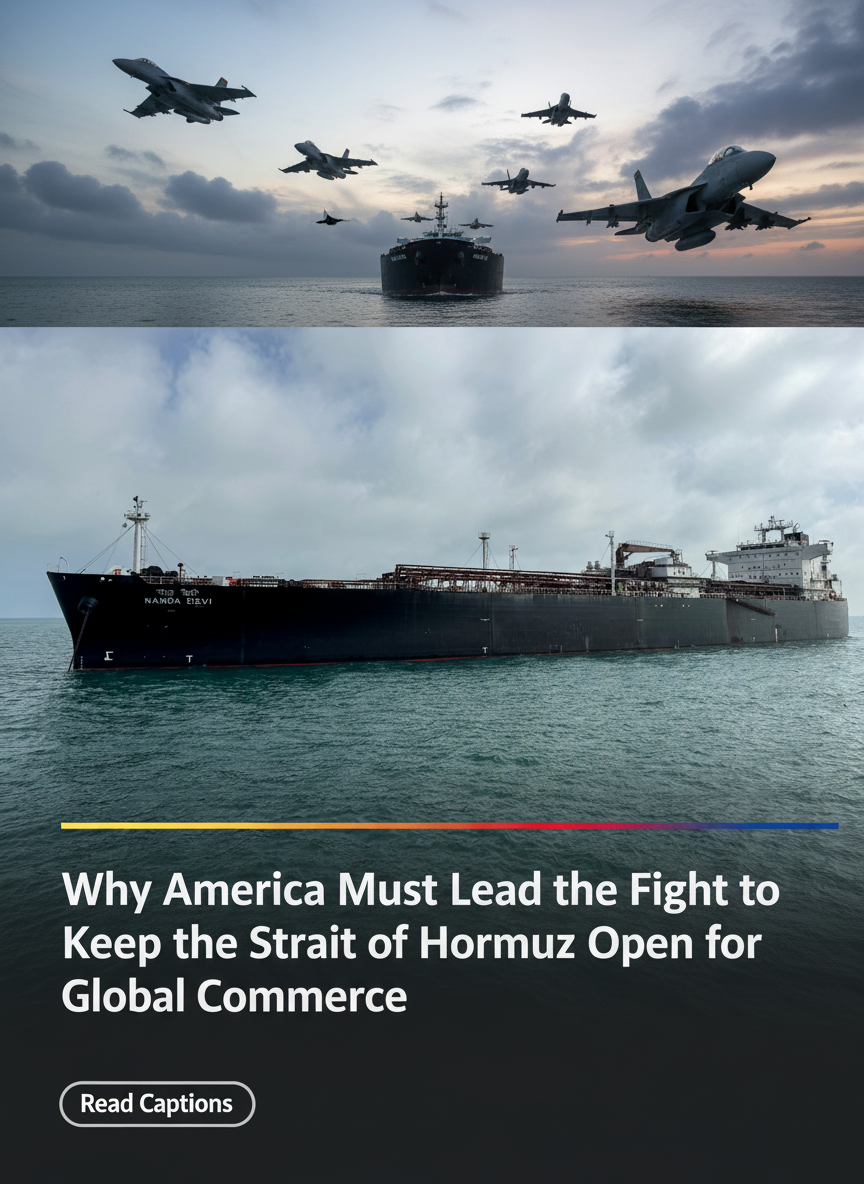
The Guardian of the Gulf: Why Securing the Strait of Hormuz Falls to Washington
March 17, 2026 — As tensions reach a fever pitch in the Middle East, the global economy finds itself once again held hostage by the precarious geography of the Strait of Hormuz. With energy prices fluctuating and maritime insurance rates skyrocketing, a familiar debate has resurfaced in the halls of power: Who is responsible for keeping the world’s most vital waterway open? While some call for international coalitions or regional self-reliance, the weight of history and the realities of modern naval power suggest a singular conclusion: the burden belongs to the United States.
A Century of Maritime Stewardship
The commitment to “freedom of navigation” is not a modern whim of the Pentagon; it is a fundamental pillar of global order that dates back over two centuries. Following in the wake of the British Royal Navy, the United States Navy has served as the ultimate guarantor of the high seas since the end of World War II. This Anglo-American tradition is based on a simple but profound principle: global prosperity requires the unimpeded flow of commerce.
The Strait of Hormuz, a narrow passage where roughly one-fifth of the world’s total oil consumption passes daily, is the ultimate test of this commitment. History has shown that when the U.S. retreats from this role, the vacuum is filled not by “regional stability,” but by chaos and the predatory ambitions of revisionist powers.
The Economic Imperative
Critics of American intervention often point to the high cost of maintaining a carrier strike group in the Persian Gulf. However, analysts argue that these costs are dwarfed by the potential fallout of a prolonged blockade. A shuttered Strait would trigger a global energy shock, stalling industrial production from Berlin to Beijing and hitting American consumers directly at the gas pump.
By securing the Strait, the U.S. is not merely performing an act of international charity; it is protecting the “arteries” of the global financial system. The current crisis has demonstrated that without a credible American naval presence, the threat of mine-laying or drone strikes by regional actors becomes an existential risk to international trade.
The Burden of Leadership
While the concept of “burden-sharing” among allies is a frequent talking point in Washington, the reality remains that no other nation—nor any collection of nations—possesses the logistical capability and command structure to replace the U.S. Fifth Fleet. The “fight is on us,” as many strategic experts suggest, because the United States is the only power with the credibility to deter aggression before the first shot is fired.
For decades, the American presence has provided a “security umbrella” that allowed regional economies to flourish. Withdrawing that protection now would not only betray a two-hundred-year-old maritime legacy but would also signal an end to the American-led era of global commerce.
Conclusion: No Alternative to American Resolve
As the standoff in the Strait continues, the choice for the United States is stark. It can either uphold its historic role as the defender of the seas or watch as the foundations of global trade crumble under the pressure of regional volatility. If history is any guide, the “burden” of freeing the Strait is one that Washington must bear—not because it seeks conflict, but because the alternative is a world defined by scarcity and lawlessness. In 2026, as in 1826, the freedom of the seas remains a prize that only the vigilant can protect.