Turbulence on the Ground: Powerful Storms and TSA Staffing Shortages Cripple U.S. Air Travel
NEW YORK — Millions of travelers across the United States are facing a “perfect storm” of travel disruptions this week as a volatile combination of severe weather and critical staffing shortages at security checkpoints sends flight schedules into a tailspin. From the bustling hubs of the East Coast to connecting gates in the Midwest, passengers are finding themselves stranded as airlines struggle to maintain operations amidst mounting external pressures.
A Double Threat to the Skies
The current travel crisis stems from two primary catalysts occurring simultaneously. First, a massive system of powerful thunderstorms has been sweeping across the eastern half of the country, grounding flights and forcing air traffic controllers to implement significant ground stops. The Mid-Atlantic and Northeast regions, which house some of the nation’s busiest airspace, have been particularly hard hit by lightning, high winds, and torrential rain.
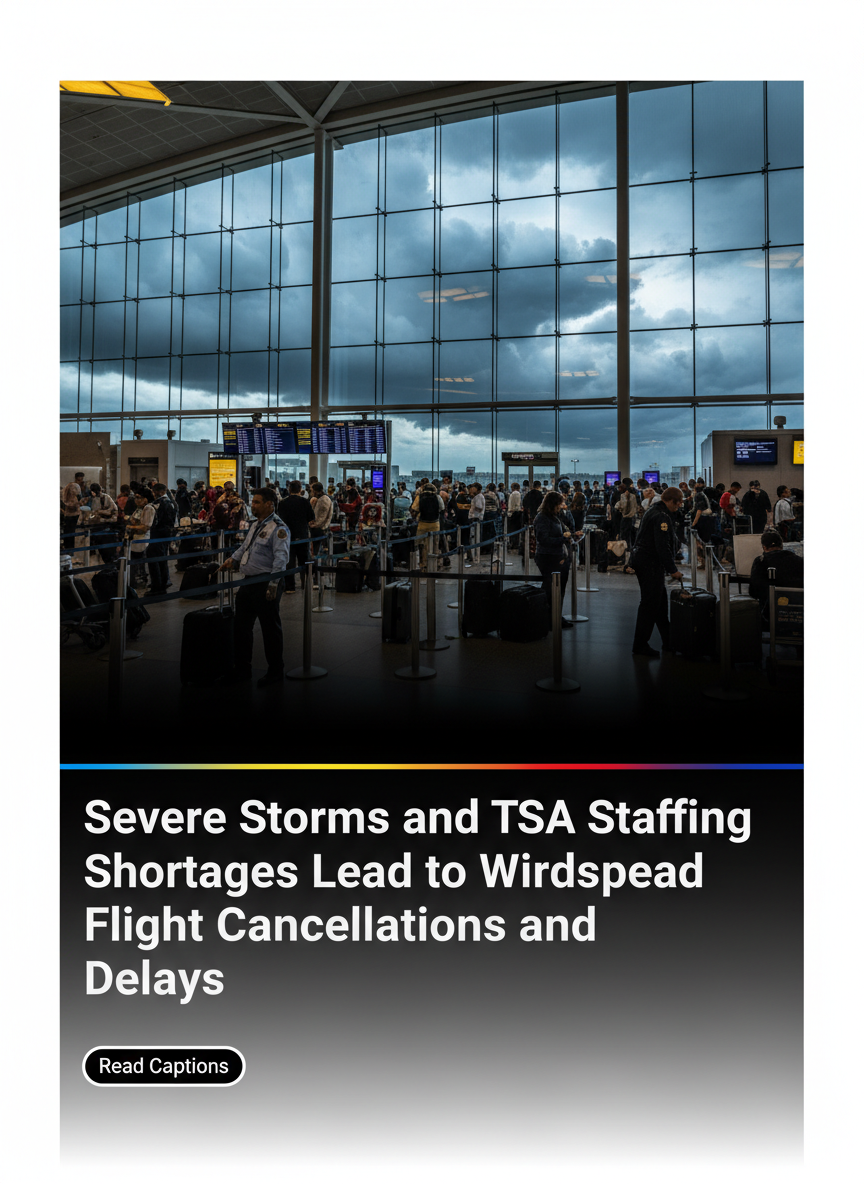
Compounding the meteorological chaos is a burgeoning human resource crisis at the Transportation Security Administration (TSA). Many airports are reporting significant delays at security checkpoints due to reduced staffing levels. The result is a secondary bottleneck: even when planes are ready to depart, hundreds of passengers are missing their flights while stuck in security lines that, in some cases, stretch through terminal lobbies and out onto sidewalks.
The Ripple Effect of Regional Disruptions
Aviation experts note that because of the highly interconnected nature of the U.S. flight network, a storm in New York or a staffing shortage in Atlanta can cause a domino effect that impacts travel as far away as Los Angeles or Seattle. On Tuesday alone, flight tracking services reported thousands of delays and hundreds of outright cancellations, a number that is expected to rise as the weather system moves toward the Atlantic coast.
“We are seeing a systemic failure to absorb these shocks,” said one industry analyst. “When you combine high summer travel volumes with a thinning workforce and unpredictable weather, the margin for error disappears. The system is currently operating at its breaking point.”
Frustration Mounts for Stranded Passengers
At major hubs like John F. Kennedy International, Newark Liberty, and Hartsfield-Jackson Atlanta, the scenes are increasingly desperate. Terminals are crowded with passengers hovering over mobile apps, hoping for a rebooking that isn’t scheduled days into the future. Hotel vouchers and meal cards have become the primary currency for those caught in the middle of the disruption.
The TSA has acknowledged the staffing challenges, citing a combination of high seasonal turnover and the rapid return to pre-pandemic travel levels that has outpaced hiring efforts. While the agency has authorized overtime and deployed “National Deployment Force” officers to help at the busiest locations, the relief has yet to significantly shorten the wait times for many travelers.
Looking Ahead: Navigating the Uncertainty
As the weather system is projected to linger over the East Coast through the end of the week, airlines are urging passengers to check their flight status frequently before leaving for the airport. Travelers are also being advised to arrive at least three hours before domestic departures to account for the unpredictable security wait times.
While the weather will eventually clear, the staffing issues present a more long-term challenge for the aviation industry. For now, the message to the American traveler is one of patience and preparation—attributes that are being tested to their limits in one of the most difficult travel weeks of the year.
Stay tuned for further updates as this story develops.