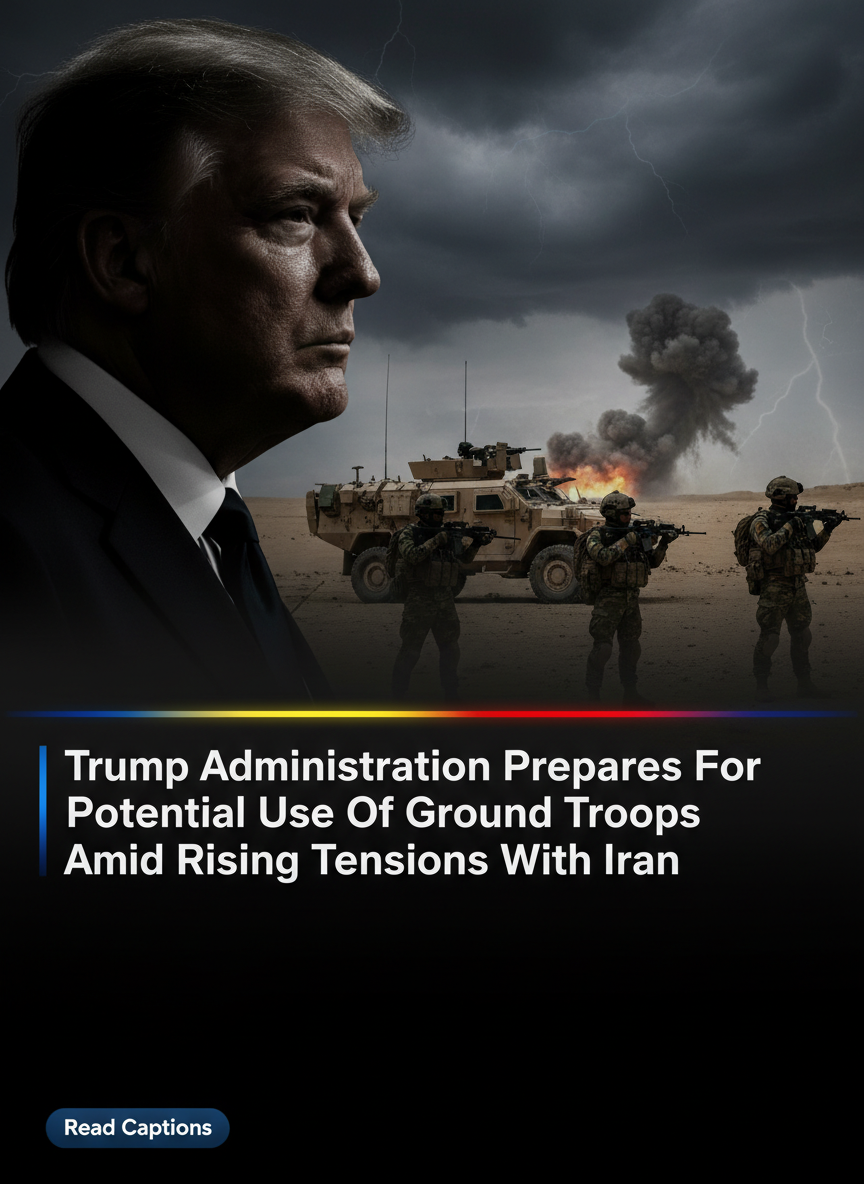
Pentagon Mobilizes Military Options: Trump Administration Intensifies Preparations for Potential Ground Operations in Iran
WASHINGTON — As tensions in the Middle East reach a critical flashpoint, the Pentagon has initiated comprehensive planning for the potential deployment of U.S. ground forces into Iran. While the White House maintains that no final decision has been made, the scale of military movement suggests the administration is rapidly expanding its “optionality” in the escalating U.S.-Israel-led conflict.
Multiple sources briefed on internal discussions confirmed to CBS News that senior military commanders have submitted specific requests to ready ground forces for a variety of contingencies. These preparations include not only troop movements but also logistical frameworks for high-stakes scenarios, such as the detention and processing of Iranian soldiers and paramilitary operatives.
The deliberative process comes as President Trump weighs his next moves in a regional war that has entered its third week. Despite the intensity of the military’s planning, the President offered a characteristically coy response to inquiries about his intentions. “No, I’m not putting troops anywhere,” Trump told reporters in the Oval Office on Thursday. He quickly added, “If I were, I certainly wouldn’t tell you.”
Military Assets on the Move
The scale of the “heavy preparations” described by officials is underscored by the deployment of elite units and significant naval assets. Elements of the 82nd Airborne Division are currently being prepared for deployment to the Middle East, joined by the Army’s Global Response Force and specialized Marine Corps units.
According to U.S. officials, approximately 2,200 Marines and three warships departed from California earlier this week. This marks the second Marine Expeditionary Unit (MEU) dispatched to the region since the onset of the conflict. A first unit, diverted from the Pacific, is also currently en route. These movements are designed to provide the Commander in Chief with a robust “boots on the ground” capability should the conflict escalate beyond air and sea engagements.
Detention and Logistics Planning
Perhaps the most telling sign of the Pentagon’s readiness is the specific focus on prisoner-of-war logistics. Sources indicate that military leadership has held high-level meetings to determine where Iranian personnel—ranging from regular army soldiers to paramilitary operatives—would be sent if captured during ground operations. Such detailed planning typically precedes significant military incursions, indicating that the Pentagon is leaving nothing to chance.
White House Press Secretary Karoline Leavitt sought to frame these preparations as standard military procedure. “It’s the job of the Pentagon to make preparations in order to give the Commander in Chief maximum optionality,” Leavitt said in a statement. She reiterated that the President “is not planning to send ground troops anywhere at this time,” emphasizing that preparation does not equal a finalized directive.
A Regional Powder Keg
The preparations occur against a backdrop of crumbling regional stability. In a sign of the perceived risk of a wider war, NATO has reportedly begun pulling hundreds of personnel from Iraq. Meanwhile, Israel has continued a high-intensity campaign of assassinations targeting senior Iranian figures, an effort that has drastically thinned the ranks of Iran’s military leadership but also increased the pressure for a massive U.S. intervention.
The ongoing conflict has already sent ripples through global markets, with oil and gas prices fluctuating as the international community watches the Strait of Hormuz. As the 82nd Airborne and the Marine Expeditionary Units close in on the region, the window for a diplomatic resolution appears to be narrowing, replaced by the mechanical precision of a military preparing for the worst.