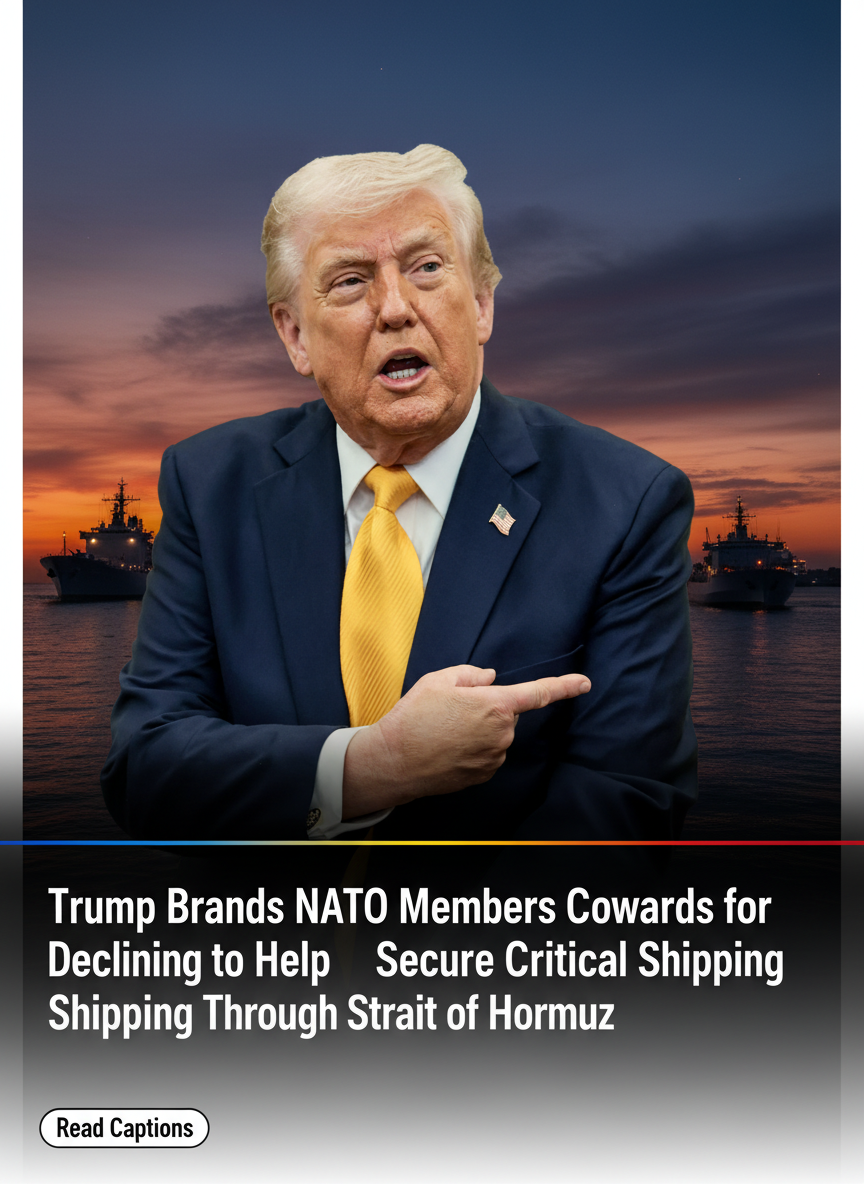
‘Cowards’: Trump Blasts NATO Allies Over Refusal to Secure Strait of Hormuz
WASHINGTON — President Donald Trump ignited a fresh firestorm within the transatlantic alliance early Friday morning, labeling NATO members “cowards” after several key allies declined to participate in a military coalition aimed at reopening the Strait of Hormuz to international shipping.
A Sharp Escalation in Rhetoric
The President’s comments, delivered via a series of social media posts and confirmed by White House officials, mark a significant escalation in the ongoing tension between Washington and its European partners. The dispute centers on the critical maritime corridor, where recent disruptions have threatened the stability of global energy markets.
“Our so-called allies are happy to take American protection, but when it comes time to secure the world’s most important shipping lanes, they go missing,” the President stated. “It is a disgrace. They are cowards who would rather let the world economy bleed than stand up for what is right. America cannot continue to pick up the tab for countries that won’t even defend their own interests.”
The Crisis in the Strait
The Strait of Hormuz, a narrow waterway between Oman and Iran, serves as the transit point for approximately one-fifth of the world’s total oil consumption. In recent weeks, a series of maritime incidents—including the seizure of commercial tankers and increased naval harassment—has led to a spike in insurance premiums and a volatile surge in crude oil prices.
The Trump administration has been lobbying for an international maritime task force to provide armed escorts for merchant vessels. However, several major NATO powers, including France and Germany, have expressed hesitation. These nations have cited concerns that a heightened military presence could inadvertently trigger a wider regional conflict, preferring instead to pursue diplomatic channels to de-escalate the situation.
NATO Divided
The refusal of NATO members to commit naval assets has touched a nerve in the Oval Office, reviving the President’s long-standing grievances regarding “burden-sharing” within the alliance. While the U.S. Fifth Fleet remains stationed in the region, the White House has signaled that its patience is wearing thin.
Diplomatic sources in Brussels suggest that the “cowards” label has caused deep offense among European leadership. A spokesperson for the European Union remarked that security in the Gulf requires “precision and diplomacy, not inflammatory rhetoric,” though they acknowledged the “seriousness of the navigational threats.”
Economic and Political Fallout
Domestically, the President’s supporters have praised his “America First” stance, arguing that European nations rely heavily on Middle Eastern oil and should therefore be the ones leading the charge to protect the lanes. Conversely, critics argue that alienating allies during a geopolitical crisis could leave the U.S. isolated and increase the risk of a miscalculation in the Persian Gulf.
As of Friday afternoon, the Pentagon has not announced any changes to the U.S. naval posture, but officials hinted that “unilateral measures” to ensure the flow of commerce are being considered if an international coalition fails to materialize.
Looking Ahead
The standoff at the Strait of Hormuz is now as much a diplomatic crisis as it is a maritime one. With NATO leaders scheduled to meet in the coming weeks, the President’s pointed remarks have set the stage for what is likely to be one of the most contentious summits in the history of the alliance. For now, the world’s most vital energy artery remains a tinderbox, with the primary defenders of the Western world at odds over who should hold the match.