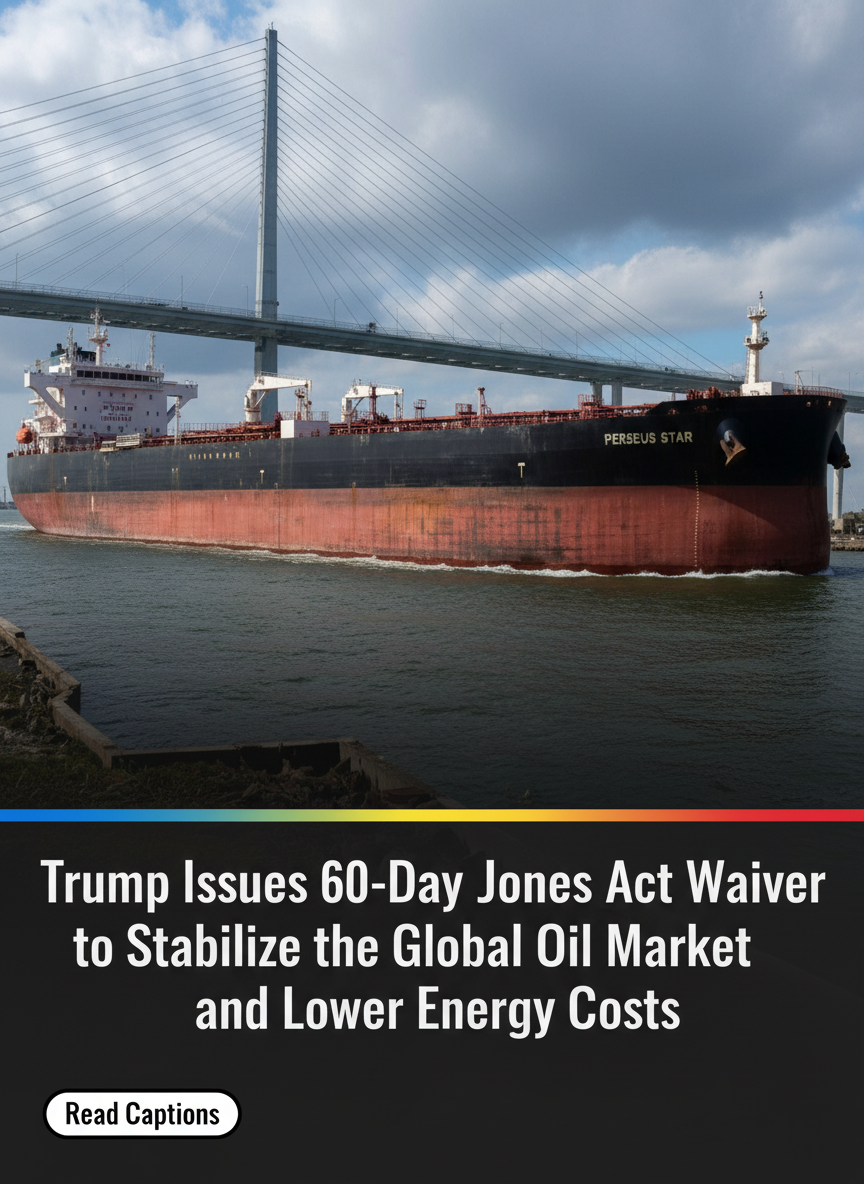
Trump Issues Emergency 60-Day Jones Act Waiver to Stabilize Energy Markets as Iran Conflict Escalates
WASHINGTON D.C. — In a decisive move to counter soaring energy prices and logistical bottlenecks triggered by the escalating military conflict with Iran, President Donald Trump signed an executive order Wednesday morning to waive the Merchant Marine Act of 1920—commonly known as the Jones Act—for a period of 60 days. The waiver is intended to provide immediate relief to the U.S. oil market by allowing non-U.S. flagged vessels to transport petroleum products between domestic ports.
An Emergency Response to Global Turmoil
The decision comes as the global oil market faces significant volatility. Following recent military engagements in the Middle East, Brent crude and West Texas Intermediate (WTI) prices have surged, leading to concerns over domestic fuel shortages and inflationary pressure at the pump. By suspending the Jones Act, the administration aims to bypass the current shortage of U.S.-crewed and U.S.-built tankers, which are required by law for domestic maritime commerce.
“Our priority is the American consumer and the stability of our national economy,” a senior White House official stated during a press briefing. “With the situation in the Persian Gulf impacting global supply chains, we must ensure that our own domestic resources can move freely and efficiently from the Gulf Coast to the Northeast and West Coast without being hindered by outdated regulatory hurdles.”
Understanding the Jones Act
Established over a century ago, the Jones Act is a federal statute that requires all goods transported by water between U.S. ports to be carried on ships that are built in the United States, owned by U.S. citizens, and operated by U.S. citizens or permanent residents. While the law is intended to support the domestic maritime industry and national security, critics have long argued that it creates a logistical “bottleneck” during times of crisis.
Energy analysts suggest that the 60-day waiver will allow a much larger fleet of international tankers to assist in moving U.S. crude and refined products. This is expected to lower the cost of transport significantly, which the administration hopes will translate to lower prices for American families within the coming weeks.
Political and Industry Reactions
The move has been met with a mixture of praise and concern. The energy sector largely welcomed the news, with industry leaders noting that the flexibility provided by the waiver is “critical” for maintaining a steady supply of heating oil and gasoline. “This is a common-sense measure to ensure that American energy reaches American homes during a period of geopolitical instability,” said a spokesperson for the American Petroleum Institute.
However, the decision has drawn criticism from maritime labor unions and some shipbuilders, who argue that waiving the act undermines the domestic shipping industry and sets a dangerous precedent for national security. Proponents of the act argue that maintaining a robust U.S.-flagged fleet is essential for military readiness, particularly during times of war.
Looking Ahead: A 60-Day Window
The 60-day waiver is set to expire in mid-May, though the executive order includes a provision for a possible extension should the conflict with Iran continue to destabilize global energy flows. The administration has signaled that it will monitor market conditions daily to determine if further deregulation is necessary.
As the conflict in the Middle East remains fluid, the White House has emphasized that this waiver is just one part of a broader “energy independence” strategy. For now, the eyes of the world—and the markets—remain fixed on the Persian Gulf and the U.S. coastline as the first international tankers begin to pivot toward American ports to fill the supply gap.
This is a developing story. Updates will be provided as more information regarding shipping schedules and market impacts becomes available.